
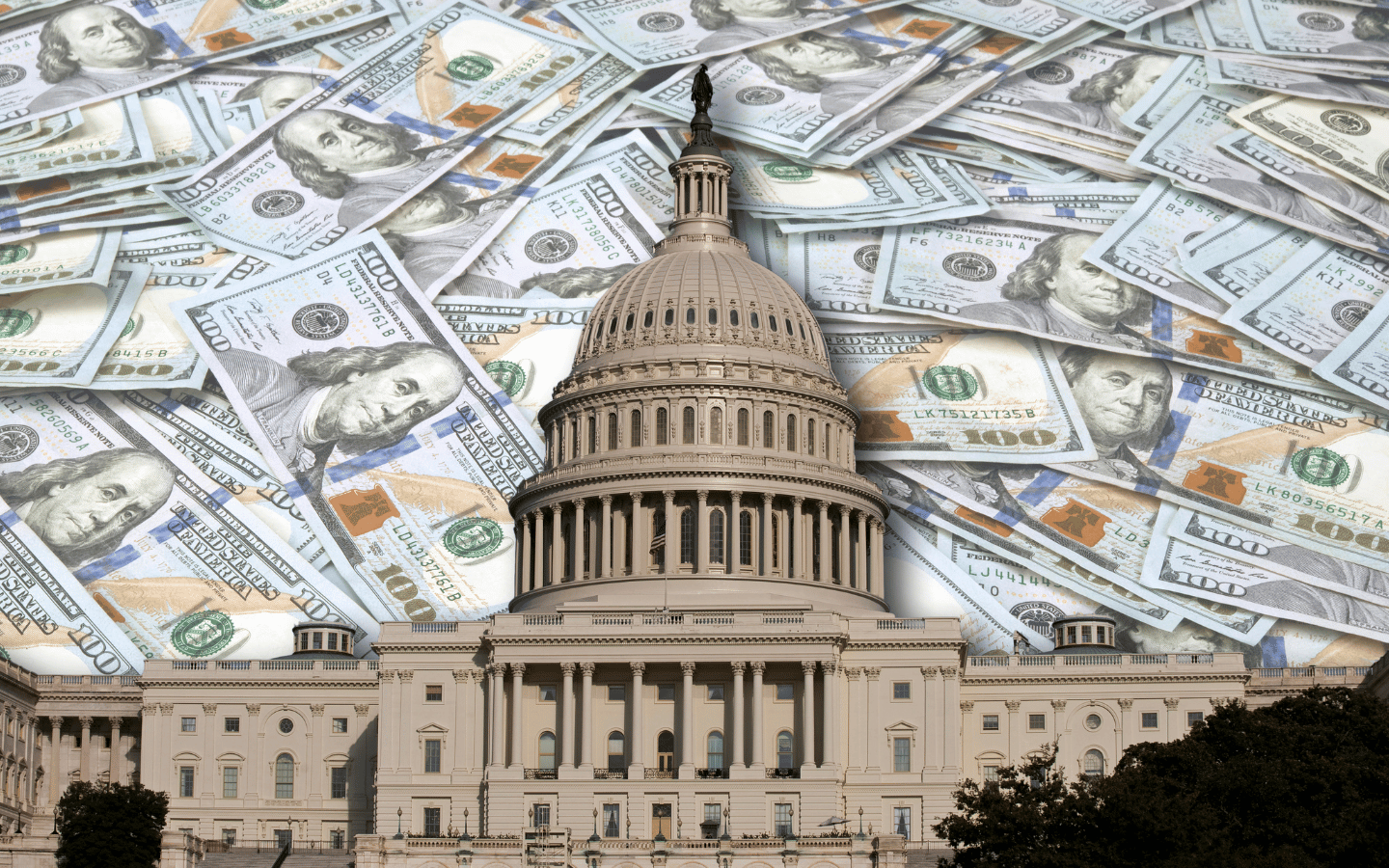
For months, my phone has been blowing up with requests for financial contributions to political candidates. Some are from those I will vote for; others are not.
Increasingly, democratic elections are less about candidates’ moral fiber, experience, and skill. They are about money and which candidate or party can raise and spend the most to sway voters. More money means more ads, which, unfortunately, are mostly attack ads that denigrate the opponent instead of promoting the candidate’s positive attributes.
“Dark money” and money spent by large political action committees (super PACs) are mind-boggling to average “kitchen table” folks like me. Through mid-October, the top 40 donors gave $2.5 billion. This has increased exponentially since the 2010 Supreme Court Citizens United ruling, which allowed corporations and unions to make political contributions.
Super PACs must report donor names and donation amounts to the Federal Election Commission (FEC), which hackers are currently attacking. Dark money is funneled through groups such as social welfare organizations, unions, and business and trade groups that often carry nonprofit 501(c) status. Donors may contribute unlimited amounts to these groups and remain anonymous; thus, the phrase “dark money.”
One might assume our government would regulate such enormous amounts of money from corporate titans seeking to influence the outcomes of our democratic elections and governance. That is not the case.
The FEC, charged with enforcing campaign finance laws, currently has only two of its six required members. Because it lacks a quorum, it hasn’t met or had the authority to enforce campaign finance policy since April 30, 2025. The Trump administration appears to be sanctioning the lack of campaign finance control, as it has taken no action to fill the vacancies.
The Supreme Court has also jumped into the campaign finance fray with the June 2026 ruling in National Republican Senatorial Committee v. FEC. Under this decision, national party committees and state parties’ federal accounts can now spend unlimited funds to support individual federal candidates in coordination with those candidates. Both the Republican and Democratic parties have now taken advantage of this ruling.
The lure of power, empire, and the lust for gold are destroying our democracy as well as tarnishing our standing on the global stage. Megadonors are buying politicians to influence government policies that favor their growth and wealth goals, not the common good. All this is happening as the wealthiest 1% of Americans collectively held about $55 trillion in assets in the third quarter of 2025 — roughly equal to the bottom 90% of Americans’ combined wealth.
I’ve been thinking about the gospel story of Jesus cleansing the temple, turning over the money changers’ tables, and driving the livestock out of the Court of the Gentiles, the only place where non-Jews could worship. He called out the corrupt high priest and religious authorities: “My house shall be called a house of prayer, but you make it a den of robbers” (Matthew 21:13). Jesus’s actions were in protest of the corruption, greed, and exploitation of worshippers by both the religious elite and the Roman Empire.
We are living in a time when our nation is plagued with corruption, greed, and exploitation of “we the people.” Whether it’s flawed political campaign financing, bulging corporate coffers, or the 1% mega-wealth hoarders, all come at the expense of “we the people” and the common good.
Now is the time for flipping tables. Now is the time to meld our personal power, our individual ability to have an effect or influence, into our collective “we the people” power.
Our power is in our ability to voice our concerns and our will to act. In our democracy, our voice is heard in our vote. Our vote is our personal and collective power to affect and influence the future of our nation.
Let’s flip some tables, not based on any political party affiliation, but on our commitment to sustain the principles on which our nation was founded:
We the People of the United States, in Order to form a more perfect Union, establish Justice, insure domestic Tranquility, provide for the common defence, promote the general Welfare, and secure the Blessings of Liberty to ourselves and our Posterity, do ordain and establish this Constitution for the United States of America.
- About the Author
- Latest Posts

Retired after 38 years in education and counseling, the last nine of those as school counselor serving a campus of 650+ third, fourth and fifth graders. When not traveling, she fills her days with community, charitable and civic work, along with occasionally writing for The Tyler Loop and blogging at Pilgrim Seeker Heretic, affirming the sacredness of life and the sacrament of relationships.