
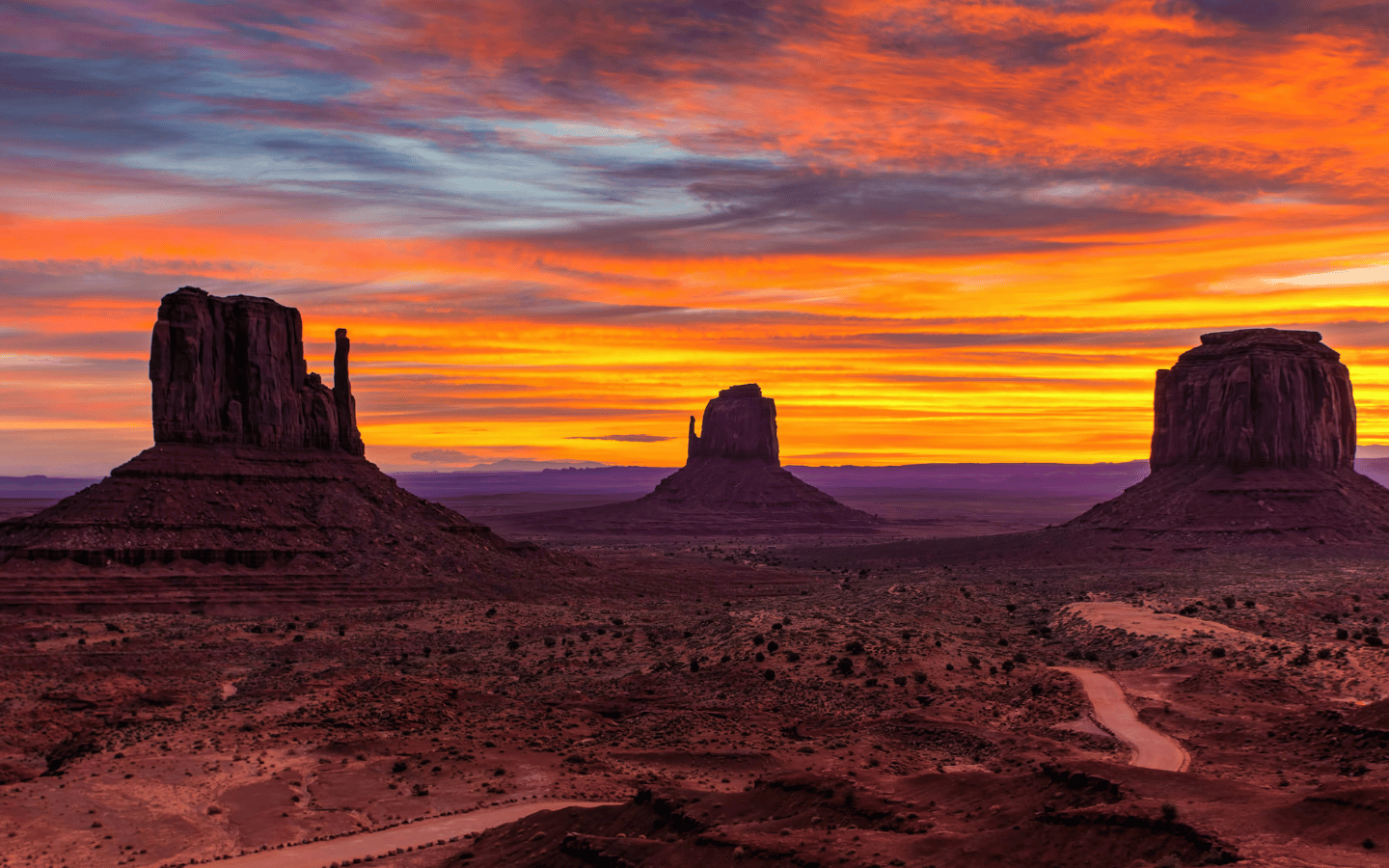
I am still reflecting on my experiences from a recent tour of the Four Corners area: the glorious landscapes, the vast vistas from challenging hiking trails, rafting on the clear waters of the San Juan River, and gazing at the star-filled night sky with the Big Dipper seemingly within reach.
We drove a ribbon of road stretching to the horizon, surrounded by the vast, mostly flat, pale brownish-yellow desert sand, dotted with occasional green juniper trees and bushes, and frequently interrupted by various geological formations. Layers of vibrant and varied colors—red, gray, orange, shades of lavender and brown—decorated the buttes and mesas sculpted by eons of wind and water erosion.
As I gazed in awe and wonder, an old Dottie Rambo lyric popped into my head:
“Oh, we shall behold Him,
Yes, we shall behold Him,
Face to face in all of His glory.”
It was then I thought, “I am looking at the glorious face of God.” I pondered that thought as I continued to gaze.
Archaeological studies indicate that this area—Bears Ears National Monument—was inhabited by Indigenous people as far back as 11,000 BCE. It was completely inhabited by 6000 BCE and was home to the Ancient Pueblo people between 800 and 1300 CE. Today, the Hopi Tribe, the Navajo Nation, the Zuni Pueblo people, the Ute Mountain Ute Tribe, and the Ute Indian Tribe hold strong ancestral and cultural ties to the land.
Much of our travel was also within the 27,000-acre Navajo Nation Reservation. The Navajo park ranger at Hubbell Trading Post asked how we would describe the land we saw on our drive. The responses—beautiful, awesome, desert, majestic—were all accurate. His response: “My people believe the land is sacred.”
I was deeply touched as he spoke passionately and reverently about the land, Mother Earth, its significance to his people, and their commitment to care for it. He shared with equal fervency their tradition of caring for family and community, emphasizing the interconnectedness of all beings and things. As we departed, he shared the Navajo farewell, “Walk in Beauty.”
Monument Valley is much more than the iconic backdrop from John Ford’s 1939 film “Stagecoach.” On a backcountry tour, our Navajo guide took us to ancient, magnificent red sandstone arches—Ear of the Wind, Eagle’s Eye and The Eye of God—sacred places for traditional tribal ceremonies.
Environmental Degradation
As I bask in the sacredness of these lands and Native American traditions and practices, our current administration is moving at breakneck speed to remove many, if not most, of the protective restrictions on the use of our public lands, opening them up for logging, extraction, mining, construction and unfettered grazing.
Actions have been taken to eliminate existing protections from about 88 million acres of public lands. Including rollbacks in wildlife habitat protection, 175 million acres of public and private land have been impacted.
On May 11, 2026, the administration rescinded the Public Lands Rule, which recognized conservation as a legitimate land use on equal footing with corporate and commercial uses. The 20-year mining ban near Minnesota’s Boundary Waters Canoe Area Wilderness was recently lifted, threatening contamination of the pristine waters and the Superior National Forest.
Congress is now using the little-known and controversial Congressional Review Act to overturn Bureau of Land Management Resource Management Plans, which are long-term blueprints for acceptable land use and management. In 2025, Congress repealed five BLM resource management plans, citing the CRA as its authority.
These actions stripped protections from roughly 6.4 million acres, including wildlife migration corridors and Alaska Native subsistence areas.
Current legislation is targeting the Grand Staircase-Escalante National Monument. A spokesperson at Bears Ears Education Center indicated they were preparing to defend their new management plan should it become the target of future legislation. Using the Congressional Review Act to nullify Resource Management Plans not only removes the most current protections, but also prohibits drafting new plans, leaving our public lands under outdated management plans and unable to address needs as they arise.
Objecting
Are these the actions of good stewards? Are we taking care of Mother Earth as commanded in Genesis 2:15?
The Hebrew word for “take care of” is shamar, which means to guard, preserve or protect. This exquisite Blue Marble is not ours.
“The earth is the Lord’s and the fullness thereof, the world and those who dwell therein” (Psalm 24:1). All creation, including our own lives, is a gift.
Are we squandering our gifts, diminishing, defacing and destroying Mother Earth, which provides all we need for sustained life? Are we hastening our own extinction? Are we so shortsighted and obsessed with short-term gains that we refuse to see the long-term perils?
My answer to all is a resounding, “Yes, I object!” I repeat Barry Lopez’s words of warning:
“Crudely put, it is that we can no longer afford to carry on in a prolonged era of polite reflection and ineffective resistance. An Era of Emergencies is bearing down on us. … We must invent overnight, figuratively speaking, another kind of civilization, one more cognizant of limits, less greedy, more compassionate, less bigoted, more inclusive, less exploitative.”
Yes, and I do not object. That other civilization sounds much like Navajo traditions. What a shame our ancestors killed, pillaged, subdued and isolated Native peoples instead of joining them.
I have hope and pray it is not too late.
- About the Author
- Latest Posts

Retired after 38 years in education and counseling, the last nine of those as school counselor serving a campus of 650+ third, fourth and fifth graders. When not traveling, she fills her days with community, charitable and civic work, along with occasionally writing for The Tyler Loop and blogging at Pilgrim Seeker Heretic, affirming the sacredness of life and the sacrament of relationships.