
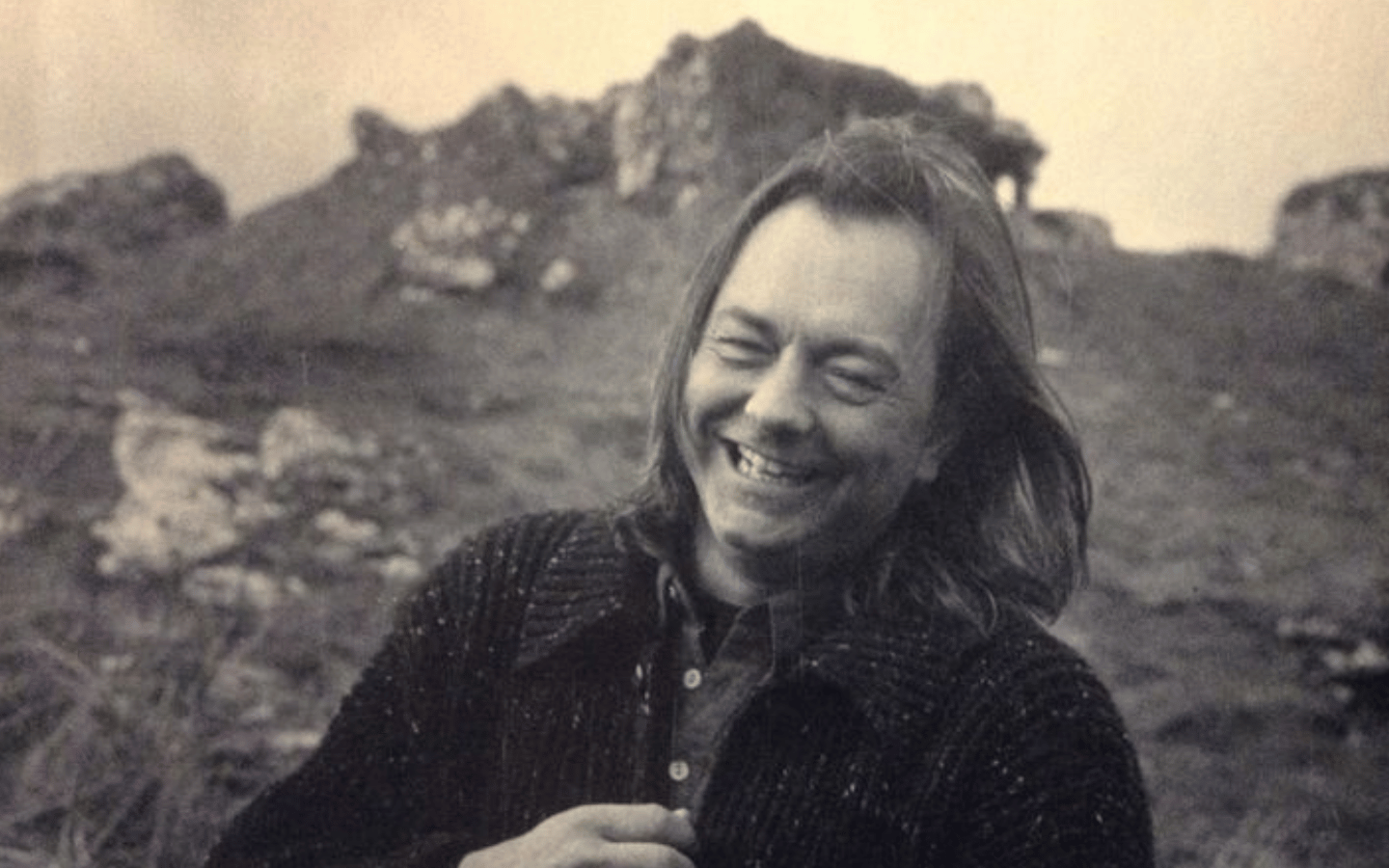
In May 1995, shortly after graduating with a degree in music education from Friends University in Wichita, Kansas, Rich Mullins moved to the Navajo reservation in Tse Bonito, New Mexico. By that point, the beloved Contemporary Christian musician had already released several highly acclaimed albums and was becoming something of an enigma in the broader evangelical community.
In an interview at a music festival almost a year later, a reporter asked if he had made the move to take Jesus to the Indigenous people there.
“No,” he chuckled. “Wouldn’t that make a great story, though, for the evangelicals? They’d love it! The truth is, I just got tired of a white, evangelical, middle-class perspective on God, and I thought I’d have more luck finding Christ among the ‘pagan’ Navajos.”
Bristling at his response, the reporter asked whether it’s true that “more than 80% [of the Navajo] are lost.” The question seemed more like a suggestion that Rich should consider evangelizing the Navajo.
“Well,” he said, “that’s probably not any more than evangelical Christian white folks [who are lost].”
That exchange and his move to the Four Corners region of the United States were vintage Rich: embracing the sacredness of place and people while flipping the tables of a faith overly concerned with conversion—all with a boyish grin. It also subtly hinted at the ambivalence Rich had toward his country and the white Christian audiences he had spent over a decade singing to.
Speaking From the Grave

(A Liturgy, A Legacy, & a Ragamuffin Band)
Nowhere was that ambivalence more pronounced than in one of his greatest artistic achievements, the 1993 album A Liturgy, a Legacy, and a Ragamuffin Band. The concept album, released just four years before his untimely death, was later recognized by CCM Magazine as the third greatest album in the history of the genre. On my personal list, it’s at the top.
I’ve found myself returning to the album in the gaudy ramp-up to the 250th anniversary of the signing of the Declaration of Independence, as I’ve wondered what Rich Mullins would have offered to this moment if he were still with us.
For the most part, I’m opposed to projecting what the dead would say about contemporary events, which politician they’d support, or where they would have fallen on a social issue that wasn’t as prominent when they were alive as it is now. Those projections tend to align with the beliefs and values of the person making them, so we should remain suspicious.
Still, Rich Mullins left us a treasure trove of clues. Two of them were the songs that bookended A Liturgy, a Legacy, and a Ragamuffin Band.
Here in America
In “Here in America”, the album’s first track, Rich invites “saints and children” in to “hear the sacred story.” Throughout the song, he announces what he hopes we will see and feel throughout the album, and it has very little to do with esoteric ideas about God and spirituality. Instead, he wants us to see “the oceans crashing off the coast of North New England,” the mountains of Appalachia “waking with the innocence of children,” and hitchhikers on a “million exit ramps” waiting for “four-wheeled messiahs to take them home again.”
The song paints an Edenic picture of our land, mostly unencumbered by division and human strife.
Tracks 2-6 of the album comprise the “liturgy” portion of A Liturgy, a Legacy, and a Ragamuffin Band, while the back half of the album returns to more earthbound concerns.
Land of My Sojourn
In the final tune, “Land of My Sojourn,” Rich paints a much darker picture of the country than the one he opened the album with.
“Land of My Sojourn” begins with coal trucks rolling down a road “that lies open like the soul of a woman who hid the spies who were lookin’ for the land of milk and honey.” Rich further describes the road as being “made from a rib, cut from the sides of these mountains, of these great sleeping Adams who are lonely even here in paradise.” He leads listeners down a road, and it is difficult to tell if it is toward redemption, destruction, or both.
The closest we may ever get to knowing what Rich Mullins would have believed about the United States in 2026 is found in the second stanza of “Land of My Sojourn”:
And the lady in the harbor
She still holds her torch out
To those huddled masses who are
Yearning for a freedom that still eludes them
The immigrant’s children see their brightest dreams shattered
Here on the New Jersey shoreline in the
Greed and the glitter of those high-tech casinos
But some mendicants wander off into a cathedral
And they stoop in the silence
And there their prayers are still whispered
And I’ll sing their song
In the land of my sojourn
It’s worth noting that in 1993, a quarter of the casinos in Atlantic City, New Jersey, were owned by a certain Manhattan real estate developer whose corruption was well known by then.
If Rich had any hope for this country, it was found in the desolate, forgotten places and people, far removed from the “greed and the glitter” that mark this, and every other patriotic celebration the United States has ever held.
He ends “Land of My Sojourn” by painting a picture of a countryside “pocked with all of those Mail Pouch posters.”
In the 1960s, the Mail Pouch chewing tobacco company paid farmers across the country to allow them to paint advertisements on the sides of their barns. The ads served to bolster the company’s profile and to provide a fresh (free) coat of paint on the farmer’s barns. The program was officially discontinued in 1992, a year before the recording of A Liturgy, a Legacy, and a Ragamuffin Band.
But by that point, the paintings had faded, and the barns had begun to collapse. They represented communities, like other neighborhoods in urban areas, that had been left behind by the systems of greed and corruption that have led us to this moment.
Those Mail Pouch posters, according to “Land of My Sojourn,” had been “thrown up on the rotting sideboards of these rundown stables, like the one that Christ was born in, when the old world started dying, and the new world started coming on.”
Rich ended the album by declaring that Christ’s was the song he would sing, “in the land of my sojourn.”
I don’t know if the old world can die and give way to another if there’s not a serious reckoning with all the pain we have wrought. I don’t know if there is a form of patriotism that can simultaneously hold a love for this country in one hand and honesty about its history (and present) in the other. I have my doubts.
But if it does exist, I suspect it won’t be found in the fireworks we’ll shoot and songs we’ll sing this weekend. Rather, it’ll be found in the places Rich Mullins traveled and returned from with news of the holy he found in the forgotten places—here in America, the land he sojourned.
- About the Author
- Latest Posts

Senior Editor at Good Faith Media.