Listening to the twists and turns of public opinion polling and voter interviews reminds me of watching a slow-moving river. Its surface ripples move whichever way the wind blows at a given time, while the river’s deeper current continues in the same direction, driven by gravity.
The expressed and sometimes implied response to the “why” question for a given opinion often reflects the respondent’s latest experience with higher gas or grocery prices, increased health care costs, the consequences of the war, or the latest example of public corruption. These are legitimate reasons an opinion might shift one way or another and campaign managers are quick and skilled at turning the political sails to catch the breeze. Find out someone’s “why,” tailor your “what” to answer it, and then you’ll have their support.
There is no argument that higher everyday costs, inflation and regional economic impacts, health care, employment, immigration policy and enforcement all have a significant effect on voter opinion and choices. These issues matter and it is no surprise that votes responding to them can change the direction of the ripples on the surface of our public life.
But we might wonder, “What will happen when gas and grocery prices go down, when inflation begins to temper, when the war stops, when reasonableness becomes part of immigration policy? Will everything be OK again? Or will a change of the wind produce new ripples to dominate our thinking?”
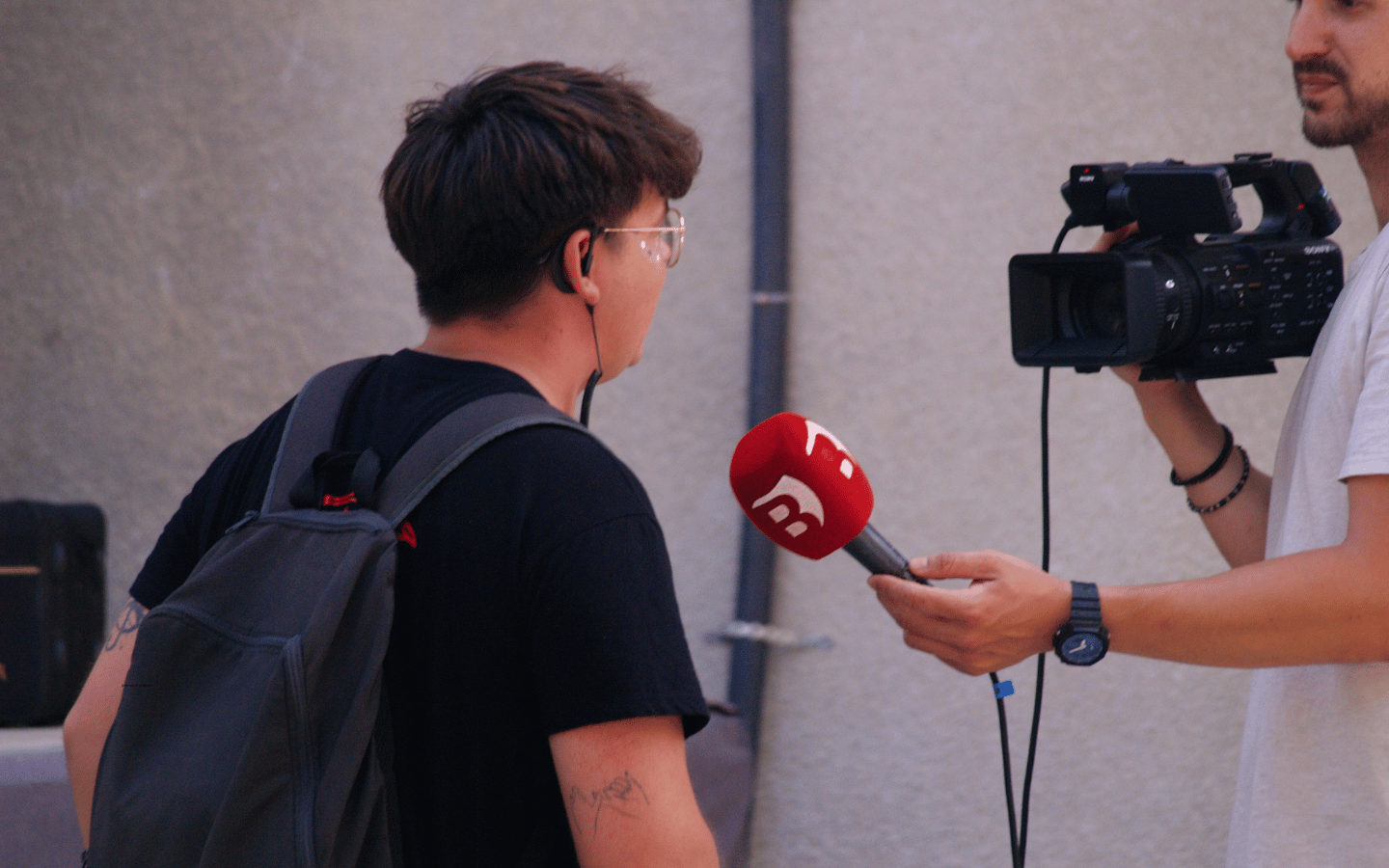
I am waiting and hoping for a response to a reporter asking why someone holds a certain opinion or plans to vote a certain way, that doesn’t respond with “gas prices” or “presidential vanity.” Instead, I hope for, “Because I’m concerned about the erosion and decay of the moral foundation of our society that has allowed all these things to happen that are a detriment to the common good.”
This is a “why” at the level of the river’s current, beneath the surface ripples that follow the wind.
Whatever issues and concerns dominate our attention and efforts to remediate, an underlying moral foundation has always motivated a “more perfect union” that would distill the mash of deliberation and maneuvering into a more wholesome future. That moral foundation is rooted in a heritage shaped by earlier distillations over a long history.
This foundation clarifies the difference between truth and falsehood, authenticity and hypocrisy, what is just and what is not, and what is sustainable as a vision for the future and what is not.
It is a foundation that helps answer the “why” of any opinion or action—not “because it will give advantage to this or that group“ or “because it will be good for business,” or even “because it will help advance the principles of our (or another ) religious faith.” Rather, this foundation lies at the base of who we are as a people, and enables us to say, “Because it is the right thing to do.”
There has been a sustained effort to erode and replace this moral foundation that was constructed and refined for 200 years, through challenge, debate, war, and public confrontation in a process that moved toward the dream of justice and equality for all. That replacement foundation is marked by clear levels along racial, economic, and religious lines. Its “constitution” is known as “Project 2025.”
We can all hope that gas and grocery prices will go down and that the war will end. Perhaps we can also hope that the “why” of our opinions and votes will find root in our concern for the moral foundation of who we are (and aspire to be) as a people.
It may be a platitude to say, “Because a healthy and wholesome future depends on it,” but that doesn’t mean that it doesn’t.
- About the Author
- Latest Posts
Professor emeritus of religious studies at Mercer University, a member of Smoke Rise Baptist Church in Stone Mountain, Georgia, and the author of Keys for Everyday Theologians (Nurturing Faith Books, 2022).