

When Christopher, Greek for “Christ bringer,” Columbus sailed the ocean blue in 1492, he carried the most primitive and savage worldview to the people who discovered this lost sailor off their shores.
My conquistador forefathers, who joined him, raped the Indigenous women and threw their babies to the dogs. They tested their machismo strength by lopping off men’s limbs with a single whack. The friar Bartolomé de las Casas documented these horrors.
Later, as illegal immigrants from England, France and the Netherlands settled in the lands north of where the Spaniards invaded, they developed what came to be known as the Black Legend.
Using the writings of de las Casas, they proposed that Northern European conquests were benign when compared to those of the Spaniards. After all, as I was reminded during a sermon I heard not too long ago, the Spaniards came in search of gold while the pilgrims came in search of God.
It is true that my ancestors came in search of fortune and fame. Their quest for gold required the Indigenous people to work the mines, extracting gold, silver and other precious resources. The need for workers meant they, as a commodity, had worth and thus were kept alive.
The offspring of the violent conquest of land and Indigenous female bodies brought forth a mestizo people. This is why today, when we see expats crossing the southern borders from Mexico and Central America, they typically have Indigenous features.
Now consider the typical United Statesian. They lack Indigenous features, resembling their settler colonialist ancestors instead.
Why the difference? Because their forebears did not come in search of God; they came in search of territory.
But the so-called New World already had inhabitants, despite myths concerning virgin land. To obtain clear title to the land, they had to exterminate its original inhabitants.
Because Africans would eventually meet labor needs, Indigenous people held no monetary worth. Blankets used by smallpox patients, given as gifts, wiped out entire Indigenous villages. Others were simply massacred under the misnomer “Indian Wars.”
Those who survived were rounded up and placed on reservations, the precursor to concentration camps. Their children were shipped to schools attempting to “save the man by killing the Indian.”
Lest I be misunderstood, allow me to be clear. I do not intend to be an apologist for the Black Legend, insinuating that the Northern European conquest was somehow worse.
The brutality and barbarism of those who settled the Southern Hemisphere were no less severe than those of the settlers in the north. Both were equally genocidal, even while their methodologies of conquest differed.
Regardless, a debt is owed to the original occupants of the land by all illegal immigrants to the Western Hemisphere.
Maybe it is guilt. Maybe it is a sense that a terrible wrong was committed. Maybe it is an attempt to acknowledge this horrific moral failing.
Whatever the motivation, my liberal colleagues have begun the ritual during public gatherings of reciting a statement recognizing the original people who once occupied the land upon which they currently find themselves. Typically, it goes something like this: “We acknowledge that the space in which we gather today is located in the ancestral home of the [insert tribal name here] peoples.”
Now I confess, when I first heard this, I was pleased. No doubt it raised my consciousness about who exactly the original people of the land upon which I stood were.
But as the years went on, like most regurgitated prayers, I stopped listening. I began to feel its recitation was more for the benefit of my Euro-American liberals than for the Indigenous people.
Last month I was asked to serve as marshal of my institution’s convocation. One of my responsibilities was to recite the land acknowledgment.
To be fair, the statement I was given was more than an acknowledgment. It contained specific acts of terror in which my institution was complicit.
Furthermore, it went on to list specific actions my institution committed to. The hope is to establish a more productive and mutual relationship not just with the original people of the land but also with other Indigenous people whom our institution deeply and directly wronged.
The statement took responsibility for specific crimes committed, rather than simply reciting abstract, generalized wrongs. I appreciate these attempts to move beyond simple recitation and instead pledge action.
Still, I wondered if this was enough. So as I recited the land acknowledgment, I added one sentence at the end: “And yet, as an ethicist, I have to wonder: If we steal someone’s land but acknowledge the theft, what good does it do the Indigenous people to have our acknowledgment if we still keep their stolen land?”
The land upon which we stand is not the ancestral home of some people long gone and forgotten. It remains their land.
We occupy stolen land held by force. If this is so, then acknowledgments seem lame.
Obviously, I was influenced by Bishop Tutu’s quip: “If you steal my pen and apologize, what good does that do me if you still keep my pen?”
I’m not naïve enough to think that stolen land will be returned anytime soon. And yet, something remains owed that must be worth more than words of acknowledgment—not just to the original people but also to Africans whose bodies and labor were stolen, and to the expats crossing our southern borders following their stolen resources and labor, thanks to a century of gunboat diplomacy (revised recently in Venezuela).
Maybe land acknowledgments should also acknowledge debts owed and how those obligations can be satisfied.
- About the Author
- Latest Posts
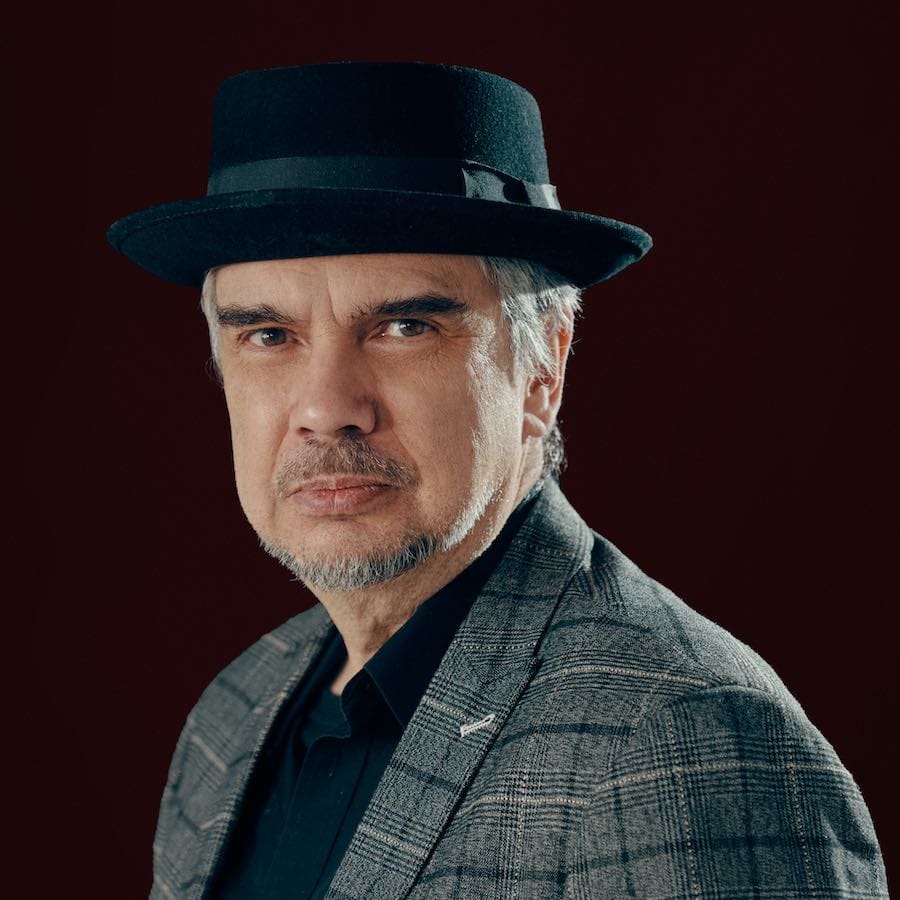
Professor of Social Ethics and Latinx Studies at Iliff School of Theology in Denver, Colorado, and a contributing correspondent at Good Faith Media.