

I am a biracial woman—Black, white, and something in between.
One side of my family was Baptist and the other was Church of Christ.
Our little double-wide trailer was situated right off the highway that runs down the center of Texas.
I am no stranger to being in the middle. I lived there for much of my life.
It can be a beautiful, sacred space. And, to tell the truth, I miss it terribly.
I used to unabashedly describe myself as a moderate—not because I was unmoored or indecisive, but because I was thoughtful—a burgeoning young mystic who understood the centrality of mystery in any authentic life of faith. I still believe in mystery.
I can (and at times, still do) make the case for moderation. But standing in the middle and calling it holy at this moment in history feels increasingly less like a sign of moral maturation and more like an act of moral defection. The middle-ground fallacy presumes that moderation and compromise are necessarily virtuous, despite evidence that one side is factually closer to the truth (or to love).
The “elephant argument” is sometimes used to explain this cognitive error. If one of my adult siblings shouts emphatically that elephants can fly while another claims with as much fervor that they cannot, our family could choose to “compromise” or “agree” that some elephants can fly.
Such a conceit might extinguish the family tension for a while. But reality is extinguished right along with it.
Obviously, there are intellectual and imaginative loopholes to the argument for those so inclined. A group of elephants could be transported on a plane, or a child might draw a herd with wings and in those instances, yes, there are some versions of some elephants doing some type of flying.
But if these proofs of concept do not capture the spirit of my sibling’s original claim, then they are not aiding in the journey toward real understanding. Asserting that my siblings are simply “holding different opinions” on the matter of elephants to “keep the peace” could be an intentional evasion and distortion of the facts under the guise of “diversity of thought.”
I don’t use the elephant example when teaching this fallacy because the stakes feel a bit too cutesy. It probably would not hurt my sister to go on believing in flying elephants and my insistence on the “capital T” truth about something so silly would likely say more about my need to be right than a commitment to the virtue of honesty. So, rather than focusing on elephant aviation, I ask my classes to consider the middle ground between a pacifist approach and a genocidal approach.
Would we feel comfortable, as individuals in a helping profession or as representatives of a helping faith, proceeding with a middle ground between these two poles? “Since some of us wish to avoid enacting any violence and some of us wish to enact mass exterminations of groups that we deem less human, let’s meet in the middle and choose a few vulnerable groups to exterminate.”
We might not claim either extreme as our personal philosophy in all circumstances. But I would hope that in studying service to each other, we would find ourselves, if ever so slightly, on one end of this continuum, because stakes matter.
So, when we hear leaders say things like “we are trying to include all sides equally” or we are “staying out of it,” or “we are committed to centrism,” over issues like detainment centers, bodily autonomy, and freedom of speech, I hope we will not be lulled into believing that these phrases are necessarily smart or kind.
Some positions, policies and practices are objectively more violent than others. It is not the job of the virtuous to be popular with the masses. It is the call of the virtuous to count the cost of our policies and practices—especially for those most vulnerable—and then to lead by example.
___
Some websites for helping assess the stakes for our siblings and ourselves:
- About the Author
- Latest Posts
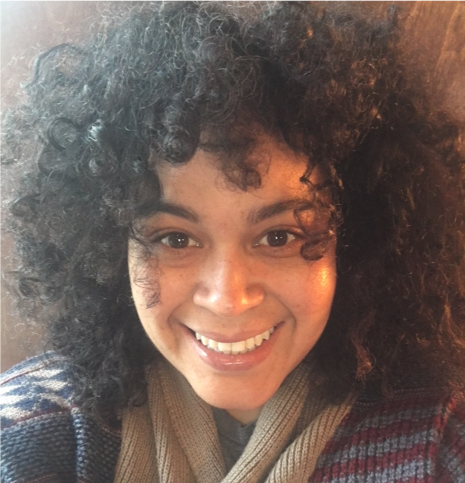
Kerri Fisher is Clinical Associate Professor and the Associate Dean for Community and Action at Baylor University’s Diana R. Garland School of Social Work.