
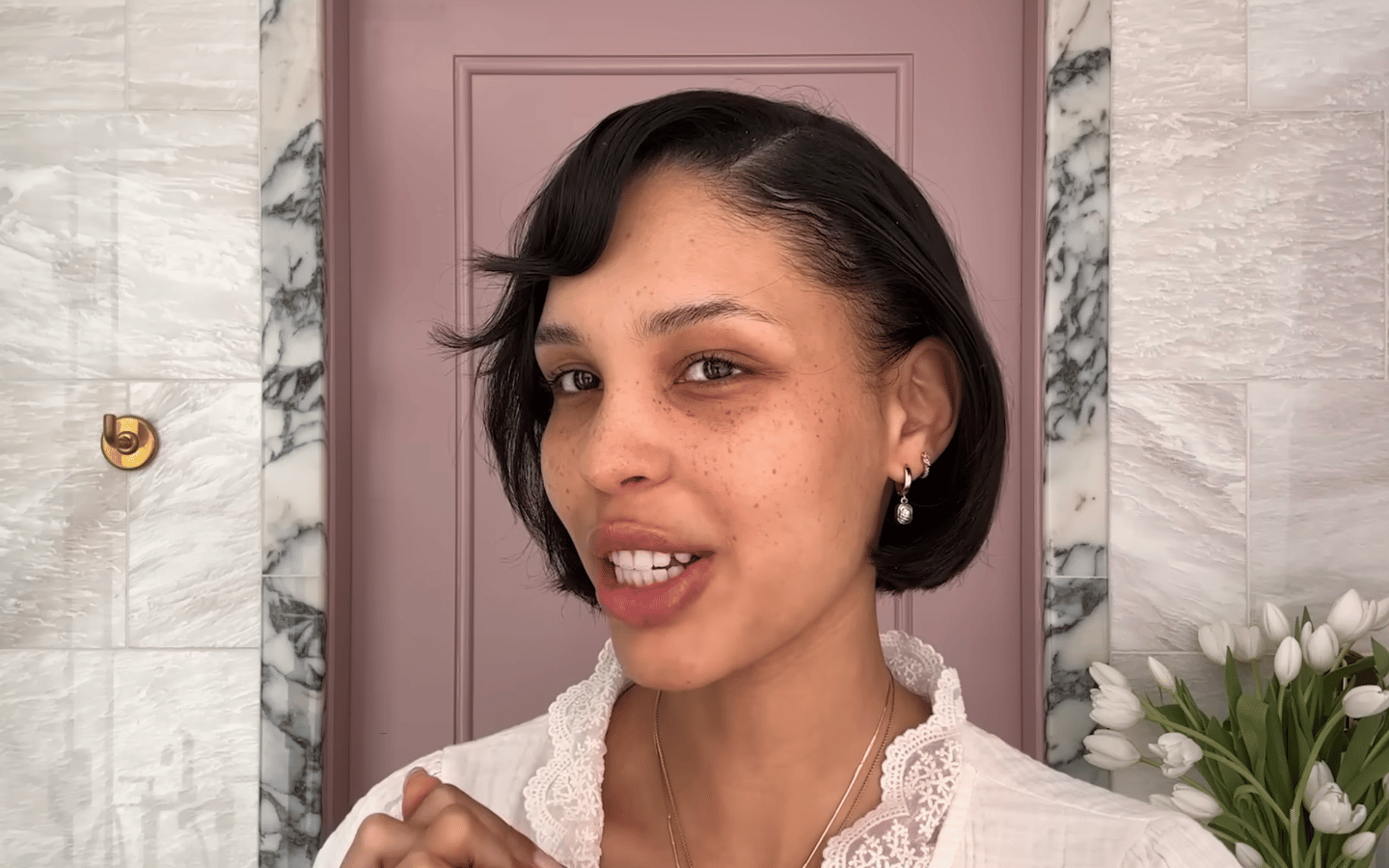
Nara Smith broke the internet again.
This time it wasn’t for taking seven hours to make homemade sprinkles for a mason jar cake while wearing a couture dress and speaking in her signature breathy-baby doll voice. It was because she was sitting down (in jeans, no less!) to tell Alex Cooper on the Call Her Daddy podcast that she is not a trad wife.
The internet did what it does, devolving into a mosaic of arguments, think pieces, and memes over whether or not Nara is a trad wife. Meanwhile, it struggled to define the elusive internet phrase itself, which is still in its infancy.
When I was raising my three daughters on homemade baby cereal, essential oils and second-hand cloth diapers, the term “trad wife” was not in our vernacular. There were “fundie mommy bloggers,” and I was one of them.
The most successful among us sold fifty-dollar ad banners that flashed along the side of our website. We wrote blogs about submitting to our husbands. We taught others how to make cake pops, all while secretly gagging over the wet, soggy cake.
And yet, I look at the content cycling through the internet at rapid speed and I see a seed of myself and the darkness I once harbored like an infectious, paternalistic ghost.
A trad wife is short for a “traditional wife.” These are women who are tired of modern womanhood and think that feminism stole instead of saved. A trad wife longs for the good old days they never actually lived through, but still craves because of its tantalizing folklore.
I was a trad wife because I didn’t want to be like my mother or grandmother. I believed I had to submit to the umbrella of authority over my husband.
I wasn’t raised an ultra-conservative Christian, but I became a woman under the influence of fundamentalism. I learned “biblical womanhood” through sermons by men like Mark Driscoll and James MacDonald. I believed as a wife and mother, my Christ-ordained role was to submit to my husband’s authority and serve my family selflessly, righteously, piously.
All these words make me shudder now, but they were my reality. It wasn’t that long ago that I clung to female bloggers who sold me “homemaking bundles” and led online morning bible studies for mothers.
This led to years trapped in a cycle of depression, anxiety, and the pursuit of godly perfectionism. I believed that my pain was for God’s glory, when I was self-harming myself at the altar of man-made ideology.
With the rise in Christian Nationalism, the “traditional family values” propaganda has only increased. Some women and many men want to rewind time and return to an idyllic world that honors “traditional” family values. They long for a life where women are gentle homemakers and generous mothers to their growing brood.
The propaganda is no longer funneled through blogs, but a new, shinier set of platforms such as Instagram, TikTok and YouTube. Trad wife content glorifies this lifestyle, with a cycle of cozy, soothing images of women dressed in prairie dresses doing quaint rural chores. They pick up eggs from their chickens that peck in the yard, make bread from stone-milled flour purchased at a local market, and craft handmade soap using freshly cut lavender from the garden.
With over 12 million TikTok followers, a career as a model, and a cookbook, Nara Smith, the 24-year-old mother of four, believes it is ridiculous to think that she’s a trad wife. I agree.
Smith has agency, money and power. She is a businesswoman first.
She has, however, used the trad wife lifestyle to launch her lucrative career. She has sold many young women a dream. (She’s done it all while dressed up in Schiaparelli, but still.) She has fed the algorithm gods a domesticated illusion that co-signed a patriarchal lifestyle.
Most of us know the content trad wives are producing isn’t authentic. But the longing that it unlocks is.
A barrage of images might just lead a young woman to loosen her grip on her own agency, all without realizing it’s happening. Soon, she’s formed her entire identity around the man she calls husband and a half dozen kids. She’s made life-altering choices.
And the thing about life-altering choices is they’re not that easy to undo.
- About the Author
- Latest Posts

Brianna Bell is a Canadian journalist whose work has been featured in The New York Times, The Guardian, The Globe & Mail, and more. Brianna’s memoir, God Lover, will be published by Dundurn Press in June 2027.