
My father has many stories to tell from his youth. They are histories, comedies, tragedies—you name it.
The one he tells most, though, is a true act of memoir as he picks it up and turns it over time and again in hopes of making a little more sense of it with each ornery oration. It is an “end-of-youth” ode. It is his story to tell and boy can he tell it.
For those of us privileged enough to hear this story time after time, it has become a bit of a call-and-response opportunity.
Our father says: “You don’t listen to no damn body, do ya?
We retort: Not unless I have to,
All together now: and I damn sure don’t have to!
Our father says: We are taking you downtown.
We yell: Ride, Clyde, ride.
And finally, just at the point in this tale when you think the young man in the story might be all out of options…
Our father yells: “Call Bud Duncan!”
And we, with glee, all yell back with him: M-E-4-4413!
ME4-4413 is the phone number for my father’s friend and legal counsel when he was a wild animal of a young man. Phonebooks stopped using the two-letter, four-number format in the sixties, likely before any of his four children were even born.
As there was no digitization at the time, there are probably only a handful of folks left on the planet who could recite that particular phone number. The Fisher children are a few of them.
What Belongs to Us?
Some might say this is “needless” information, but I would disagree. Like my father, I still have many childhood phone numbers stored neatly in a neighborhood of my brain that refuses to believe they are now somehow useless to me.
I probably won’t need most of them; I understand that. Although occasionally, one comes in handy, like when I drive through my hometown and order a breakfast burrito from the same place my friends and I used to grab them on the way to first period in high school, over 25 years ago. There is a certain comfort each time I dial that number, as if I am still tethered, as if some rare things remain as they always were.
I am glad my mind held onto these burrito-based seven digits even when I lived hours and oceans away. Yes, I could always look up the number when I am in town, and at some point I may need to, but there is something about plucking people and places from our memory that confirms they are “ours.”
Sometimes I worry no one and nothing belongs to any of us anymore—not in a claim-staking way, but in a communal one. Democratization and access to information do a great deal of good in society, of course. But there is a difference between being able to locate something out in the ether and choosing miraculously to make room and carry that something around within our own finite bodies.
A beloved colleague of mine memorizes quotes and poetry, which imbues him with an iconoclastic air. When he comes to speak to my human diversity classes about what it is like to be him, he opens his mouth, and we find he contains multitudes:
John Odonahue: I would love to live like a river flows, carried by the surprise of its own unfolding.
Mary Oliver: You do not have to be good. You do not have to walk on your knees for a hundred miles through the desert repenting…
Maya Angelou: Do the best you can until you know better. When you know better, do better.
Could he note each of these, write them down, and read them to us rather than reciting? He could.
And for those of us who don’t have a brain or a life that easily accommodates memorizing poetry and prose, I am glad there are options. But it might also be that many of us are not lacking in capacity or opportunity, but have simply forgotten (or never known) the beauty of truly taking something in.
As a teacher, it sometimes feels like I am fighting a losing battle when I argue that there are things we should know by heart. Even that phrasing suggests something meaningful about where memory truly lives.
Some educational “experts” spit out the word memorization like it is a swear word. Maybe it is.
Perhaps I long for us to be able to swear by more and to stop conflating access to an idea with knowing, much less having one.
Not Nostalgia
I know it sounds like I am pining for yesteryear, but I don’t think I am. I have no interest in uptight instructors with rulers rapping the hands of pupils who have not yet succeeded in reciting the entire periodic table or the book of Job. If anything, I think what I am feeling is the opportunity for a new era of remembering that is emerging at the very least within me, if not more broadly throughout education and existence.
It is generally understood that everything and everyone exists in a cycle of construction, deconstruction, and reconstruction. We know so many things today that we did not know when rote memorization was conflated with intellect or moral superiority. That is not what I yearn for.
But I heard a friend say the other day that she was getting acquainted with her backyard and I watched as her eyes scanned the foliage around her with no plant app in sight. That seemed so foreign that it felt almost like she had invented something new—this drinking something in rather than looking something up.
I’ve also been rereading Fahrenheit 451 and it has me wondering what books I could offer the world if all the access we have become certain will always be at our fingertips suddenly (or maybe slowly, quietly) went away? What does it mean to have every text, critique, or defense one click away from us at any given moment? What does it mean to increasingly know nothing by heart?
Re-membering
I think the time has come, at least for me, to commit to memory again. Whether trees or poems or people, I long for more than brief scans and momentary visitations. I long to know and to be known even at a time when fewer and fewer people seem to consider it strictly necessary to learn anything at all.
I will probably never need to dial the number 939-5490 again, but when I was a girl this string of numerals represented love and safety and whimsy and restoration. Retrieving them from memory and pushing the buttons with my own fingers was the process required of me to get ahold of my best friend and her family.
It’s nice to have the number there as the doorway to so many moments I never want to lose, each digit a breadcrumb that takes me back to all the parties and tears and swimming trips and confessions and epiphanies of my youth. I hope I never forget that number.
And I hope we all keep telling stories and asking others to tell them with and for us when we need them to, because we engraved them not just on our own hearts but on theirs too. I hope we let go of memories and memorization tactics that do not aid our efforts to be more present, helpful, and human.
But mostly, I hope that even as we move forward, reconsider, relearn, and rebuild ourselves, our lives, and our institutions, that we don’t forget to hold on too.
- About the Author
- Latest Posts
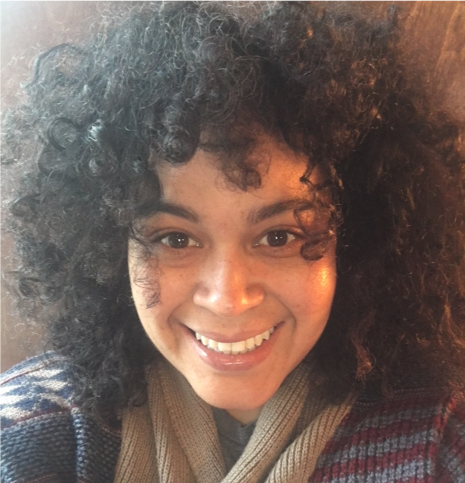
Kerri Fisher is Clinical Associate Professor and the Associate Dean for Community and Action at Baylor University’s Diana R. Garland School of Social Work.