
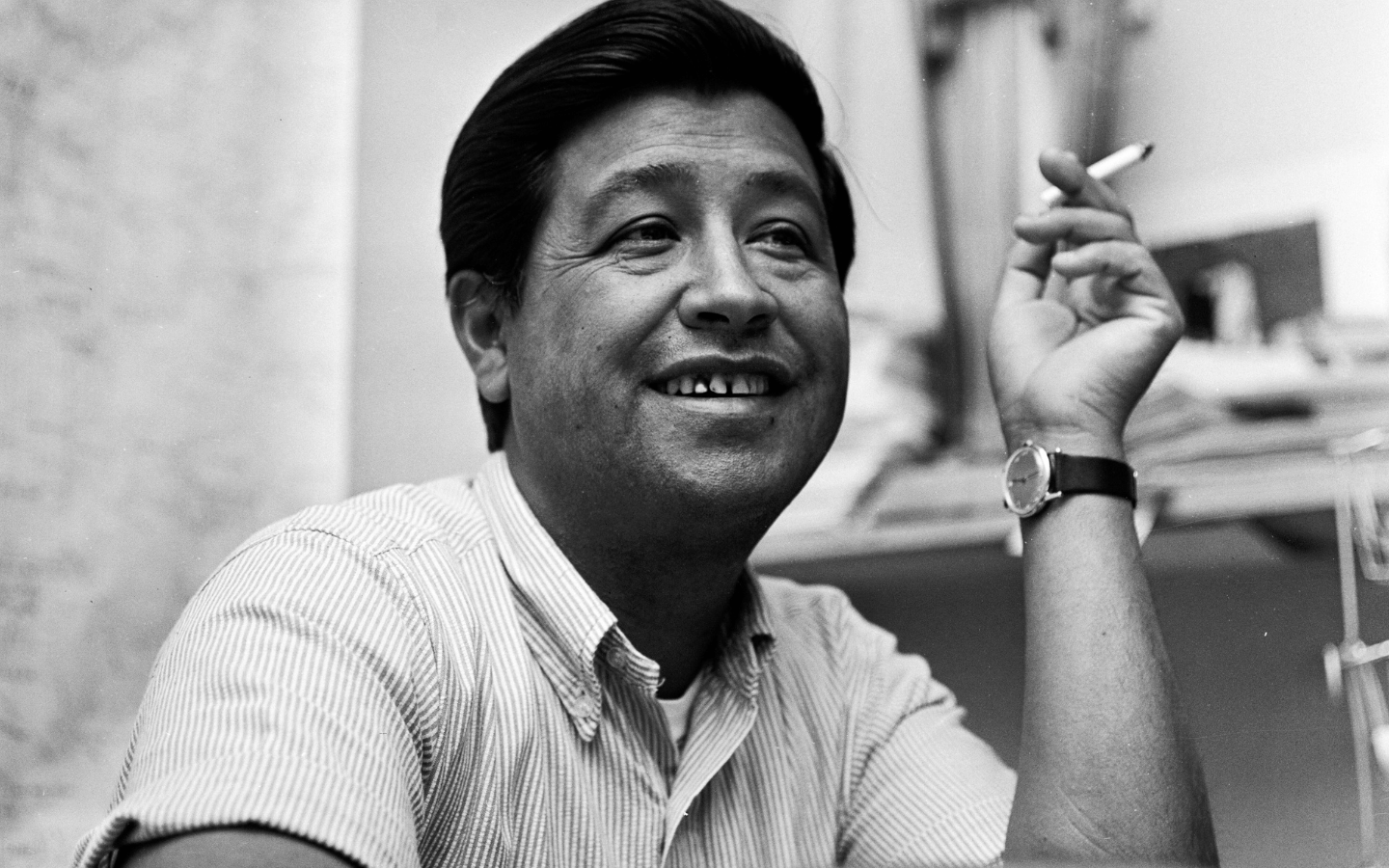
Editor’s Note: A recent New York Times investigation discovered evidence that celebrated labor activist César Chávez groomed and sexually abused young girls who worked within the movement.
I read recent allegations concerning César Chávez, one of my liberationist heroes, with a grief that unsettles my soul and a moral nausea that cannot be easily settled. There is a particular kind of disillusionment and disgust reserved for moments like this—when a figure once held as a symbol of struggle and dignity para nuestra gente becomes entangled in acts that strike at the very core of human vulnerability and exploitation.
The hope I once placed in my hero has been shattered. My hopelessness has risen to new levels as I consider the man who preached nonviolence being unmasked as a violent sexual predator. Lord, have mercy.
Frailties, Failings, and Abuse
Let me be clear. The human condition is marked by imperfection.
None of us, including you and me, is perfect. We are all, in various ways, complicit in systems and actions that betray our highest ethical ideals.
But there is a chasm between the ordinary frailties and failures of character and acts that constitute profound violations of justice. To name that distinction is the bare minimum required of an ethical person.
When allegations involve sexual violence, particularly against minors, we are no longer in the realm of regrettable shortcomings or moral ambiguity. We are confronted with acts that shatter female bodies, silence their voices, and perpetuate structures that were constructed for their domination. Such harm cannot be excused, explained away, or subordinated to the legacy of one’s public achievements, regardless of how noteworthy they might have been.
The Movement Matters More
The temptation, especially within minoritized communities invested in symbols of resistance, is to protect the icon—to shield the narrative that has sustained hope for so many. But ethics demands something far more unsettling: that we refuse to idolize any individual to the point where justice becomes negotiable.
The struggle for liberation is not served by deifying our leaders. It is served by an uncompromising commitment to justice for the most vulnerable— those who are the least among us.
Enough has been revealed to substantiate that these accusations are true. If so, there can then be no pedestal, no history of advocacy, no collective memory of sacrifice that stands as a barrier to accountability.
Justice must not be selective. It must not cower in the face of reputation. It must proceed with clarity, rigor and an unwavering commitment to those who have been harmed and violated.
What remains, then, is not only the continuous investigation of these crimes but also a reckoning with our own complicity in elevating figures beyond reproach. The work of real justice demands that we interrogate our own heroes.
Movements are never about the elevation of a single name, but about the collective struggle of a people whose self-worth has long been denied. Any leader who forgets this already betrays the very cause they claim to serve.
Leaders do not create movements. They are carried by them—often on the backs of those who risk their livelihoods, and sometimes their very lives for a justice they may never witness.
As my former colleague Vincent Harding, a speechwriter for Martin Luther King, Jr., once told me: “You cannot start a movement; you must be ready for when the movement is started by the people.”
Questioning Our Heroes
So yes, renaming Cesar Chavez Day as “Farmworkers Day” gestures toward a more honest reckoning—one that shifts attention from the myth of the individual to the reality of the oppressed community. Such a change centers moral authority on the disenfranchised rather than on charismatic leaders.
But one must ask why it took so long. Why do we so easily sanctify individuals while rendering invisible the many who make liberation possible? Why do we accept and privilege ego-driven and male-centered power structures?
To center a movement on a single personality is to flirt with idolatry. It is the logic employed by wannabe authoritarians, not liberationists.
Those truly committed to justice are not preoccupied with having their names etched into buildings or street signs, but with dismantling the conditions that keep others from ever being named at all. The goal is not remembrance of the leader, but the restoration of those relocated to invisibility. We strive for collective agency, not individual charisma.
Contrary to the fearmongering rhetoric of those in power, such as from the current occupant of the Oval Office, no ethnic group monopolizes sexual violence. To suggest otherwise is to recycle the same racialized myths that once justified the lynching of Black and Brown bodies under the pretense of protecting white innocence.
Sexual violence is not the pathology of a race, but the fruit of a patriarchal order that cuts across every race, class and political ideology. Sexual violence is structural, intersectional, and sustained by power. It exists wherever male privilege is normalized and legitimized, where power shields the perpetrator, and where silence is mistaken for peace.
From the margins, we see clearly what the center refuses to name—this is a crisis embedded in structures, not isolated in some racialized “others.”
Because this violence is systemic, accountability must be uncompromising. Where credible evidence exists, perpetrators—regardless of their identity, ideology or status—must be confronted and judged. To excuse, minimize, or explain away their actions is complicity.
No Stone Unturned
This ethical demand does not spare our heroes. Figures like César Chávez, revered for their contributions to liberation, must still be interrogated where harm has been done.
The same must be said of founding fathers like Thomas Jefferson, whose legacy cannot be disentangled from the sexual exploitation of his enslaved teenager. It must also be said of celebrated ethicists such as John Howard Yoder, whose nonviolent ethical commitment coexisted with sexual violence toward female colleagues.
Liberation cannot be built on selective memory.
Neither wealth, influence, nor proximity to power should offer refuge. The machinery that enabled Jeffrey Epstein’s crimes was not his alone; it was upheld by networks of privilege: male and economic privilege. Those who participated and enabled must be held to account, whether they be billionaires, presidents, public officials or celebrities.
If liberation is to mean anything, then it must begin with those most violated and the voices most silenced. The ethical mandate is clear: zero tolerance.
¡Sí se puede!
- About the Author
- Latest Posts
Professor of Social Ethics and Latinx Studies at Iliff School of Theology in Denver, Colorado, and a contributing correspondent at Good Faith Media.