

White-body supremacy is a staged performance of superiority, requiring playwrights, producers, directors, stage managers, choreographers, designers of sets, lighting, sound, costumes, props, makeup artists and performers. There is nothing natural about it.
It is a profound psychological lie requiring massive social, cultural and institutional support. Consequently, the work of The Raceless Gospel Initiative, in part, is to go behind the “veil” or “curtain of guilt,” as clarified by James Baldwin, used to avoid the humanity, history and moral decay of persons racialized as white in the United States.
The intention of the white invention is to deceive and yet make us believe more or less about ourselves as somebodies and nobodies, white and non-white, white and people of color, white and other. These false binaries ensure dueling identities that fight for meaning, visibility and subsequent social positioning.
There is also a solidarity in distrust as persons racialized as white are socialized to see their bodies as in need of protection from bodies racialized as black and brown, creating a “social pact of suspicion.” This suspicion requires lethal force, though white supremacist groups are labeled the “most persistent and lethal threat” by federal agencies, including the Department of Homeland Security.
For our protection, we act out the words handed to us; these hand-me-down phrases turned personas. Paul Lawrence Dunbar outlined the requirements for the role of persons racialized as black in a poem titled “We Wear the Mask”: “We wear the mask that grins and lies/ It hides our cheeks and shades our eyes,—/ This debt we pay to human guile;/ With torn and bleeding hearts we smile,/ And mouth with myriad subtleties.”
Likewise, white-body supremacy, used to justify a false front, has hidden systemic inequality, masking laws, economic policies, policing and social practices to maintain a color-coded hierarchy. The charade preserves comfort with covert or “polite white supremacy” and “polite racism” used to aid in its appearance as normal, subtle and civil. Known as subversive decorum, white-body supremacy is hidden behind politeness and professionalism, conserving structural power through exclusion and tokenism.
A charade is the lens through which I view whiteness and white-body supremacy. This designation is not to deny “white fear,” that is, the anxiety over losing dominant status, economic power or cultural hegemony, or the predictable violence that insulates it. But it is to name whiteness as a presentation, which prioritizes one’s image of goodness (i.e., virtue-signaling) over actual structural change.
This observation is not new but understood within the African American community, a body of knowledge passed down to navigate and survive systems of white-body supremacy (e.g., “The Talk” is an intergenerational conversation on how to interact with police officers to minimize the risk of violence.). “I can’t believe what you say because I see what you do,” James Baldwin explained.
Charades is a team-based game in which players act out a word or phrase using only gestures or body language. Their teammate must guess what it is within the time limit. Charade also means farce, sham, a foolish masquerade, a preposterous show.
“All we wanted was a chance to talk/ ‘Stead we only got outlined in chalk/ Feet have bled a million miles we walked/ Revealing at the end of the day, the charade,” D’ Angelo and the Vanguard sang in a song titled “The Charade.”
With the killings of Renee Nicole Good and Alex Pretti, the legitimacy of Immigration and Customs Enforcement (ICE) is being questioned. Both unarmed, as Pretti’s gun was removed before he was shot and killed, a familiar cry of abolition is being heard again.
But before both of their untimely murders, there was Keith Porter, Jr., Heber Sanchaz Dominguez, Victor Manuel Diaz, Parady La, Luis Beltran Yanez- Cruz, Luis Gustavo Nunez Caceres and Geraldo Lunas Campos. Extrajudicial killings didn’t begin with them.
Before Good was shot in the face, there was Sonya Massey. Before Pretti was accused of “brandishing” a weapon or waving a gun, there was 12-year-old Tamir Rice.
“If a society permits one portion of its citizenry to be menaced or destroyed, then, very soon, no one in that society is safe,” James Baldwin made plain in Nothing Personal in 1964. “The forces thus released in the people can never be held in check, but run their devouring course, destroying the very foundations which it was imagined they would save. But we are unbelievably ignorant concerning what goes on in our country–to say nothing of what goes on in the rest of the world–and appear to have become too timid to question what we are told.”
Protective fictions offer false narratives that cushion individuals and societies from uncomfortable truths to safeguard specific, idealized beliefs. Erin Dooley, co-founder and director of BLK South, wrote on Facebook, “We’ve reached the point where white folks are discovering that yt [white] supremacy kills white folks too… It quite literally destroys all of creation.”
On the same platform, Lashaunda Thomas shared a similar sentiment: “The reality of America now is that if you had cared when this was happening to Black people… it wouldn’t be happening to everyone else now!”
European Americans are calling for the abolishment of ICE after the senseless killings of Renee Nicole Good and Alex Pretti. In 2020, African Americans were demanding the defunding of police after the gruesome murder of George Perry Floyd Jr.
All these murders occurred in the same city—Minneapolis. Good was murdered within blocks of Floyd. Pretti was executed a couple of miles away, a ten-minute car ride.
The saying is sure: “Whatever you allow your government to do to others, it will eventually do to you.” Normalizing this power dynamic and overreach through apathy, inaction or complicity, so many people opted for the charade of white-body supremacy.
- About the Author
- Latest Posts
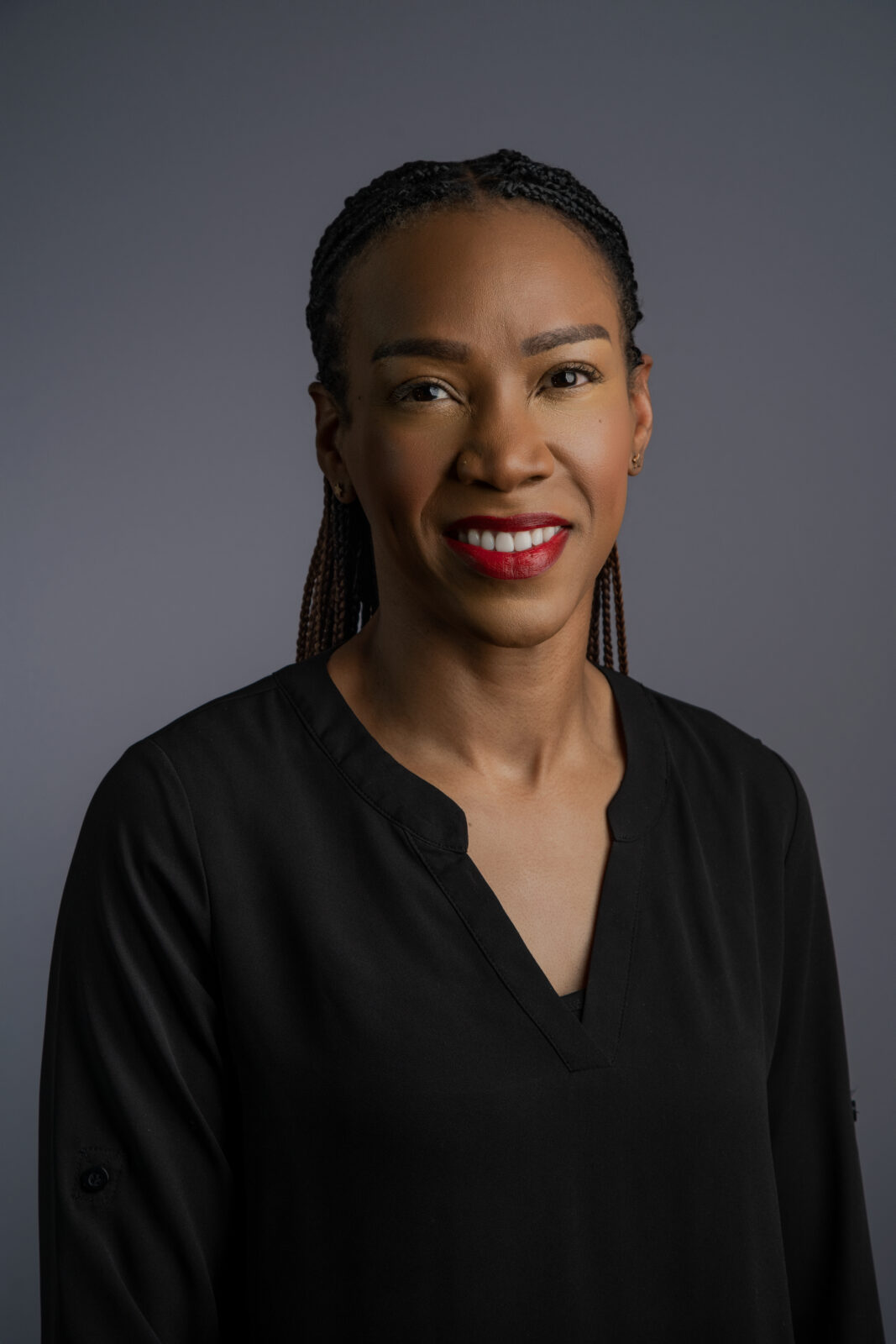
Director of The Raceless Gospel Initiative, an associate editor, host of the Good Faith Media podcast, “The Raceless Gospel” and author of Take Me to the Water: The Raceless Gospel as Baptismal Pedagogy for a Desegregated Church.