
Colin Powell, former Chairman of the Joint Chiefs of Staff, was widely known for embracing a philosophy that war should only be undertaken as an absolute last resort. This prudent perspective, often referred to as the Powell Doctrine, insists that political leaders must exhaust every diplomatic, political and economic avenue for resolving conflict before sending soldiers into battle and placing human lives at risk.
War, in Powell’s view, was never to be entered into lightly or impulsively. It was to be the final measure taken only when all other paths to peace had been thoroughly pursued and demonstrably failed.
Sadly, there is little evidence that such a cautious and morally serious philosophy guided the recent conflict involving the United States, Israel and Iran. The drumbeats of war appear to have sounded long before the full range of diplomatic possibilities had been explored.
Powell’s philosophy of war rests upon several foundational principles that reflect both strategic wisdom and moral seriousness.
The Powell Doctrine
First, it calls for restraint before launching a war against another nation. War should never be treated as a casual instrument of policy or a convenient tool for asserting power. The decision to wage war must arise only after sober deliberation, careful reflection and a genuine recognition that no other viable options remain.
Second, the Powell Doctrine insists upon the employment of the greatest wisdom in conflict resolution. Diplomacy, negotiation, economic pressure, international cooperation and patient dialogue must be pursued with determination and creativity before violence is considered. Mature statesmanship recognizes that peace, though sometimes difficult to achieve, is always preferable to the devastation that accompanies armed conflict.
Third, Powell’s philosophy prizes the sacredness of human life. Military leaders understand better than most the terrible price that war extracts.
Soldiers, young men and women who have pledged their lives in service to their country, are asked to risk everything when a nation goes to war. Their sacrifice must never be demanded lightly. The decision to place them in harm’s way carries immense moral weight.
Yet recent events suggest that this wisdom may not have guided the course of decision-making.
Prior to the strikes against Iranian nuclear research facilities, the Trump administration had repeatedly claimed that Iran’s nuclear capabilities had been effectively neutralized. Officials asserted that Iran’s ability to produce a nuclear weapon had been severely crippled, if not entirely eliminated.
If those claims were accurate, then the question naturally arises: What imminent threat justified the sudden escalation toward military action?
If a nation’s capacity to produce such weapons had already been “annihilated,” as some officials suggested, then the rationale for launching military strikes becomes far less clear. The logic appears inconsistent, and the public is left to wonder whether other motivations were at work beneath the surface of official explanations.
War is Hell
War is a horrific enterprise. It unleashes forces of destruction that cannot easily be contained once they are set in motion. Violence spreads rapidly across borders and societies, bringing misery, fear and death in its wake.
Military personnel suffer grievous wounds, both physical and psychological. Many lose their lives. Families are left to grieve loved ones who will never return home.
Moreover, wars rarely confine their devastation to the battlefield. Civilians, men, women, and children often bear a terrible share of the suffering. Cities are damaged, infrastructure collapses and entire communities are thrown into chaos.
In such environments, violence breeds more violence. Fear fuels suspicion, hatred deepens and irrational behavior becomes increasingly common.
History teaches us that once the drums of war begin to beat, reason often becomes difficult to hear.
Spiritual Considerations
As Christians, we must also consider the moral and spiritual dimensions of conflict. Our Lord Jesus Christ, during his earthly ministry, proclaimed a radical and transformative vision of human relationships. In the Sermon on the Mount, He declared:
“Blessed are the peacemakers, for they shall be called the children of God” (Matthew 5:9).
These words reveal something profound about the heart of God. The Lord values peace. God honors those who work to reconcile enemies and heal divisions.
The Kingdom of God is not advanced through violence, domination or the destruction of others. Rather, it is manifested through reconciliation, mercy, and the courageous pursuit of peace.
Christ understood the tragic human tendency toward violence. He witnessed the brutality of Roman imperial power and the simmering political tensions of his own day. Yet instead of encouraging armed revolt or militant nationalism, He called H=his followers to a higher path, a path marked by humility, mercy, forgiveness and peace.
This calling remains just as urgent today.
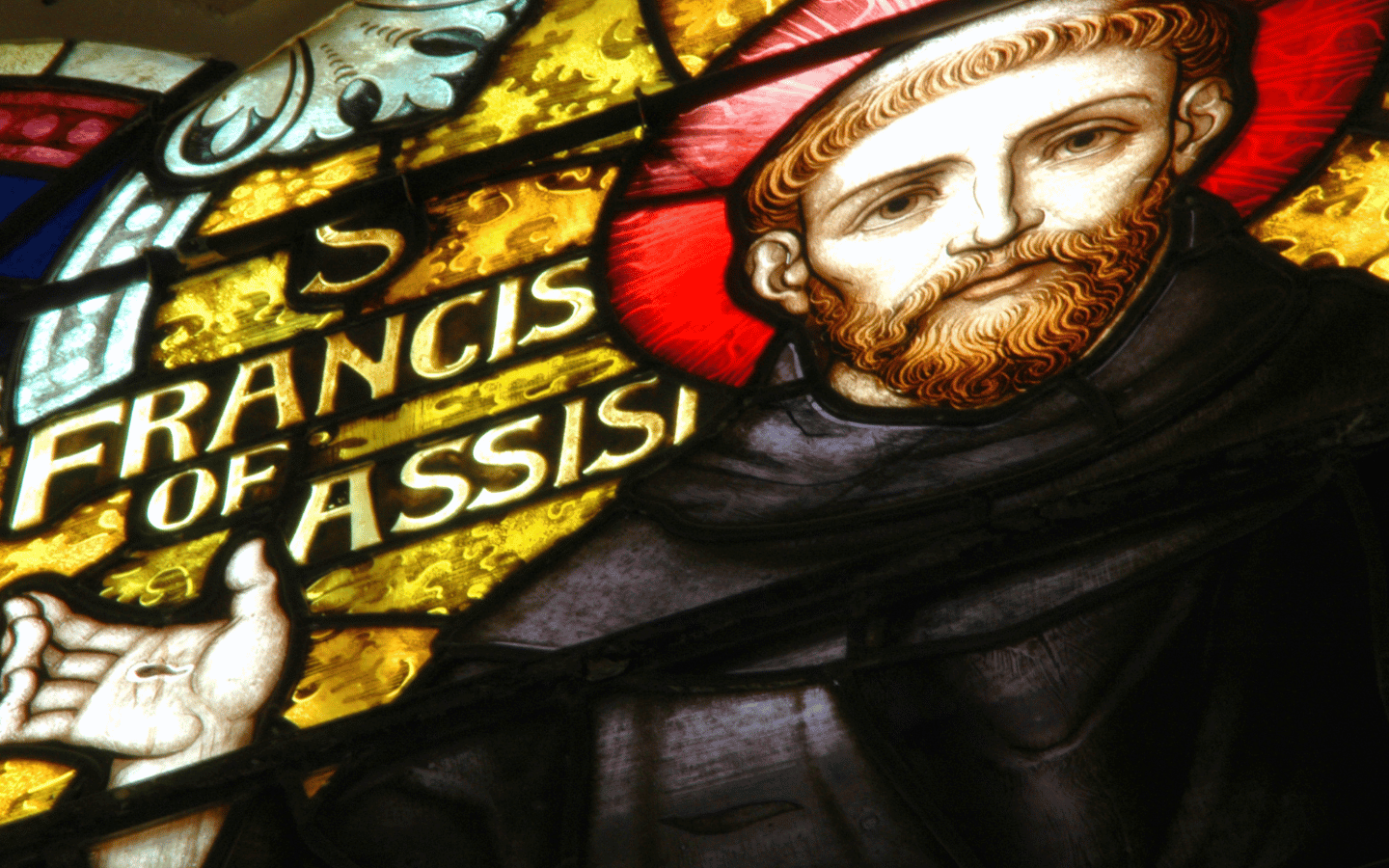
One of the most compelling historical examples of a life transformed by the call to peace is found in the story of St. Francis of Assisi. Francis grew up during the Middle Ages, a time when warfare between rival cities and kingdoms was frequent and often glorified.
Young men were taught to pursue military honor, glory and fame. War was romanticized as a proving ground for courage and nobility.
Francis himself initially embraced this cultural ideal. As a young man, he eagerly joined military campaigns, hoping to win distinction and prestige on the battlefield. Yet his experiences with war profoundly changed him.
After returning to Assisi, Francis underwent a spiritual awakening that reshaped his understanding of life, power and human relationships. The horrors of war opened his eyes to a deeper truth: violence ultimately contradicts the purposes of the God of creation.
In his transformed vision, Francis embraced a life devoted to humility, compassion, and peace. From that spiritual awakening emerged one of the most beloved prayers in Christian history:
Lord, make me an instrument of your peace.
Where there is hatred, let me sow love;
where there is injury, pardon;
where there is doubt, faith;
where there is despair, hope;
where there is darkness, light;
and where there is sadness, joy.
These words capture the heart of the Christian calling. Rather than contributing to cycles of violence and hostility, believers are called to become instruments of healing and reconciliation.
Our world today remains deeply troubled. Political tensions run high, nations posture for dominance, and the temptation to resolve disputes through force continues to loom large. The drums of war still echo across the global landscape.
Yet Christians are called to a different rhythm.
We are called to be agents of peace in a fractured world. We are called to challenge the easy acceptance of violence and to advocate for wisdom, restraint and diplomacy. We are called to remember the sacred value of every human life.
The call of Christ does not mean ignoring injustice or pretending that evil does not exist. It means responding to the brokenness of the world with courage shaped by love rather than hatred.
In an age when the drums of war can sound so loudly, the voices of peacemakers are needed more than ever.
Let us therefore strive to be those voices.
Let us become champions of peace.
- About the Author
- Latest Posts

Donald E. Williams is a United Methodist pastor and Duke University graduate. He completed his doctorate at Duke University in 2022 and is the author of An Investigation Into the Relationship Between Aristotelian Eudaimonia and Christian Discipleship: A Thomistic Perspective, Wipf and Stock Publishers. His website is https://www.virtuespromise.com/.
Newsletter: https://donaldewilliams.substack.com/publish/posts