
The conservative justices of the U.S. Supreme Court took out their judicial knives last week and carved up the Voting Rights Act of 1965.
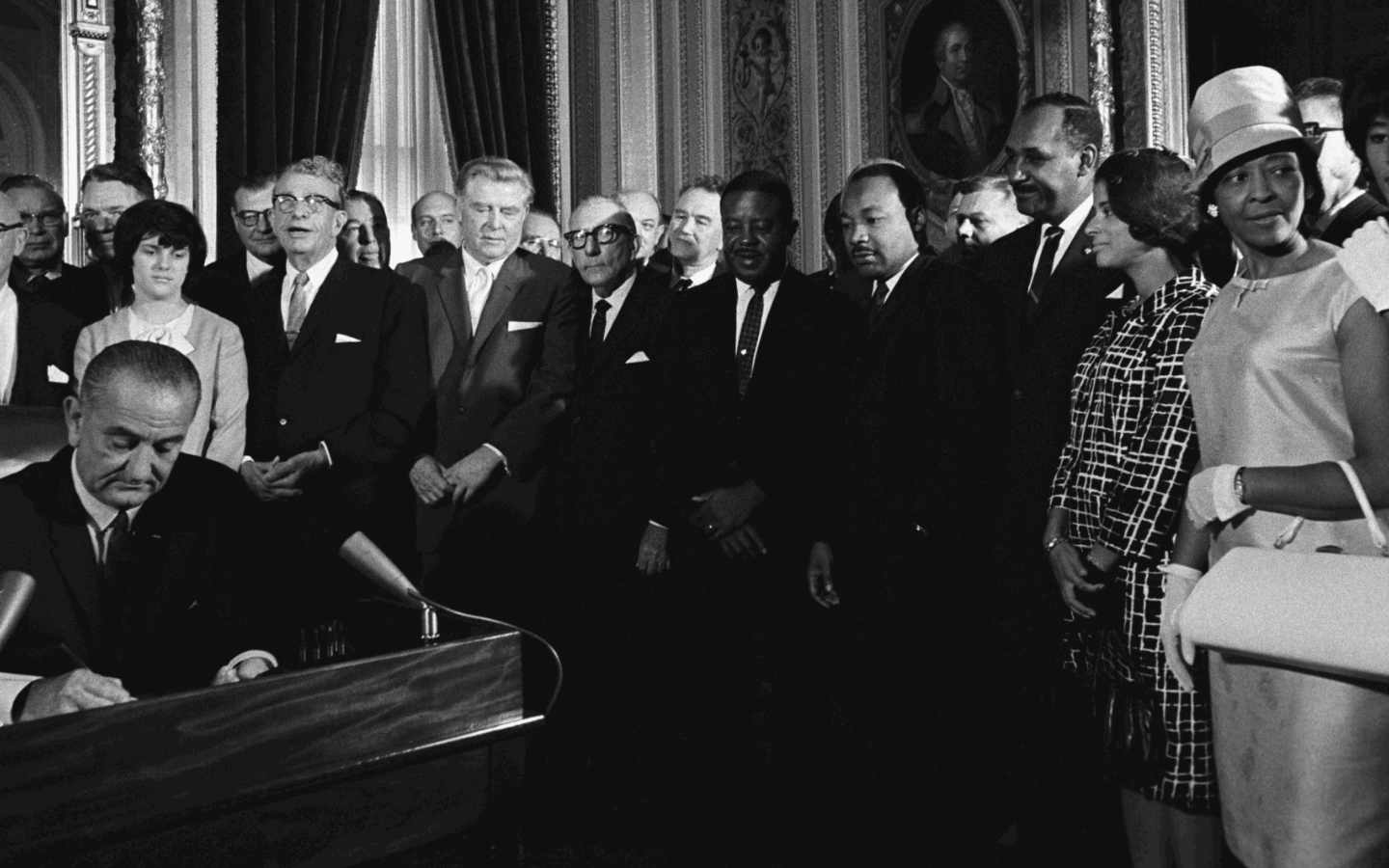
The Voting Rights Act was passed by the U.S. Congress and signed into law by President Lyndon B. Johnson. At the time, the country considered it landmark legislation that prohibited racial discrimination in voting. After years of voting suppression in many Southern states after Reconstruction, African Americans finally had the opportunity to cast their votes without fear of White suppression.
Johnson claimed, “The vote is the most powerful instrument ever devised by man for breaking down injustice and destroying the terrible walls which imprison men because they are different from other men.” Rev. Dr. Martin Luther King Jr. proclaimed, “Voting is the foundation stone of political action.” However, with this most recent decision by the court’s conservative majority, that foundation stone will begin to crumble for many Americans, particularly in underrepresented communities.
Conservative justices carved out Section 2 of the Voting Rights Act in their majority opinion in Louisiana v. Callais. According to Politico: “For decades, Section 2—a provision that broadly outlawed discrimination in voting on the basis of race—has been interpreted to allow, and sometimes demand, the use of race-conscious data in redistricting, to protect the voting power of minorities.”
In addition to sending voting rights to Jim Crow, the Supreme Court issued another ruling this week that would fast-track the finalization of its decision. This means that Louisiana and other states can move forward with redrawing voting districts before this year’s midterm elections.
Louisiana has already halted mail-in voting to redraw congressional maps. Over 42,00 voters had already cast their ballots.
Political pundits were predicting Republicans would not fare well in the midterms because of the unpopularity of President Donald Trump and his policies. Now, with the court’s decision, damages might be minimized to help Republicans maintain control by dividing underrepresented communities through racial and political gerrymandering.
U.S. Senator and Baptist pastor from Georgia, Rev. Dr. Raphael Warnock, told reporters, “What happened this week is nothing less than a massive and devastating blow—not only to our democracy, but particularly to people of color in the South.” Responding to a question about the court’s decision to eliminate Section 5 in 2013, Warnock said: “They’re 21st-century Jim Crow tactics in new clothes: moving voter polls, closing polls in Black and brown communities … purging people—people literally showing up and not knowing that their names have been purged from the rolls. And the data shows that this disproportionately impacts Black and brown citizens.”
Growing up in Oklahoma, a state that can be considered South-adjacent, I often heard the Civil War was more about states’ rights than slavery. Southern heritage activists often claimed the South was really defending itself from the North’s aggression.
While their arguments fail miserably against factual evidence, this week’s ruling by the Supreme Court might just reinforce their argument: It was about states’ rights all along—the right for states to do whatever the hell they want as long as the majority ruling class enforces their will on others.
In states like Oklahoma and Louisiana, where Republicans hold supermajorities, lawmakers will be able to control laws with little input from voters. According to MultiState, Democrats are projected to have supermajorities in both chambers in nine states and in one chamber in two states in 2026. Republicans will have supermajorities in both chambers in 19 states and in one chamber in four states.
While on the campaign trail in 2024, Donald Trump told a group of Christians, “They won’t have to vote anymore” if he were elected. While many scoffed at the remark back then, the President’s words might be closer to the truth than anyone realized.
With the Supreme Court willing to throw aside legislative precedent and disregard the U.S. Constitution, a scenario is being set up for supermajority states to declare elections legitimate based on their outcomes. If the supermajority expects an outcome detrimental to those in power, they now have the right to redraw congressional lines to benefit their party or to reject the outcome altogether.
Ridiculous, you say? Not so ridiculous, I say. The U.S. Supreme Court just declared that states’ rights supersede everything.
It appears W.E.B. Du Bois was right all along: “A system cannot fail those it was never intended to protect.”
- About the Author
- Latest Posts

CEO of Good Faith Media.