

I always look forward to March, as it is both my daughter’s birthday and Women’s History Month.
This is a wonderful time to celebrate the numerous ways women have shaped the world. Too often, women’s stories are erased or diminished. For this reason, having a dedicated month to honor women is not merely symbolic, but necessary for our movement toward equality, justice and human flourishing.
Women’s History Month grew out of grassroots efforts as local celebrations gained momentum, prompting President Jimmy Carter to declare a National Women’s History Week in 1980. This recognition of women’s contributions was expanded into a month-long celebration in 1987.
March 8 is marked as International Women’s Day. It began as “Woman’s Day” in 1909 in New York City and was first celebrated internationally in Austria in 1911. The day is a global celebration rooted in women’s rights movements and recognized in many countries around the world.
Women’s History Month invites us to focus not only on women’s achievements but also on the diverse experiences, struggles, and forms of resistance that women embody across cultures, identities and contexts. It calls us to challenge the inequalities and systems of oppression that women continue to face in the U.S. and around the globe.
At this moment, women’s rights are being rolled back, and we must speak up for women and girls everywhere. We must end child marriage, female genital mutilation and sex trafficking.
With the dark and inhumane revelations emerging from the Epstein files, we recognize the magnitude of trafficking and assault against young girls and women. The impact of ICE policies on women and girls also reveals racism and sexism played out in public. We must fight for reproductive rights, economic justice and gender equality, and work to eliminate all forms of discrimination against women and girls.
Christianity and Women
We live in a patriarchal society in which women have been silenced and marginalized in literature, science, mathematics and religion. Religious restrictions continue to silence and erase women from history.
This silencing is evident in the Bible, where narratives often center on the lives and actions of men. Women are pushed to the margins, their contributions minimized or erased.
Many biblical women are not even named but are identified by their relationship to men, such as Jephthah’s daughter (Judges 11) or Pharaoh’s daughter (Exodus 2). Others are known only as someone’s wife, such as Lot’s wife (Genesis 19) or Potiphar’s wife (Genesis 39). Still others are reduced to descriptors, such as the Wise Woman of Tekoa (2 Samuel 14) or the Wise Woman of Abel Beth Maacah (2 Samuel 20).
In these narratives, women’s identities and full personhood are ignored or erased.
Women were present throughout Jesus’ ministry, yet many of their stories were left unrecorded. When women do appear in the Gospels, their significance is often minimized or their names omitted, as with the Samaritan woman at the well (John 4) or the widow who gives two coins (Mark 12). Their voices are rarely highlighted in church lectionaries, Bible studies or congregational programs, as churches continue to center men and their stories.
And yet, where would the church be without women?
It was Mary Magdalene, Mary (the mother of James), Salome and Joanna who went to Jesus’ tomb. It was Mary Magdalene who became the first evangelist, running to tell Peter and John that the body of Jesus was gone.
Women consistently fill church pews in greater numbers than men. They are often the primary bearers of faith, passing on biblical stories and religious traditions to children and communities. Women have sustained the life of the church pastorally, spiritually and materially, even when denied leadership, ordination and authority.
Feminist Theologies
While Women’s History Month offers an important opportunity to honor women’s contributions, but women’s work deserves recognition every day. The church depends on it if we are to build a flourishing community.
It is precisely because of the deep and persistent inequalities within the church — and the longing for women’s liberation — that Susan Shaw and I co-wrote Feminist Theologies. In this work, we examine how patriarchal theology has dominated Christian thought and reinforced the second-class status of women.
Feminist theology is not marginal or optional; it is essential for justice, truth and the flourishing of the church. We must uplift women and confront patriarchy, which continues to hold a strong grip on the church and society.
Christianity shapes society in profound ways, influencing how people view immigration, women and freedom. If we maintain only a masculine, patriarchal understanding of God, it will continue to subordinate women and allow sexual, physical and verbal abuse to persist.
Feminist theology is more necessary today than ever. It emphasizes women’s experiences and the intersections of gender with race, sexuality, ability, class, nation and empire. Women’s experiences are never shaped by gender alone but by these overlapping realities.
As we celebrate Women’s History Month, we honor the many contributions women have made in every area of society and recommit ourselves to the ongoing struggle for women’s rights. Christianity has a significant impact on how society views and treats women; therefore, we need strong feminist theology to challenge harmful attitudes and structures.
We must remember women’s stories, honor their lives and continue to highlight how women contribute to every sector of society. As we uplift and respect women, we move toward a more just and flourishing world for all.
- About the Author
- Latest Posts
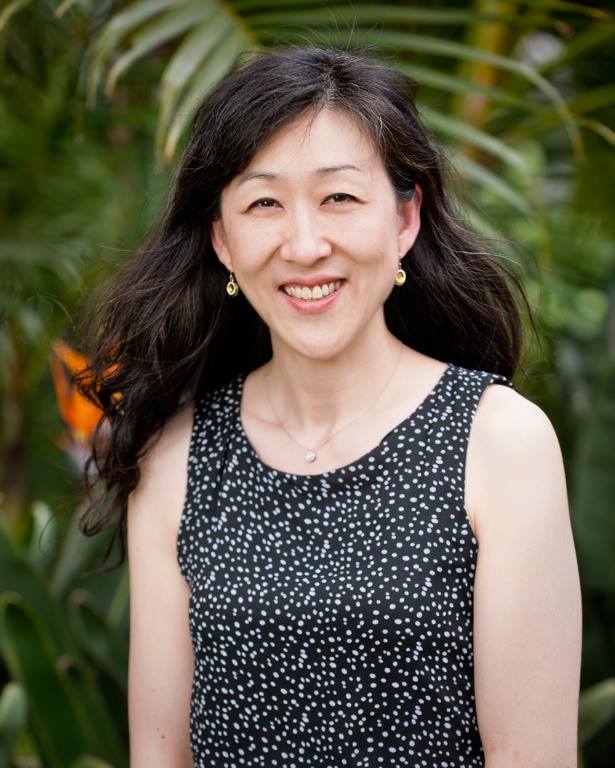
Grace Ji-Sun Kim (Ph.D. University of St. Michael’s College) was born in Korea, educated in Canada and now teaches in the USA as Professor of Theology at Earlham School of Religion, Richmond, Indiana. She is the author or editor of 26 books, most recently, Earthbound: God at the Intersection of Climate and Justice.
Kim is the host of Madang podcast which is sponsored by the Christian Century. She blogs on her substack: Loving Life: Loving Life and has written for Huffington Post, The Nation, Sojourners, Baptist News Global, Faith and Leadership and TIME. Kim has appeared on MSNBC, PBS and C-Span. She has been a guest on BBC Radio, Soul Search Radio, WBEZ Radio, and Keep Hope Alive Radio. She is an ordained PC(USA) minister and enjoys being a guest preacher on most Sundays.