
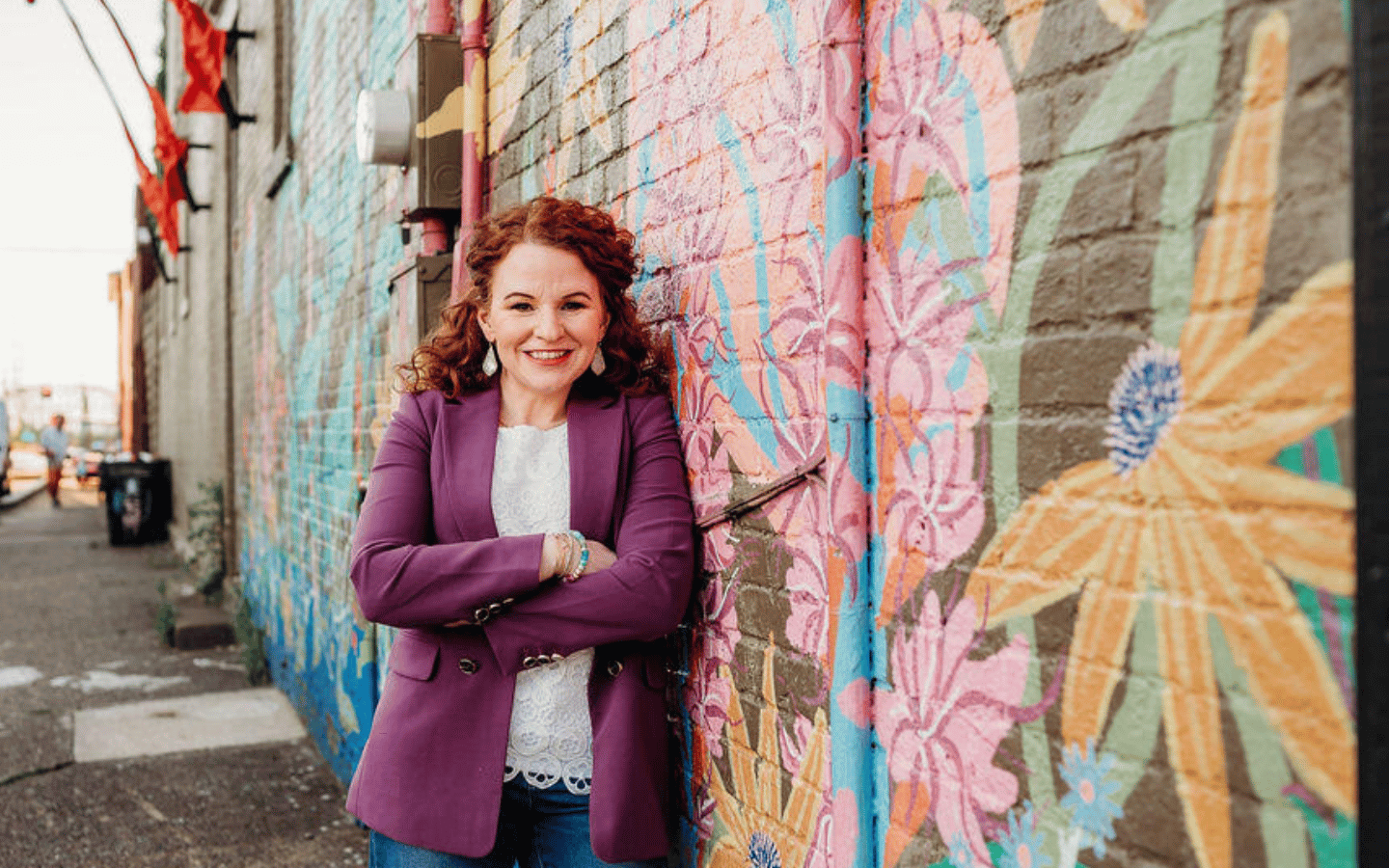
We didn’t get any embryos from our first round of IVF.
I had multiple surgeries just to get to this point in the process. We spent thousands of dollars on treatment and medications. My entire abdomen was bruised from all the nightly shots.
The physical and emotional fatigue, the hope that buoyed us throughout it all, and then, in one phone call from our embryologist, it felt like it all went down the drain. I can’t remember another time I’ve felt so gobsmacked.
In the moments following that phone call, my husband, Evan, and I sat together in stunned silence. There were no words for the devastation.
But as the fog slowly lifted, we realized we were not alone. In fact, as we reached out to friends, we learned that one of the bridesmaids and one of the groomsmen in our wedding had both experienced the same heartbreak.
These were some of our dearest friends, and we had no idea they had endured so much pain, too. Their story was hidden inside our story. And both of ours are hidden inside a much larger one.
IVF Baby Boom
In 2024, for the first time ever, more than 100,000 babies were born through IVF in the United States in a single year. More than 449,000 treatment cycles were performed nationwide and the number keeps increasing.
Yet, studies suggest that a majority of fertility patients hide their struggle from friends and family. In one survey, more than half said it was easier to tell people they didn’t intend to build a family than it was to share their journey.
Furthermore, 62% of patients ultimately stop treatment due to the financial burden, and 58% due to the psychological burden and treatment fatigue. Which makes me wonder how many people are quietly carrying this pain in our pews on Sunday mornings, riding the emotional rollercoaster of IVF without a community surrounding them.
After all, you don’t exactly put, “Produced 7 healthy eggs from IVF cycle 1, waiting on fertilization and embryo grading to determine whether they will become blastocysts” on the church prayer list.
Sadly, these aren’t the stories you’ll see in the headlines about IVF.
Reproductive Grief
In 2024, the Southern Baptist Convention formally voted to oppose IVF, asking the “government to restrain” the procedure. One day before the SBC vote, Southern Baptist leader Al Mohler described IVF as “immoral as anything we can imagine.”
More recently, multiple attempts to protect IVF access in Congress have failed, and the Texas Republican Party has even adopted a platform calling for greater restrictions on IVF and commercial surrogacy.
The very people giving their hearts, souls, bodies, and bank accounts to bring life into God’s world are being beaten down while they’re already struggling. That’s as immoral as anything I can imagine.
The voices currently dominating this conversation in Southern Baptist convention halls and Republican party platforms have become remarkably skilled at debating reproductive technology while remaining strangely silent about reproductive grief. But the people enduring IVF are not abstract ethical dilemmas.
They are our choir members, Sunday school teachers, deacons, pastors, neighbors and friends. They are emptying their savings or taking out loans, challenging their bodies, and risking their hearts as they ride the hope-and-grief rollercoaster, all for the chance of welcoming a child into the world.
And many of them are enduring all of this on their own.
For some, they fear judgment from their churches. For others, it’s shame. And for many, it’s simply the physical and emotional exhaustion of it all.
A More Hopeful Way
What would it look like for the church to come alongside them rather than issue statements against them?
What if the church became known as a place where the prayer list has room for the full, tender, complicated truth of what people are carrying?
What if we created safe spaces for people to share their stories, their pain and their hopes so they don’t have to walk this journey alone?
Thankfully, we found ourselves held by a church and community that does look something like this.
I will be forever grateful for my friends Angela and Elizabeth, who held me in the raw moments after the phone call. For Molly, who dropped off flowers on the doorstep…no questions asked. For Sally and Paige, who sent the perfect card, and who knew just what to say when we didn’t have words at all.
But for us, the word of hope we received from God throughout this journey didn’t come from a pastor or a pulpit. It came from our embryologist.
She was assessing our situation, using lots of language I often didn’t understand, when I asked a follow-up question. I needed to know, based on what she was seeing, if we had a chance. I needed to know, in my own language, if we still had something to hope for.
She didn’t know that I am a pastor, that I was actually in the car driving to church, preparing to preach my own sermon, when she preached one for me instead.
She paused and said to me, “Hope. That’s the name of the game, isn’t it?”
It sure is. And maybe that’s the church’s calling, too.
Not to offer easy answers. Not to eliminate uncertainty. Not to explain away our grief.
But to become a community capable of carrying hope when others can no longer see it for themselves. To drop off the flowers. To send the card. To sit beside someone when the phone call comes.
And the church at its best has always known how to do this—to show up, to hold on, to refuse to let despair have the last word.
That’s the name of the game, isn’t it? Hope.
- About the Author
- Latest Posts
Pastor, preacher, and writer at https://maryalicebirdwhistell.substack.com/. Mary Alice is on the Good Faith Media Board of Directors.