
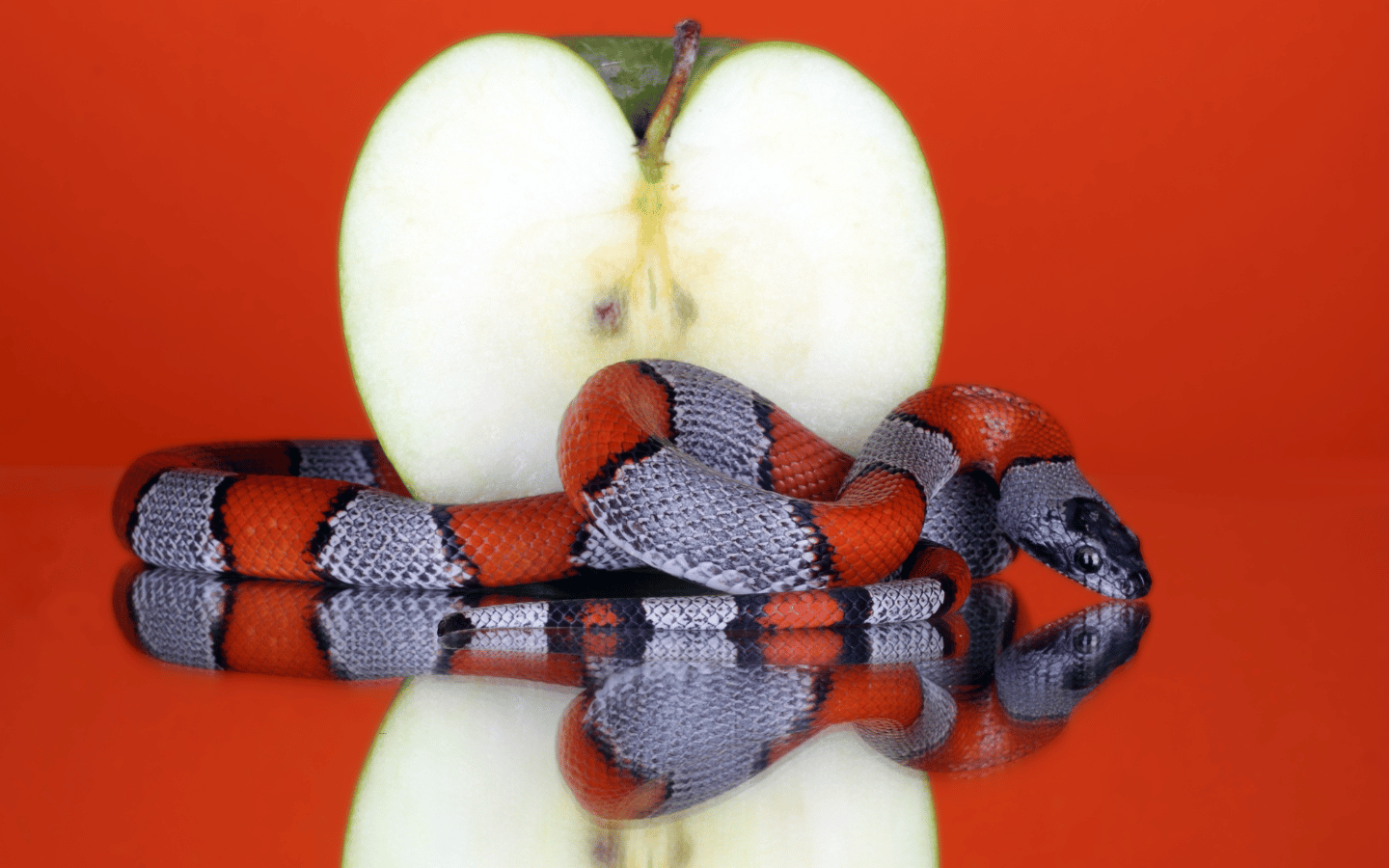
A major point of contention between different kinds of Christians and between Christians and secular humanists is the concept of original sin. Are human beings fundamentally good or depraved?
On one end of the spectrum, hardcore Calvinists believe we are “worms,” completely irredeemable apart from Jesus Christ. On the other end, secular humanists argue we are born angels and learn to hate.
Certainly, there is ample evidence of both the good and bad of humanity, although I would question whether the secular humanists have spent any time with a toddler.
The good news is, I will resolve thousands of years of argument about original sin with this short essay. That is a joke; please laugh. But I will tell you how I have come to think about sin in a way that accounts for the polarities of human nature and removes much of the shame from the equation, for whatever that is worth.
The Problem of Sin
Growing up evangelical, the idea that we are unavoidably sinful carried a lot of logic and some liberation, but even more guilt. That we are fallible creatures, that “all have sinned,” seemed pretty obvious and kind of a relief. But guilt and shame entered the picture with the idea that, through Christ, we can perfect ourselves, implying that our ongoing struggles and failures indicate a weak faith.
I always felt caught in an endless doom loop of failure, in which my faith was never adequate and my inability to overcome my flaws cast doubt on my salvation. Conversely, when I entered the secular world, I found most people had an overly rosy view of human beings, as if human history never happened and as if they themselves had no mirrors in their house. They viewed religious people and their constant harping on “sin” as a huge downer.
My secular friends’ primary measure of morality seemed to be personal happiness, but they struggled with the implications of one person’s happiness clashing with someone else’s. They also revered science as a measure of truth, and there was nothing scientific about the idea that we are born morally flawed. But again, they had no explanation for toddlers.
I’ve come to believe that both these perspectives miss the mark. Both assign greater spiritual value to the idea of sin. Rather, Christians have overly spiritualized what I have come to understand as a fact of human biology, and secularists have reacted to the Christian concept of sin by rejecting its premise.
But what if sin is actually just our innate survival instinct? Once I considered this, everything began to make sense.
It’s indisputable that we are, in fact, biological organisms, and like all living things, sentient or not, we are driven to survive above all else. That is the basis for the theory of evolution, but it’s also just obvious to anyone who has a houseplant that leans toward the sunlight or a rescue dog who assumes every person who comes through the door is trying to murder him and his entire family.
Our Competitive Edge
But humans are different from all other animals.
First, we are consciously aware of our own mortality, and therefore, we assign meaning and purpose to our lives beyond mere survival. Much of our behavior as people and our construction as human societies result from conscious death avoidance.
We do this not just by living and procreating, but also by leaving some evidence of our existence behind and, more generally, by contributing to human progress. Which is related to our second distinction—our capacity to transcend our own survival instincts and trust each other.
And ironically, that is what has helped us become the earth’s dominant species, according to Dutch historian Rutger Bregman. “Human beings crave togetherness and interaction. Our spirits yearn for connection just as our bodies hunger for food,” he writes.
We run on relationships, and those who are best at it have been most successful, making us increasingly better at it over time. To be good at relationships, you have to trust others. You have to see that a single-minded pursuit of your own survival is counterproductive.
Over time, the most successful human societies have learned to trust people across great differences, with the help of mediating institutions. We have discovered that developing strategies and systems based on cooperation, mutuality and connectedness takes us to a higher plane, one in which each of us can develop our gifts and fulfill our purpose in ways that benefit not only ourselves but everyone else, too.
In other words, most human beings have learned to offset our base human instinct for physical survival with something better, higher and ultimately more beneficial to more of us. At our best, we have learned to operate from a place of love and not fear. It’s become our competitive advantage as a species.
The Purpose of Fear
But we should recognize that fear is not, on its face, entirely bad, nor is it a choice. It is simply how our brains are built to operate.
It’s actually pretty important that when you encounter a wild animal, you run and hide instead of trying to pet it. It’s important that when you encounter a dangerous person, you don’t trust them either, and you certainly should not elect them president. It’s important that our brains can go into fight-or-flight mode, make rapid connections, draw quick conclusions, and instinctively protect our lives and well-being.
Fear of any kind is ultimately the fear of death, and we’d all be dead at a very young age without it.
However, when fear is not interrogated or checked in contexts where death is not an immediate threat, as it rarely is in the modern world, it becomes a problem. It’s a greater problem when we, as individuals, communities or societies, operate and arrange ourselves on the basis of fear. It is, if you will, a sin.
Unexamined fear is otherwise known as unconscious bias. The bias isn’t the sin; we are all programmed for it. The denial of it, the willful ignorance of it, the submission to it—that’s the moral failing.
That’s when our innate “sinful nature” overcomes our capacity for love, that divine spark that is also in each of us, makes us different from other species, and is the engine for our moral evolution. That’s when an individual who never learned how to trust, give or let go becomes a nightmare to live or work with, or even to be the president.
That’s when cycles of communal violence persist for decades or even centuries, leaving poverty and destruction in their wake. That’s when an authoritarian leader weaponizes human fear and builds an empire of self-preservation off the divisions and distrust that lurk in all human societies.
That’s when the church excludes, scapegoats and self-protects, becoming part of the disease rather than the cure.
Learning to Love
And back to those pesky toddlers: Innate human fear is why they can be both innocent babes and forking terrorists. Small children are neither good nor bad in moral terms. What they are is hell-bent on their own survival. For good reason, too, as they are powerless and vulnerable.
They grow in the ability to take care of themselves, but they also grow in the ability to love and to trust others. They behave better when they know better, when they learn that self-preservation has its place.
But love is what ultimately meets their deepest human needs through a mutual and uplifting trade: a multilateral disarmament agreement. And through letting mommy sleep through the night.
In biblical terms, we are meant to learn that turning the other cheek arrests endless loops of devastation, that living in peace and tolerance is a far lighter load than forcing and fighting, and that loosening the death grip on our own survival and that of our tribe—metaphorically dying to self—is truly the ultimate gain.
That’s both a moral and a very practical truth.
There’s no shame in our fear; it’s deeply woven into us. But there’s no freedom in it either. To the extent that we give in to it, we only cheat ourselves.
And yes, we are capable of untold evil. To the extent that we acknowledge but rise above our fear, we are also capable of transcendent, golden beauty.
Christ’s teachings show us how. But his church has too often settled for the fool’s gold of fear.
Certainly the white American church has, over and over and over.
- About the Author
- Latest Posts

Holly Berkley Fletcher is a PhD historian, former CIA analyst, and author of the award-winning book, The Missionary Kids: Unmasking the Myths of White Evangelicalism. She writes on Substack at A Zebra Without Stripes.