
“We must never forget that art is not a form of propaganda; it is a form of truth.” — John F. Kennedy
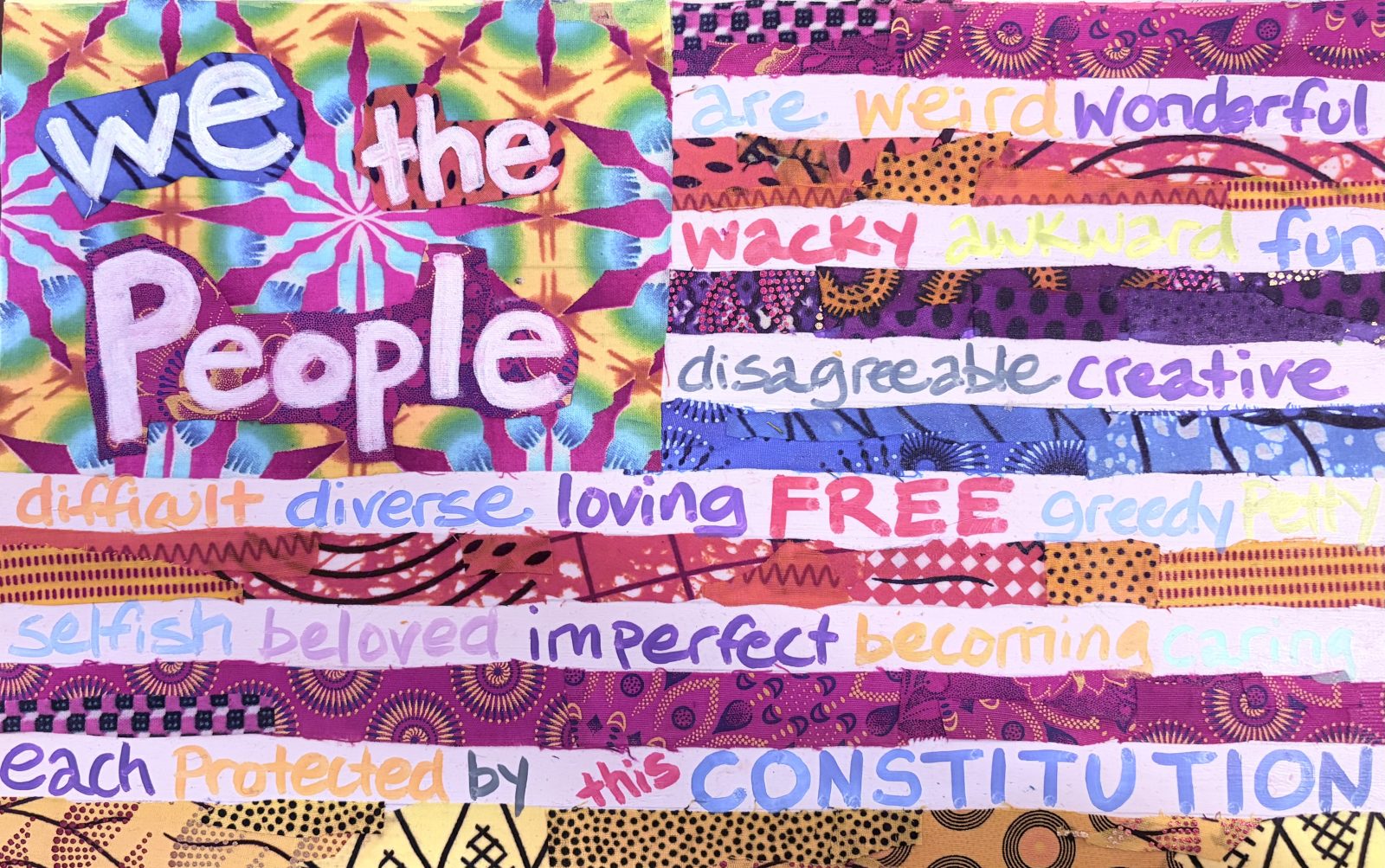
Like many people, I picked up various new hobbies during the COVID-19 pandemic to occupy the time I once spent leaving my house. One of those was making collage art using the African fabrics I love so much. My initial paintings were simple landscapes, but pretty soon I was painting more complex scenes and even portraits.
I had never exhibited any talent for art before, and the fear of failure probably kept me from putting in real effort. But once I set that aside, I found making art both calming and purposeful. As I got increasingly better, its benefits only grew.
I’ve since seen research that confirms my experience. A Drexel University study found 75 percent of participants saw marked reductions in the stress hormone cortisol after just 45 minutes of making art. Skill level made no difference.
I’ve needed art therapy even more since Donald Trump came back into our lives. When I work on a painting, my mind becomes singularly focused on the narrow aperture of the canvas. The chaos outside it recedes, if only for a time.

The Authoritarian Playbook

As Trump has mounted a visual assault on my city of Washington, D.C. and destroyed one of its artistic crown jewels, The Kennedy Center, it occurs to me that art is the perfect response to the Trump era for reasons beyond individual well-being.
Authoritarian powers and cultures have always sought control over art and artists, co-opting them when they can and removing them when they can’t.
When Hitler took power, Leni Riefenstahl was an up-and-coming filmmaker with no particular interest in the politics of the Third Reich. But the Nazis gained her cooperation, harnessing her technique and talent—still admired by film critics, despite her subject matter—to make fascist propaganda.
Artists who maintain their integrity don’t fare so well in such regimes. As of 2025, there were 401 writers in prisons around the world. Almost half are in Iran and China.
Harnessing Art for Evil
Even within free societies, authoritarian cultures, such as high-control religions, likewise harness the power of art.
In her new book Live, Laugh, Love: The Secret History of Christian Women and the World They Made, historian Kristin Du Mez documents how an aesthetic culture of sentimental art, home decor, and hyper-feminine beauty helped women participate in their own subjugation. Like government propaganda, the material effects of white evangelical culture serve to reinforce group cohesion and achieve conformity by presenting a uniform, narrow vision of the ideal.
The product usually tells on itself, albeit in intangible ways. Like pornography, you usually know it when you see it.
I always wondered why contemporary Christian music so often has the same sort of tinny sound I can’t quite put my finger on or what is off-putting about a Thomas Kinkade painting or most any movie produced by Angel Studios. All of it presents a sterile, oversimplified view of the world in order to communicate an ideal.
Not surprisingly, the Trump administration has used Thomas Kinkade’s work over his family’s objections to invoke a nostalgic view of an American past when white Christian patriarchy was the unquestioned authority.
It is art that obscures more than it reveals, even for its own artists. Thomas Kinkade, the “painter of light,” died in 2012 from an overdose of drugs and alcohol.
Earlier this year, many former evangelicals like me were deeply moved by the re-recording of the Christian group Avalon’s 1990’s hit “Testify to Love” by two of its former members—Michael Passons, who had been expelled from the group for being gay, and Melissa Greene, who has since become LGBTQ-affirming. They were joined by country artist Ty Herndon, who had also struggled as a gay artist in Nashville’s conservative culture.
The 90s version of the song had that same intangible, phony sound that turned me off Christian music once I discovered better options. But the 2026 version, with the same music, lyrics, and mostly the same artists, overwhelmed me. The song’s entire meaning was recast and rang out free, true, and clear.
Propaganda had become art.
Subverting Authoritarianism With Art
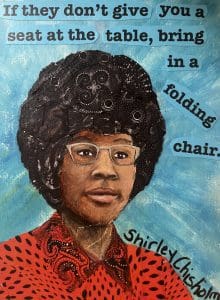 As I continue to make my own art, such as it is, during a time of authoritarian threat, I have been moved to purposefully counter this government’s attempts to co-opt and hoard the meaning of America, visually and otherwise.
The MAGA movement wraps itself in the flag, so I cling to it all the more. They try to whitewash history and claim America was created for and by people like them. So I paint my American heroes—Black Americans who refused to give up on this country’s promise, who understood its true meaning and power more clearly than even its founders.
And because my house can only hold so much art, I sell mine. I do it to pass on a little piece of defiance to someone else and give all the profits to those more directly fighting for our democracy.
It’s a small thing I can do. To stay sane, to speak the truth, to channel my fear, to refuse to comply.
To co-create with my fellow citizens what no one can destroy as long as it lives in our hearts—American freedom.

- About the Author
- Latest Posts

Holly Berkley Fletcher is an author, historian, and former intelligence analyst. She was raised in Kenya by evangelical missionary parents. She earned a PhD in American history and taught in universities for several years before being hired as an Africa analyst by the Central Intelligence Agency, where she worked for nineteen years. She writes the substack A Zebra Without Stripes, and her most recent book is The Missionary Kids: Unmasking the Myths of White Evangelicalism. She lives in the Washington, DC, area with her husband, two kids, and delinquent rescue dog.