
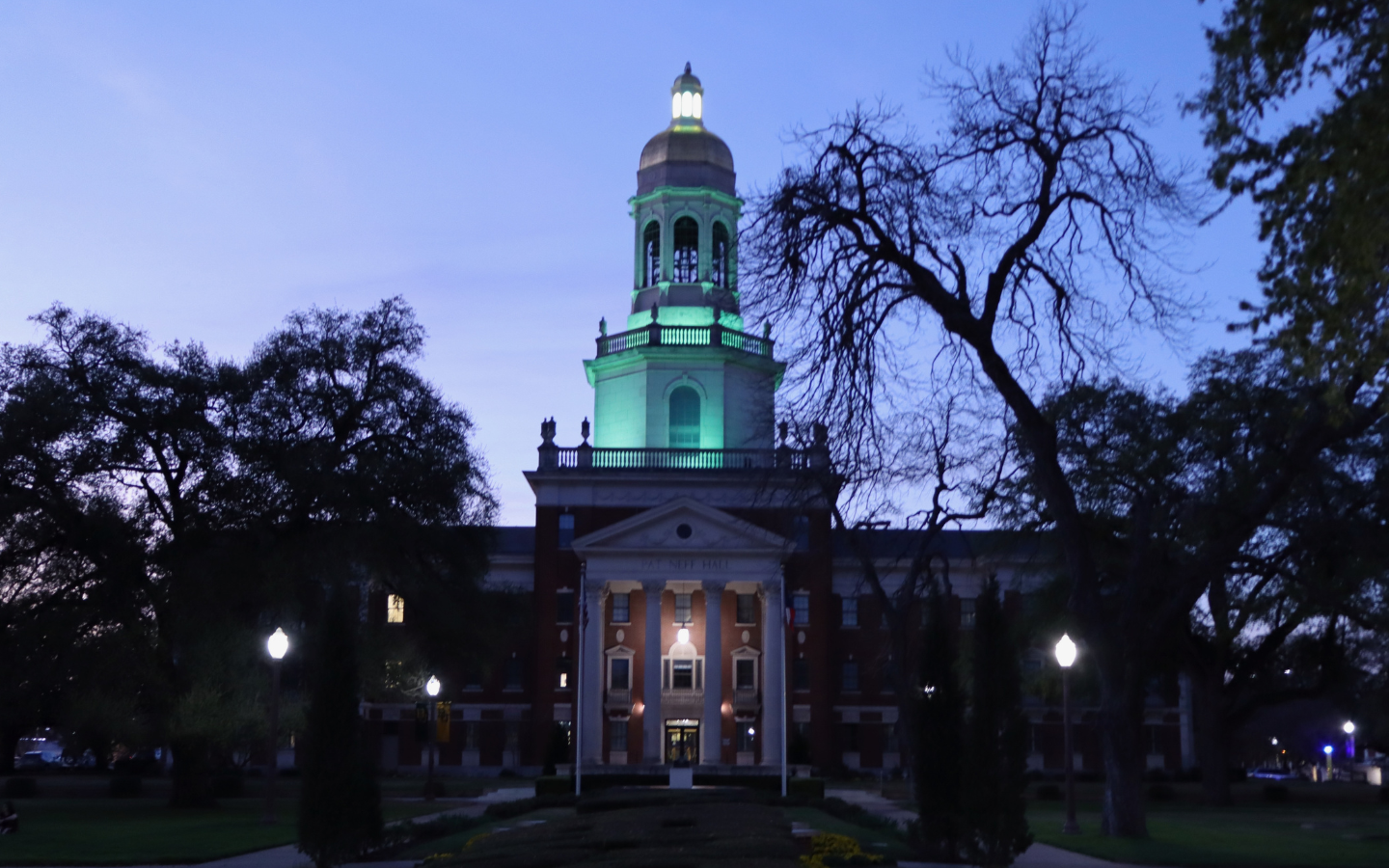
Baylor University is squandering a legacy of courage.
It is difficult for me to write this, as my entire adult life has been lived in the shadow of Baylor, which has long been the flagship Texas Baptist educational institution. Founded in 1845 during the Republic of Texas, it has thrived for 181 years through changing governments, shifting economies and the winds of cultural change.
Years ago, I attended Howard Payne College when Dr. Guy Newman was president. Newman was fond of saying, “It is a small college, but there are those who love her.” I caught that spirit alongside a great education. A West Texas kid who grew up in a service station came to Howard Payne and discovered a much larger world.
Later, my time at Southwestern Baptist Theological Seminary introduced me to the world of ministry, where I would spend the rest of my life. I served as a pastor for thirty-three years, and then as a Mental Health Manager at the Allan B. Polunsky Maximum Security Unit—a prison that housed Texas’ male Death Row. Unbeknownst to me at the time, it was considered the second-worst prison in the United States. Following that, my wife and I entered private practice as therapists, working with couples, veterans and adult victims of childhood trauma.
It was during my third pastorate that Baylor altered its relationship with Texas Baptists without the knowledge or consent of the state convention. I was angry at the time because Baylor didn’t follow the rules. I vividly remember the uproar at the State Convention hosted by Baylor as the issue was addressed.
The president of the convention actually arrived wearing a bulletproof vest.
As the years unfolded, however, I realized just how farsighted Baylor had been. A fundamentalist takeover was in full swing, grasping for power and control over the Southern Baptist Convention (SBC), with which the Baptist General Convention of Texas (BGCT) maintained a cooperative relationship. By changing its structure, Baylor removed itself from the line of fire.
The legacy of Baylor has always been one of courage, shaped by frontier life and refined by history. As trustees of any university are sworn to do, they chose not just to govern, but to protect. Though I disliked their methods at the time—being a hopeless rule-keeper myself—I eventually came to recognize both the wisdom and the insight behind what Baylor did.
Frankly, the fundamentalists were strategically shortsighted. Because they were so marginally involved in the mechanics of Southern Baptist life, they didn’t understand how state and national conventions were actually aligned. They targeted the SBC, believing all power was vested in the national convention.
I remember attending a small gathering where sexual predator Paul Pressler complained about the “raging liberalism” at Baylor. I didn’t accept his assessment then, but it spurred me to learn more about the institutional connections between Southern Baptists and state groups.
Decades earlier, an agreement had been hammered out: the national SBC would establish and fund theological seminaries, while the state conventions would handle undergraduate and non-theological graduate programs. When the fundamentalists succeeded in taking over the national SBC, they were far less successful in overrunning state conventions like Texas.
Because Baylor had anticipated the future and placed itself out of reach, it was shielded from their grasp. It took courage to take that step, and Baylor thrived because of it.
Until now.
Baylor’s enrollment numbers and finances are excellent (by contemporary standards), but the university is trading its courage for fear.
Driven by that fear, a year ago today, the administration declined a significant gift from one of its largest donors because it was earmarked for the School of Social Work to investigate the experiences of women and LGBTQ+ individuals in the church. That research is deeply needed.
Others in evangelical academia, such as Mark Yarhouse, a psychology professor at Wheaton University, have been guiding lights in research regarding the LGBTQ+ community. Yet Baylor blinked. They returned the gift because their courage failed them. A university that aspires to tier-one research status, alongside its liberal arts and seminary programs, failed to stand up for its mission, its purpose, and what is right.
Meanwhile, the Baptist General Convention of Texas has formed a committee to reexamine its relationship with Baylor. The Texas convention is currently wobbling between MAGA fundamentalists and the rest of us.
In her writing, Joyce Landorf challenges us to consider whom we will listen to: balcony people or cellar voices. Balcony people support and cheer us on toward success. Cellar voices speak only of fear, timidity and regression.
Right now, Baylor is listening to the cellar voices.
- About the Author
- Latest Posts

A private practice counselor working with veterans and survivors of trauma. Previously, Chancellor served four churches in Texas for 33 years, then ran a Mental Health Department of Alan B. Polunsky Maximum Security prison which houses death row.