
Content Warning: Self-harm and Suicide.
As a proud father of three now-grown boys, I have a lot of lived experience with things getting broken.
After receiving a Christmas gift from us one year, our oldest son went to his room. When he returned the next morning, he showed us the digital watch we had given him and said, “I turned it off last night and now it won’t turn on.” Whatever he did, it was broken.
Recently, our youngest son James, who was visiting with us over the summer holiday, reached for an overripe banana attached to two others. Without much force, he accidentally pulled the stems off all three. His response was so funny I burst out laughing: “I broke the bananas.”
That was a first for me. There are plenty of things that need repair because a part snapped. But bananas?
Years ago, my wife Anna acquired a ceramic manger scene, complete with the three wise men. She displayed them on the piano across from the tree in the small living room where we lived at the time.
Giving the boys her sternest glare, she warned, “You are not to play in this room until after Christmas. I don’t want this nativity set broken.”
However, at some point before Christmas, the head of one of the wise men was knocked off. As I recall, it was apparently the work of “the Invisible Man,” who must have entered our residence just to decapitate one ceramic figure.
Today, Anna still sets it out, and that same wise man has his head reattached with glue. I see it and smile—but only when Anna isn’t looking. Even at my age, I haven’t lost the will to live.
Too Broke to Mend
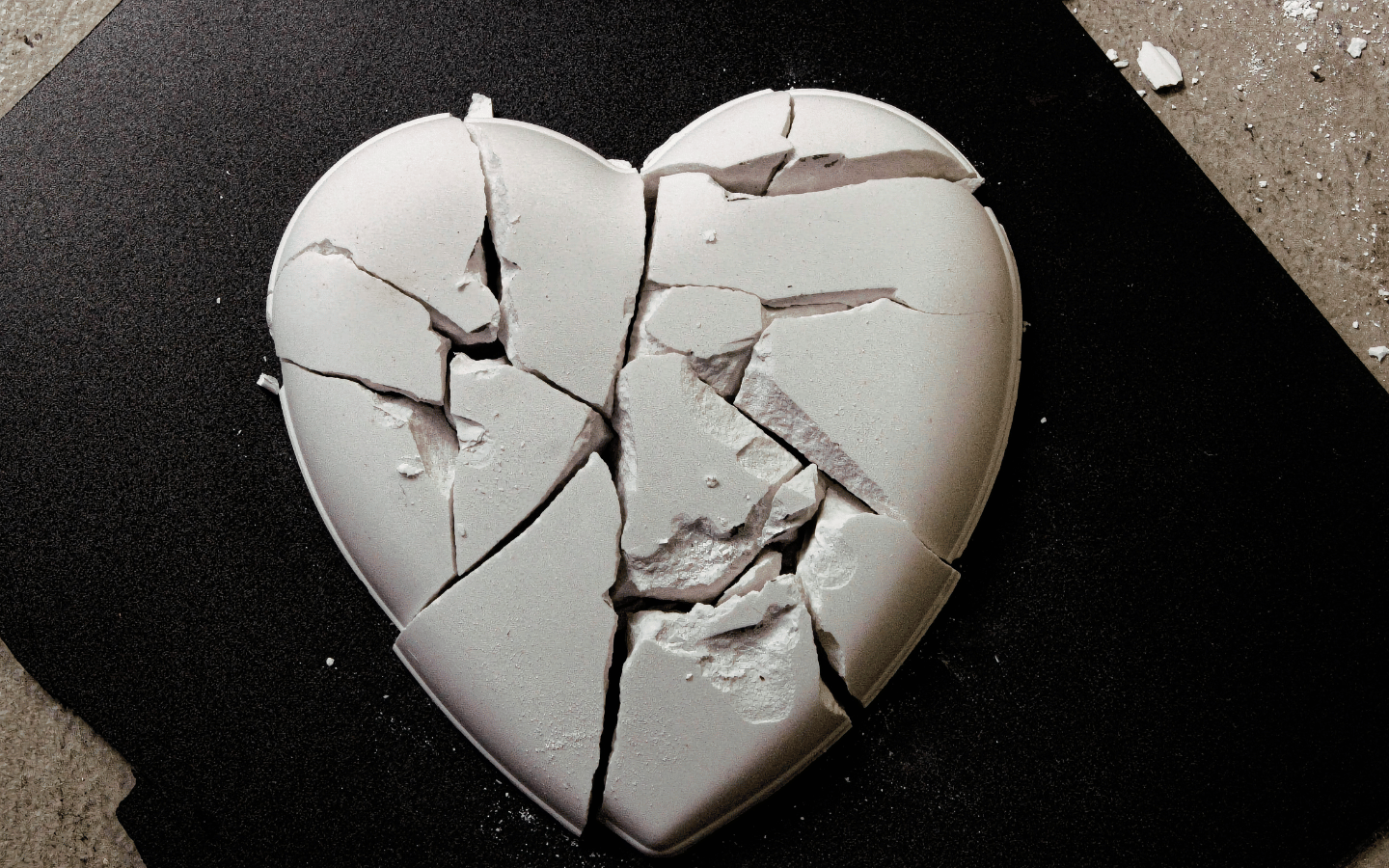
Recently, I was refreshing my memory of John Masefield’s poem, The Widow in the Bye Street, which contains the line, “some things too broke to mend.” I have officiated funerals for those who have died by suicide where I cited this phrase, while still offering hope to the grieving family.
I do not make light of death and certainly not suicide. I have never diminished the pain that drives a person to that point. But I refuse to accept the unbiblical notion that suicide is somehow an unforgivable sin.
Rather, I prefer to consider the shortfalls within our homes, communities and social resources. The societal negativity directed toward vulnerable people is the real measure of how a community connects with its members. Size doesn’t matter; compassion and kindness do.
Profound Grief and the Measure of Greatness
I was looking at the recent figures on suicide in our nation, and it is disturbing on so many levels. The overall number of deaths by suicide sits at roughly 49,000 annually, a rate of about 13.7 to 14.4 per 100,000 people. In real numbers, that means 49,000 families across the country are plunged into profound grief as a result of suicide.
The data gets even worse when looking at marginalized groups. Research shows that 45% of LGBTQ+ youth have seriously considered suicide, with 17% to 25% attempting it at some point. For transgender individuals, the lifetime suicide attempt rate is an astonishing 41%.
Having worked with clients since 2002 in both correctional settings and private practice, I know the anguish that drives a person to this point is difficult to comprehend if you have never been in that dark place yourself. Sometimes, that intense isolation can metastasize into anger and rage turned outward, becoming homicidal.
In the prison system, we saw this manifest as “suicide by cop.” I believe this is often what plays out in school shootings as well. Whether by their own hand or by law enforcement, the shooter intends to die.
While living in this world can become too much for some, if we truly value every life, we must do better as communities and as a society. That is the true measure of greatness.
- About the Author
- Latest Posts

A private practice counselor working with veterans and survivors of trauma. Previously, Chancellor served four churches in Texas for 33 years, then ran a Mental Health Department of Alan B. Polunsky Maximum Security prison which houses death row.