
The 2026 midterm elections marked the moment when the Democratic Party rediscovered religion and reversed the Kennedy paradigm of voter indifference to a candidate’s faith. No one contributed more than Adam Hamilton, the senator-elect from Kansas.
Hamilton, pastor of the largest United Methodist church in the country, defeated the incumbent, Roger Marshall, becoming the first Democrat elected to the Senate from Kansas since 1932. He did so in part by talking openly about his faith.
Similarly, in Texas, James Talarico, a seminary student and the senator-elect, talked about how his Christian faith informs his positions on everything from immigration to welfare and money in politics.
In Iowa, Sarah Trone Garriott, a member of the state senate and an ordained minister in the Evangelical Lutheran Church in America, defeated Zach Nunn, a pro-Trump Republican, in Iowa’s third congressional district.
Not all the Democratic nominees talking about faith were Christians. In Michigan, Abdul El-Sayed, the Democratic senator-elect, is unabashed about his Muslim faith, and he brilliantly parried Republican attempts to portray him as a terrorist, turning those attacks into a full-throated defense of the Constitution.
Republicans have claimed a monopoly on religion far too long.
Why are we seeing a surge of piety on the campaign trail? History provides a clue.
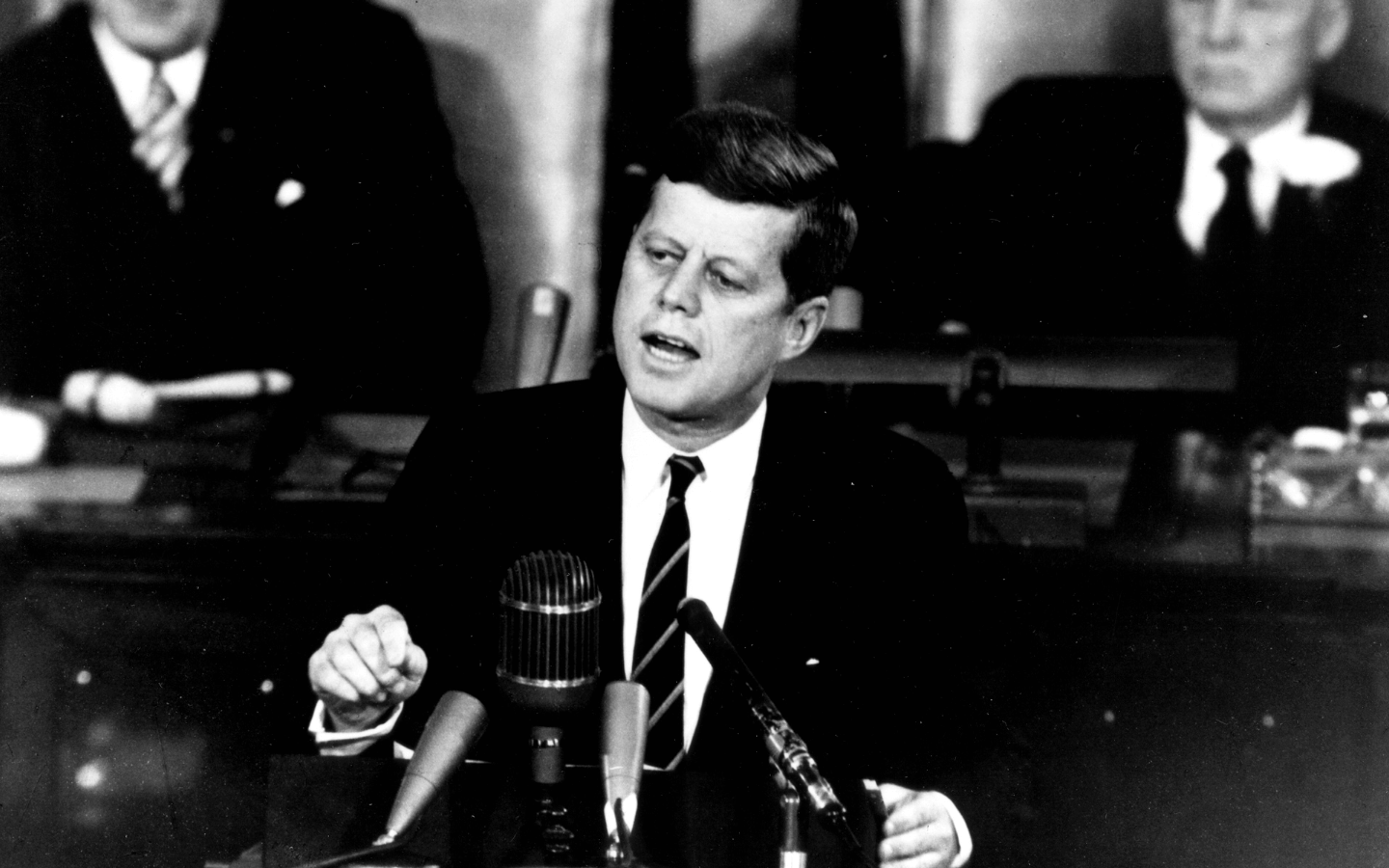
When John F. Kennedy was running for president in 1960, he was only the second Roman Catholic to win a major party nomination. The first, Alfred E. Smith, lost decisively to Herbert Hoover in 1928. In Kennedy’s election, Protestants worried that a Catholic president would harbor loyalties to the Vatican.
Kennedy responded with a speech to the Greater Houston Ministerial Association on September 12, 1960, where he stipulated that he was not the Catholic candidate for president; he was the Democratic nominee for president who happened to be Catholic. Voters, Kennedy said, should bracket a candidate’s faith when they entered the voting booth.
When Kennedy narrowly prevailed in the 1960 election, we entered what I call the Kennedy paradigm of voter indifference to a candidate’s faith. Most people, for example, don’t know Lyndon Johnson’s religious affiliation (Disciples of Christ), or that when George Romney, Mitt Romney’s father, was running for the Republican nomination in 1968, he wanted to talk about his Mormon faith. Few Americans were interested.
That indifference changed dramatically with the Watergate scandal and the corruption surrounding the Nixon presidency. Suddenly, voters wanted to know that candidates possessed a moral compass. It’s no accident that we elected Jimmy Carter in 1976, a Southern Baptist Sunday school teacher who promised that he would “never knowingly lie” to the American people.
For many Americans, religion or religious affiliation is a proxy for morality, a kind of shorthand. That’s unfortunate because it doesn’t account for the fact that many people are decent and morally upright despite claiming no religious identity.
Today, the nation is enduring the most corrupt presidency in its history, an administration that reaches new lows daily and makes Ulysses S. Grant, Warren Harding, and Richard Nixon look saintly. Is it any wonder that voters are seeking candidates with a moral compass?
Whereas Republicans once claimed the franchise on faith, some Democrats now acknowledge the merits of talking about faith and values. Several pundits are now heralding the emergence of a Religious Left.
It must be acknowledged that the candidates speaking openly about religion faced uniquely flawed opponents. El-Sayed’s opponent collected millions from special interests and moved from Michigan to Florida following his most recent defeat two years ago.
Roger Marshall used strong-arm tactics to collect medical debts from his OB-GYN patients in Kansas, and Nunn swatted a phone away from a constituent asking about his complicity in the closing of rural hospitals in Iowa.
The corruption surrounding Ken Paxton, Talarico’s Republican opponent in Texas, rivaled that of Donald Trump himself.
The midterm elections of 2026 nevertheless demonstrated that speaking openly about faith is no handicap. In a political era mired in venality, it may in fact hold the key to success.
- About the Author
- Latest Posts
An Episcopal priest, Balmer is John Phillips Professor in Religion at Dartmouth College and the author of more than a dozen books, with commentaries appearing in newspapers across the country. He is a contributing correspondent at Good Faith Media.