

Lent’s labor is a season of special time and attention given to our own hearts and minds. It invites us to examine the work of our hands and the paths of our feet. It calls us to inquire into the ways and the wherefores to which we give the attention of our eyes and our ears.
It asks us to audit our speech, whether we have been true and truthful, whether we have spoken too much or too little. It presses us to scrutinize our longings and desires, to see whether any have breached their healthy boundaries. Some may need retraining. Some retracting. Some refuting, others reviving.
But beware. Lent is not for our self-absorption or flagellation, which can be yet another form of narcissism, pride, or conceit. The work is not a spotlight on ourselves, much less a despairing obsession with our own failings. It is the work of triangulating our attention, in alignment with and yoked to the Work of the Spirit, in a world that has forgotten its origin, its promise, its purpose.
Lenten observance is simply the recognition, followed by corrective measures, that pipes can get clogged, moving parts need lubrication, rust can corrode bodies in need of medical intervention, cracks exposed, and rot replaced.
Remembering that you are dust is not an insult, for such is the very stuff of the universe, ordered and animated in God’s own delight. Do not grovel! Simply allow your compass to be adjusted, as needed.
We all need helpful hints on how to carry out Lent’s labor. There are many and none are foolproof. What follows are some suggested questions to ponder in
solitude or in conversation with others.
Asking the right question is often essential to arriving at the right answer. You may not find what you need here, but in considering them, you might formulate your own.
Questions for Lenten Reflection
- Can we be faithful without becoming arrogant?
- Can we be generous without recreating relations of control and manipulation on the one hand, and dependency and servility on the other?
- Can we be compassionate without seeking publicity?
- Can we be patient without becoming passive?
- Can we be angry without becoming vengeful?
- Can we become agents of meaningful change without becoming brokers of imposition?
- Can we be hopeful without being sentimental?
- Can we weep with those who weep while also rejoicing with those who rejoice?
- Can we offer forgiveness without ignoring the need for repairing harmed relations?
- Can we count our blessings that are not the result of wealth or other privilege?
- When all is said and done, is more said than done?
- Can we think of mercy as the mechanism that reconciles the demands of justice with the prerequisites of peace?
- Can we be prophetic without becoming sanctimonious?
- Can we prioritize the needs of those living in poverty without romanticizing poverty?
- Can we excavate the root causes of violence in the world while also doing that work in our own hearts and minds?
- Can we offer pardon without collecting IOUs?
- Can we engage those who differ from us without becoming antagonistic?
- Can we be joyful without being triumphalistic?
- Can we tearfully express our grief and anguish without languishing in the solitude of lethargy and indolence?
- Can we pledge ourselves to faithful communities without becoming tribal, insular, or sectarian?
- Can we recognize that in leaving “Egypt” behind, we also have to dethrone the lingering presence of “Pharaoh” within our own hearts.
22 Can we rediscover God’s passion for the flourishing of the natural world—see ourselves as located within, not dominating from without—thereby recognizing our need for repentance and turning toward repairing and protecting the created order?
- Can we discern the different but connected needs of providing emergency aid to the suffering, as well as the need for opposition to policies that make charity necessary?
- Can our hands and feet be deployed in the work of resistance to injustice without resorting to clenched fists or trampling boots? To guard against becoming beastly in our struggle with beasts?
- Can we be “still”—embraced by grace that generates calmness in the midst of torrents—without becoming indifferent or listless?
- Can we publicly, even vociferously, demand public justice without becoming self-righteous?
- Can we affirm that God is more taken with the agony of the Earth than with the ecstasy of Heaven—employing that affirmation as a plumb line to appraise all that we do and say and think?
- Can we think of ourselves less rather than thinking less of ourselves?
- How can we open ourselves to experiences which might expose our privileges—not for punishment but for reparation, for the growth of our understanding and the stretching of our hearts?
- Can we conceive of the “good life” for ourselves as that life extending to an ever-widening circle of kinship?
- Can we imagine that in our revolt against an economic system that centers human greed, we need to do the hard work of imagining and constructing a new system that centers human need?
- Can the passion we bring to the work of prayer become the compost that nurtures a life in pursuit of the Beloved Community, and bring both the joy and grief of that pursuit into the conduit of our prayer life?
- Can we revive the conviction that faith in the Manner of Jesus entails a bet-your-assets commitment—that following Jesus is different from admiring him?
- In the midst of interpersonal conflict, can we be truthful without becoming vindictive? Accept a criticism of ourselves without holding a grudge?
- Can we get to the point of understanding that there is no sacred and secular, only sacred and desecrated?
- Do we have the imagination to affirm that one day all shall go out in joy and be led back in peace, the mountains bursting in song, the trees in applause (Isaiah 55:12)?
- How can we shape our communities of conviction so that pastoral work is not segregated from prophetic engagement?
- Is our faith buoyant enough to withstand squalls of doubt?
- Can we be confessional without being colonial? Can we live confidently (though nimbly) in the coherence of our faith tradition, without demanding that others adopt our identity?
- How best can we adopt this pastoral advice from Dr. Martin Luther King Jr.: “If you can’t fly, run. If you can’t run, walk. If you can’t walk, crawl. Just keep moving forward.”
In the end, that is all we are asked.
- About the Author
- Latest Posts
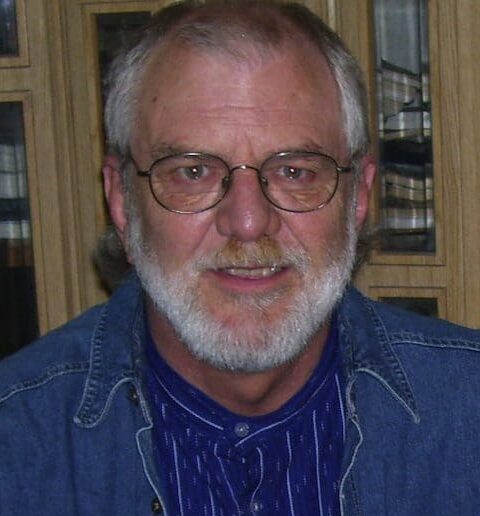
Curator of prayerandpolitiks.org, an online journal at the intersection of spiritual formation and prophetic action, and author of, most recently, In the Land of the Willing: Litanies, Prayers, Poems, and Benedictions. He was the founding director of the Baptist Peace Fellowship of North America and founding co-pastor of Circle of Mercy Congregation in Asheville, North Carolina.