

The guardians of white privilege normalize and legitimize a way of thinking and being that enslaves minds while allegedly freeing bodies. If the mind can be colonized, then those who society is constructed to benefit don’t need to worry about resistance to oppression.
All too often, liberative inclinations from the margins look to the dominant culture for ways to define and express their thoughts. Attempts to add token color to Eurocentric thought seek to humanize those who dehumanize the dispossessed.
When Latines seeking a liberative methodology rest upon Eurocentric philosophical and theological paradigms, they construct resistance on shifting sand, contributing to and continuing their own disenfranchisement. Worse, when elucidating resistance through Eurocentric thoughts and paradigms, regardless of how loud, fearless and passionate it may sound, Latines undermine their ability to bring about subsistent change.
The difficult task is to imagine and think new thoughts rooted in our social location instead of responding to Eurocentric ways and beliefs—to craft a more indigenous radical worldview apart from the normative philosophies and religious dogmas that have historically justified subservient spaces within society for those falling short of the white ideal.
The true danger is assimilation by those who recently were themselves disenfranchised immigrants. All too often, Latin American immigrants learn from those whom society privileges that the only way to succeed is to ensure no one else from their countries of origin achieves greater heights than them. In this zero-sum-rule worldview, think of crabs in a barrel.
Assimilation leads to earlier immigrants treating the more recent immigrants worse than they were. Oppressive structures are maintained and sustained whenever the marginalized embrace Eurocentrism.
There are always those who, previously disenfranchised, are willing to put on white masks for survival or profit, willing to be the henchmen and henchwomen of the dominant culture. Freedom and dignity are traded for the political and financial gain of the few who chose assimilation, who become the major advocates of the prevailing oppressive norms.
These vendepatrias, who sell out their own people, can be found at rallies carrying “Latinos for Trump” signs. Some believe the lie that they are a different subset of Latines who are closer to those for whom society is designed to privilege.
Others calculatedly seek a greater share of profits, privilege and power. Some simply are attracted to a caudillos, similar to members of the Verband Nationaldeutscher Juden during the Weimar Republic.
Regardless of the reason for supporting those implementing policies detrimental to our people, the minds of these vendepatrias are colonized, seeing reality through the eyes of those who benefit from suppressing their bodies.
What’s required is a homegrown, indigenous way of seeing the world. Eurocentric philosophical thought and religious movements, regardless of how lofty they might sound, remain oppressive to those relegated to the Eurocentric margins.
The strategy employed by my intellectual mentor, José Martí, in rejecting Eurocentrism can be summarized in one of his best-known idioms: “El vino, de plátano; y si sale agrio, ¡es nuestro vino!” (Our wine from plantains; and if it turns out sour, it’s our wine!)
Creating a new vino from our own roots is how the mind becomes decolonized. If Latines take concepts like liberty, equality, and justice seriously, then the process of achieving these goals is through making plantain wine.
The U.S. is a hemiplegic nation, paralyzed by its imperial global designs. Its success is dependent on the flourishing of racism and ethnic discrimination, thus dooming any domestic hope of creating a more perfect union, even while maintaining high-sounding rhetoric.
“We hold these truths to be self-evident: that all men are created equal; that they are endowed by their Creator with certain unalienable rights; that among these are life, liberty, and the pursuit of happiness” was written, after all, by one who owned Black bodies, and reserved for himself the legal right to rape those he enslaved who were female. Since the nation’s founding, whites understood all rhetoric concerning freedom and equality was never meant for Indians, Blacks, Latines, Asians or non-Christians.
Hence, the prevalent Eurocentric philosophical thought and religious ideals are suspect. We must reject them, for they are detrimental to disenfranchised communities within the empire, as well as nations standing in the path of “America first.” And yet, all too often, those who are oppressed embrace the very social structures that are death-dealing to themselves, their families and communities.
Political and spiritual liberation begins by rejecting Eurocentrism, specifically U.S. thought, in exchange for our own vino. The religion, philosophy, and politics contextualized within the social context of the marginalized and minoritized must replace the materialistic philosophy of Anglo-Saxon America.
Latines should stop simply disengaging with Eurocentric thought. Instead, we must call for radical dislodging, replacement, rejection, and discarding, going further than decentering.
Latines, along with other disenfranchised groups living in the shadows, are called to create a new way of thinking, a new way of being, a new way of contemplating the metaphysical based on their indigeneity by making their own vino out of their own roots—plantains.
In other words, even if our plans and projects fail, we will still be better off because our thoughts are rooted in our social context. They are ours, made from our indigenous ingredients.
Eurocentric messiahs will not liberate us. For the salvation of Latines, for the survival of Latines, for the sanity of Latines, Latines must become winemakers who harvest from their own vineyards.
- About the Author
- Latest Posts
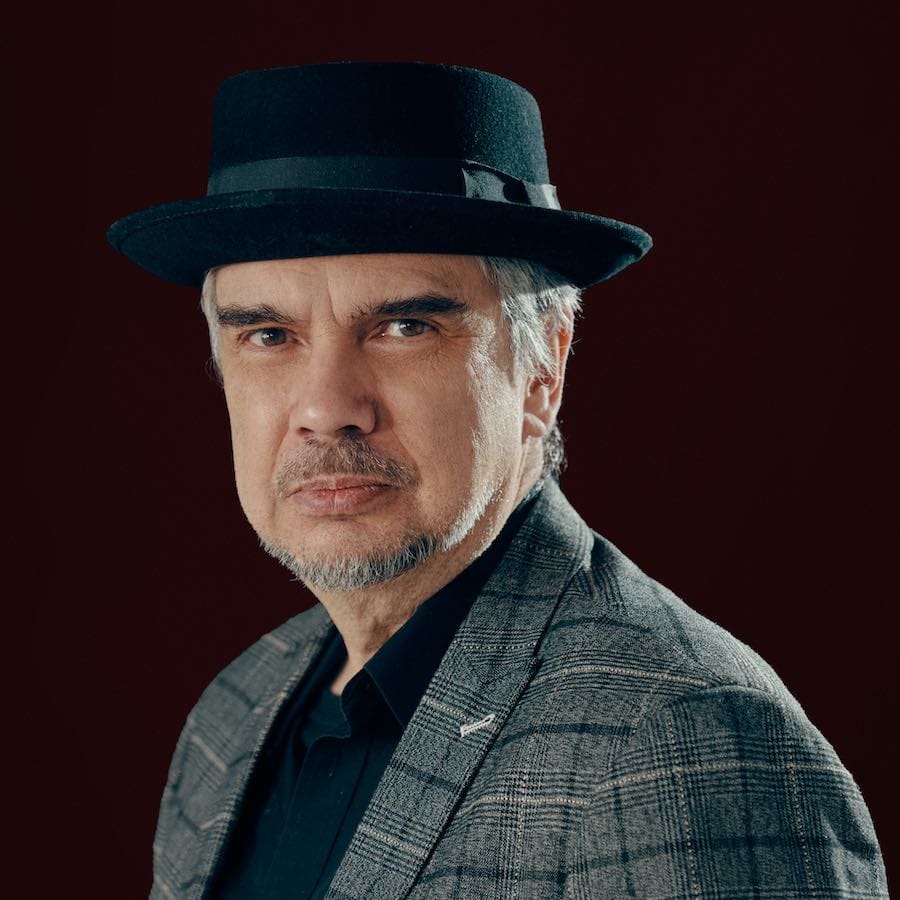
Professor of Social Ethics and Latinx Studies at Iliff School of Theology in Denver, Colorado, and a contributing correspondent at Good Faith Media.