
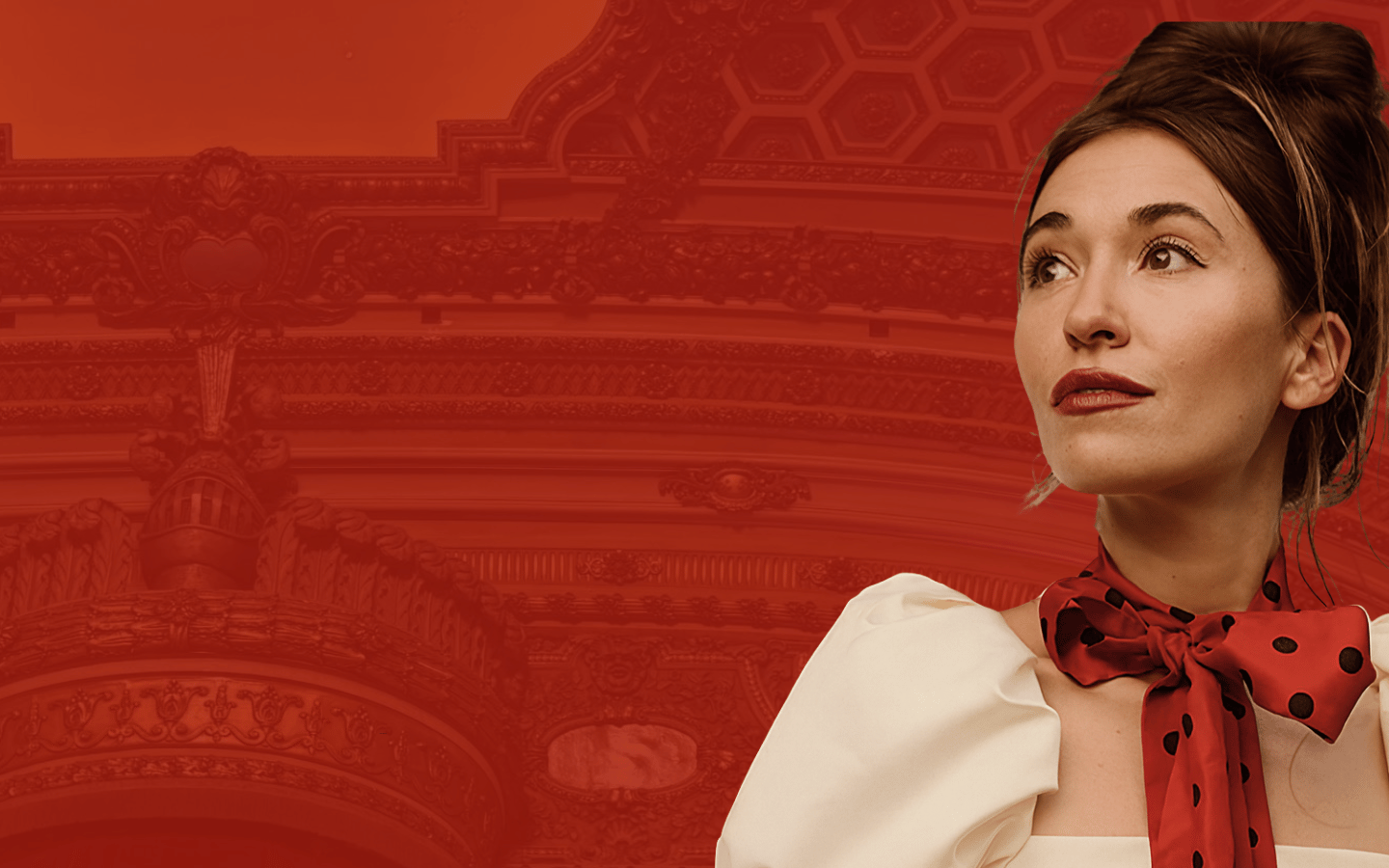
The Midland Theatre, Kansas City’s old cinematic palace, has a way of welcoming you before the music even begins. Gilded balconies, carved ceilings, and soft light made the space feel like a memory someone had carefully polished. My wife and I arrived on a cool December evening, the theatre’s warmth meeting us immediately.
Before Lauren Daigle began the concert, she stepped onto the stage for a question-and-answer session, her energy loose and playful. She laughed easily and received each question with an unguarded friendliness.
A small gathering pressed close to the stage. Daigle sat on a stool a few rows from where we sat, wrapped in a brown coat trimmed with generous fur cuffs, sunglasses resting on her head as if she had simply wandered into her living room from the afternoon cold.
When her staff read a question aloud, she asked the questioner to identify themselves. When she located them, her face brightened. Children drew a warm delight from her way of making each one feel welcomed and seen before she ever answered a word.
A Voice Forged in Isolation
Daigle told the story of her childhood illness, Cytomegalovirus, which kept her home for long months. She spent almost two years away from school, separated from friends, held in a kind of forced stillness that no teenager chooses.
Her mother, seeing something in her that needed a place to go, signed her up for voice lessons. Daigle began to sing around the house with greater intention and eventually in her Louisiana church. The seed of her vocation germinated in that long winter of loneliness.
Later, watching her move across the stage in the glow of Christmas lights, it struck me how consistent that origin story is with the sound of her voice. The first impression is one of joy. Daigle smiles with her whole body, dances with a kind of unstudied delight, and reaches toward the audience as greeting old friends.
But her voice tells a deeper truth. It contains a textured warmth like embers banked at the bottom of the fire. It also holds a grain, a rasp that knows the ache of longing and the cost of waiting.
Lauren Daigle sings as though her soul remembers the year she was tucked away, listening for signs of life.
An Advent Voice
That combination of radiance and gravity is rare, with most performers leaning toward one or the other. Lauren inhabits both, effortlessly carrying the tension of Advent—yearning for light while standing in the dark.
During the Q&A, she mentioned another season of isolation, when the expectations of her career pushed her beyond what her spirit could carry. “People say they’re burned out all the time,” she explained, “but I was ‘check me into a hospital’ burned out.” She offered the line with a smile, but only to steady the telling, not to soften the truth.
Daigle stepped away for a year. When she returned, she released Look Up Child, an album threaded with resilience and the quiet pull of hope. Songs like “Rescue,” “You Say,” and the title track sound like they are shaped from someone who has faced her own limits and found grace on the other side.
There is a pattern here.
Winter becomes a workshop. Silence becomes a teacher. Illness, burnout and the inward seasons have shaped Daigle as much as any spotlight ever has.
You can hear it in her Christmas songs. “Noel” and “Light of the World” aren’t delivered with pageantry. She gives them the tone of someone singing by candlelight, aware of how fragile and beautiful it is to hope for dawn.
If there is a tension in Daigle’s public voice, it shows up in the moments when she speaks about God. Her faith is clearly deep and sincere. She expresses gratitude with the ease of someone who has known mercy in personal ways.
Yet at times her language reflects the theological expectations of her early formation. The words come out clean and certain. Inherited.
Meanwhile, her music bears the imprint of a more complex world. A world formed by illness, loneliness and the expectations placed on a woman whose success has complicated where she fits in the Christian landscape.
Singing in the Gap
None of this is unusual.
Many live in the gap between the faith they were taught and the faith life has carved into them. The familiar vocabulary remains comfortable, even when the soul has learned to pray in deeper tones.
I don’t know if this is true for Lauren Daigle, only that the questions she unintentionally raises are potential evidence that it could be. Her songs reveal a knowing that sometimes outpaces the theology of her speech. They speak from the place where devotion and humanity meet, where God feels less like an idea and more like someone steadying you in the dark.
The pressures of her vocation add another layer.
Contemporary Christian Music (CCM) artists carry expectations that would buckle most people: Be clear enough for the gatekeepers. Be creative enough for the culture. Be gentle enough for your critics. Be bold enough for your denomination. Be uncontroversial and courageous, public and private, transparent and guarded.
It is a terrain without maps, and Daigle walks it with a generosity that suggests both strength and weariness. Perhaps the tension in her language is not a sign of confusion, but the byproduct of someone living at the crossroads of calling and public scrutiny.
When the concert began, all those complexities dissolved into the music. The stage glowed blue and gold, like moonlight warming into morning. Her band played with precision and warmth.
A Story Unfolding
Daigle moved through the Christmas setlist with the joy of someone who still loves the holiday, not for its sentiment but for its truth: Light breaking into a dark world. Hope born in obscurity. A promise whispered into a weary land.
These themes shaped the night, and her voice gave them weight without losing its brightness.
She sang the season the way the season deserves to be sung. With wonder. With honesty. With an awareness that light is most luminous where shadows have been. And with a joy rooted in something deeper than circumstance, something she found long ago in a quiet house where she learned to use her breath in a new way.
In that sense, the concert felt like a testimony. A story still unfolding. A life still aligning. A voice still learning how to hold everything it has been given.
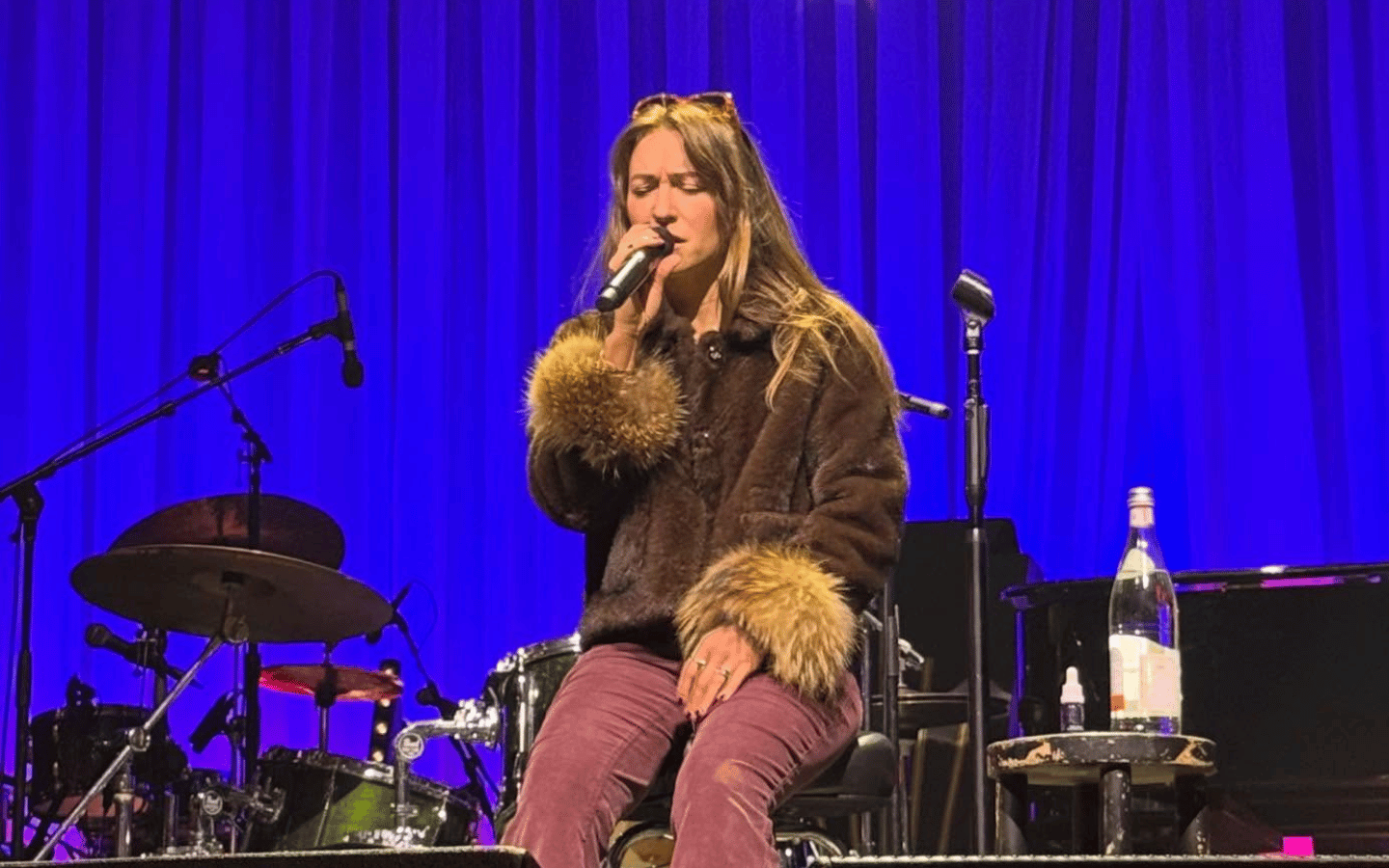
(Credit: Jason Edwards)
- About the Author
- Latest Posts

Senior Pastor of Second Baptist Church in Liberty, Missouri. His forthcoming book, At Home with God: How the Cross Transforms Us, will be available from InterVarsity Press in November 2026. His reflections appear at jasongedwards.substack.com.