
I was sitting in the airport last week when I came across the Good Faith Media article about the billboard near the locationof the Southern Baptist Convention (SBC) Annual Meeting. The billboard reads, “God calls women to pastor, preach, and minister,” and cites biblical passages from Matthew and Acts that support the message.
At first, I chuckled in approval of this ironically subversive act by Baptist Women in Ministry (BWIM) for placing this message where all 20,000 attendees of the meeting would likely pass by. Within this group, delegates would soon be voting (for the fourth year in a row) on whether to ban churches with women pastors from being cooperating members of the SBC. Previous votes had failed to produce the supermajority needed for the ban.
As I waited to board the plane one week before this year’s vote, I recalled a recent Atlantic article, “The Men Who Don’t Want Women to Vote. Or Work. Or Have Opinions.” Discussing the rising popularity of “masculinism,” author Helen Lewis describes the movement as more than a grift. In her words, it is “the single most important force uniting the American right,” bringing together pastors, posters, senators, preachers, influencers, podcasters, and fanboys.
And what does this motley crew have in common? Disdain for feminism and women’s rights, mixed with misogyny, racism, homophobia, transphobia, antisemitism, Islamophobia, and more. Although major players such as Nick Fuentes (who has suggested women be sent to “breeding gulags”) or Douglas Wilson (who wants to repeal the Nineteenth Amendment) aren’t voting delegates at the SBC, make no mistake:
Masculinism is on full display anytime power players in the world’s largest Protestant denomination vote on whether half the population is worthy of fully living into their divine call to bear the Good News of God’s love for all people.
So how is masculinism faring in the SBC?
Before this year’s meeting, some churches with women in senior pastor roles had already been expelled. And as I write, delegates just voted overwhelmingly, 6,028 to 2,026 to advance the ban on women pastors.
While another supermajority vote next year would be required for the ban to become official policy, this year’s vote—and the persistence of bringing the legislation forward year after year—sends a clear message to those clergy sisters: “You are not worthy. You are not wanted here.”
A Wider Movement
Masculinism doesn’t infect only men. Last weekend, over 3,000 women gathered for Turning Point USA’s Women’s Leadership Summit in San Antonio. There, CEO Erika Kirk said:
“At its core, feminism is a worldview that treats many of the things that make women uniquely women as obstacles to overcome, rather than divine gifts to embrace.”
Well, no. According to the feminists of the 1848 Seneca Falls Convention, feminism is grounded in the principle that “all men and women are created equal.”
And even that definition doesn’t go far enough. The Combahee River Collective, a group of Black feminists who began meeting in 1974, defined feminism as a commitment to struggle against racial, sexual, heterosexual, and class oppression—recognizing that systems of oppression are interlocking.
That is what true feminism seeks.
That, SBC, is why regardless of how many times you vote to exclude women from ministry, you will be met with reminders—from Baptist Women in Ministry and women across denominations and traditions—that it is wrong to question the value and call of women.
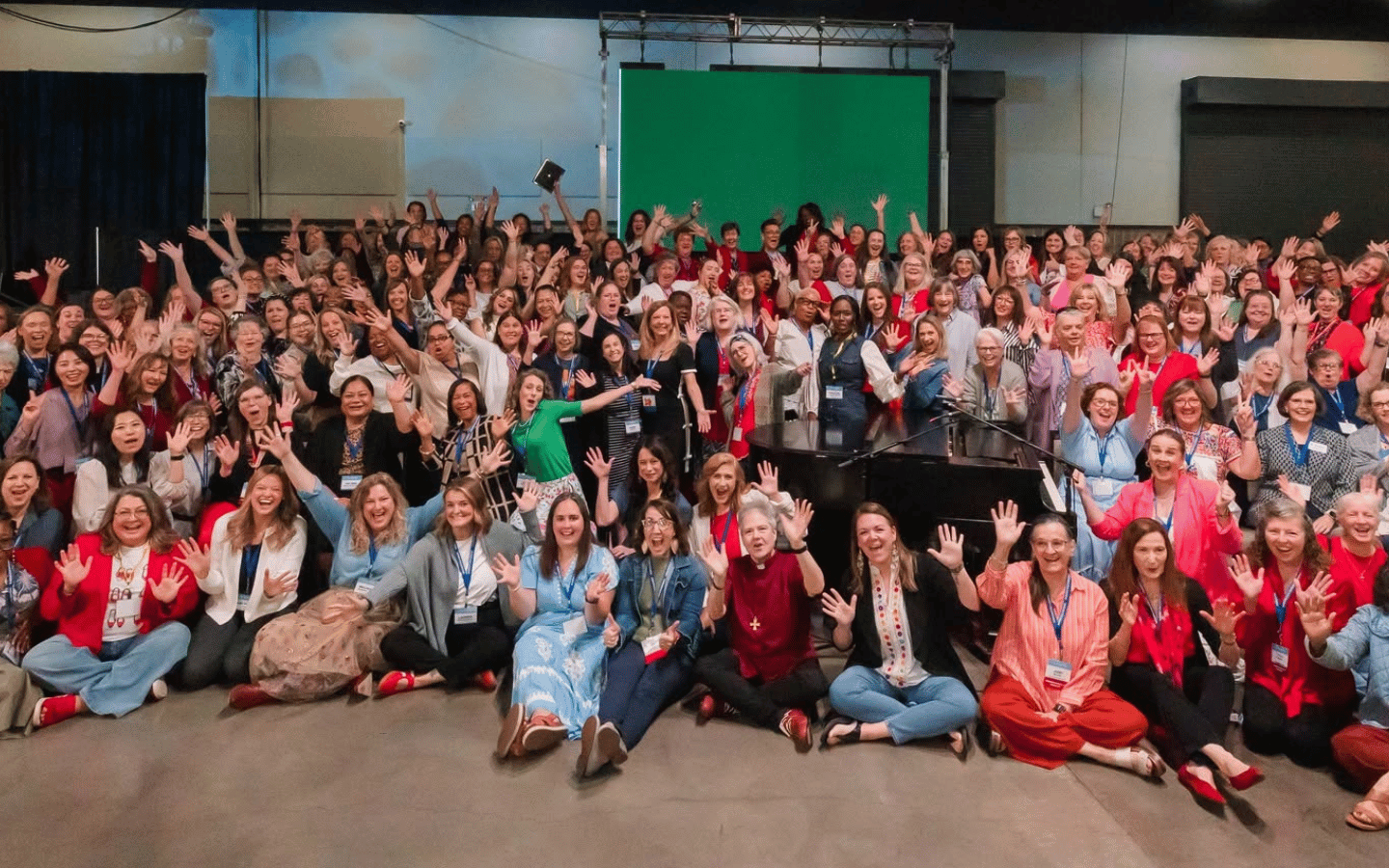
The irony is that when I sat in the Dallas airport last week, I was returning from my own United Methodist Annual Conference, where we celebrated 70 years of ordaining women. This milestone is being marked across the denomination this year.
Women’s ordination was not intuitive in our predecessor denominations. It was fought for. It still isn’t intuitive to everyone. But for 70 years, the value and call of women to ordained ministry has not been questioned by The United Methodist Church or its predecessor, The Methodist Church.
On the Shoulders of Giants
I am grateful for the women whose shoulders my ministry stands upon—for those who endured sexism and misogyny and persisted in their “Yes” to God.
I’m grateful for Rev. Carol Cook Moore, appointed Senior Pastor of my home church when I was a freshman in high school. Nothing about her leadership seemed extraordinary. She was simply my pastor.
Because of that, when I discerned my own call to ministry, I never once questioned it based on my gender. Not once.
I pray the same will be true for my Baptist sisters—those who already know their call and those who have yet to perceive it. May they find a space where their worth is never questioned, never voted on, never treated as anything but normal.
Perhaps that space will never be in the SBC. But your call does not originate in masculinism. Your call is ordained by God.
Take thou authority.
- About the Author
- Latest Posts
Dr. Rebecca M. David Hensley holds a PhD in religious studies, with an emphasis in theological and social ethics. She is a member of the adjunct faculty for Iliff School of Theology and an ordained Deacon in the United Methodist Church.