
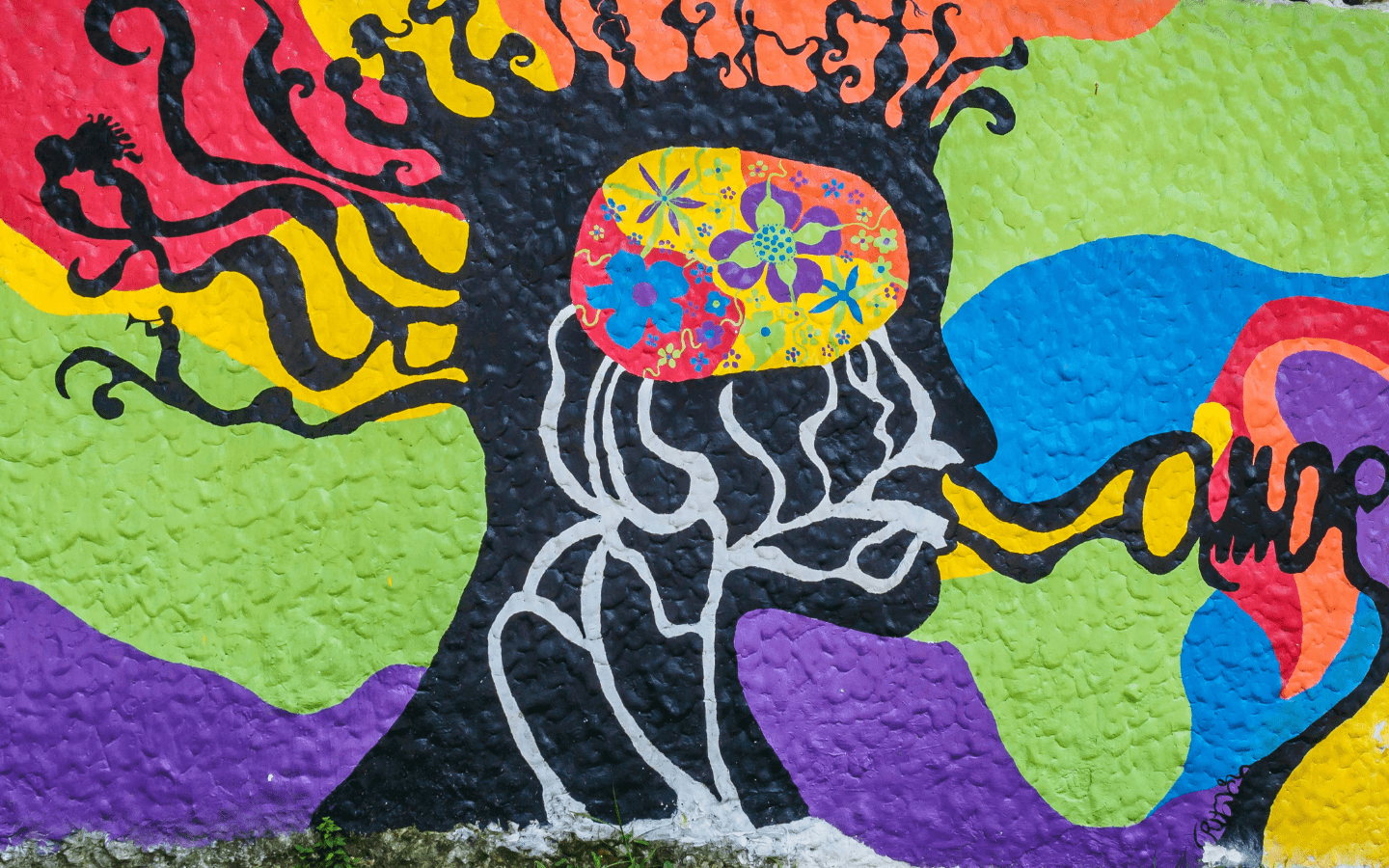
The world tried to colonize my mind long before I had the language to understand what was happening, long before I could name the pressure, the shaping, the quiet punishments, and the expectations that pressed against me from every direction. I was taught what to believe, how to act, how to speak and how to show up in the world, with my emotions shaped to fit others and the truth covered to keep those in charge comfortable.
The world tried to colonize my mind through people who insisted their comfort mattered more than my clarity, through systems that demanded I shrink myself to keep the peace, and through environments where honesty was treated like a threat instead of a virtue. Groups around me placated the anxious person rather than assisting me, rewarding the performance of calm over the reality of struggle. I learned early in life that my inner world was something others wanted to manage, soften or silence.
The world tried to colonize my mind by teaching me to doubt my instincts, to override the signals my body sent me, to treat my own perceptions as unreliable simply because they made other people uncomfortable. I was taught to reinterpret my own reactions through someone else’s lens, to second-guess the truth I felt in my bones, to believe my clarity was aggression and my boundaries were ingratitude.
The mechanics of the colonizing were subtle: a raised eyebrow, a disappointed sigh, a quiet correction, a reminder to “be nice,” a warning not to “make things harder,” a suggestion that I was “too much.” These were the tools used to sand down the edges of my mind until I fit the shape they preferred.
The world tried to colonize my mind so thoroughly that feeling trapped meant feeling voiceless inside my own body, arranged on the outside like a doll while who I really was was silenced.
My body kept the truth even when my environment didn’t; it tightened, recoiled, froze or flared whenever I was asked to betray myself. I learned to hold my breath in rooms where truth was unwelcome, to fold myself into shapes that made other people feel safe, to carry the weight of their expectations like a second spine.
I was told to be agreeable, to be grateful, to be quiet, to be manageable. I was told my instincts were too sharp, my perceptions too honest, my reactions too real. I was told my clarity was a problem.
And because the world tried to colonize my mind, I believed for a long time that the problem was me. But resistance was already forming inside me, even when I didn’t have the words for it.
I realized I was resisting when I sat alone with thousands of memories of choosing myself over the crowd, moments where something in me refused to bend even when bending would have been easier.
I realized it when I stood firm among people who claimed to want justice but ran the moment things got hard in their progressive-theology spaces—people who preached liberation but practiced convenience.
I realized it when I noticed the difference between shaping and erasure. Shaping strengthens you. Erasure hollows you out.
My refusal looked like not playing along, removing myself, and losing social networks and opportunities. It looked like stepping out of circles that demanded my silence. It looked like letting go of people who only valued me when I was small.
It cost me by forcing me to go against the grain painfully, by making me walk away from the familiar, by stripping away the illusion that belonging could be bought with self‑betrayal.
But even as the world tried to colonize my mind, my refusal protected my real self, my psyche, my body and my future.
It protected the parts of me that were never meant to be negotiated. It protected the clarity others found threatening. It protected the instincts that kept me alive. It protected the truth that lived under every forced smile and every swallowed sentence.
I understand now that the people who tried to soften me were never meant to stay; they would have been content with me suffocating in the dark while they kept their own comfort.
The world tried to colonize my mind, but it failed.
Naming this truth is the final act of decolonization. Speaking it out loud is the moment the old architecture collapses. Writing it is the moment the ownership returns to me.
And publishing it is the moment the story becomes irreversible and not twisted to fit someone else’s narrative.
Telling the truth doesn’t remove the weight of reality; it just strips it of the illusions that weigh it down even more.
- About the Author
- Latest Posts
Baptist minister, graduate of Campbell Divinity School, and a neurodivergent advocate.