
Last week, BBC producers decided to air the N-word, a vocal tic aimed at Sinners stars Michael B. Jordan and Delroy Lindo. The slur was shouted during the 79th BAFTA Awards by John Davidson, a Tourette’s Syndrome activist and the inspiration for the documentary I Swear.
All dressed up, Jordan and Lindo were expected to continue with the show while being publicly humiliated in front of their peers. More than a failing, an error, or an oversight—since there was a two-hour delay in airing the ceremony and thus, plenty of time to remove it, I am left to assume the BBC is so racist.
In 2015, activist April Reign created the social media hashtag #OscarsSoWhite to protest the lack of African American nominees in major acting categories at the Academy Awards. This repulsive decision by the BBC deserves the same energy.
“You may have heard some strong and offensive language tonight,” Alan Cumming said, addressing the incident from the podium. “We apologize if you were offended.”
Hannah Beachler, the “Sinners” production designer, called the apology a “throwaway” remark. Because what did Cumming mean by “you may have” and “if you were offended”?
So, the N-word is not offensive to some people? Well, it is so offensive to others that they won’t even say it. Like me, it is so volatile, so dangerous, so heinously criminal, so recognizable, its meanings and implications so very well understood that we leave off the remaining letters.
We leave off the remaining letters because the word is attached to chattel slavery, lynching, Jim and Jane Crow segregation, and police brutality. It is often the first and the last word a victim hears before they are subjected to white supremacist violence. Its meaning is imbued with degradation and barbaric violence, including immolation and mutilation.
“Over the years, [the N-word] has become the best known of the American language’s many racial insults, evolving into the paradigmatic slur,” Randall Kennedy explained in N—–: The Strange Career of a Troublesome Word. “It is the epithet that generates epithets.”
Detailing its “special status,” Kennedy quotes Farai Chideya, who sees the N-word as “the all- American trump card, the nuclear bomb of racial epithets.” He continues, “The writer Andrew Hacker has asserted that among slurs of any sort, [the N-word] ‘stands alone [in] its power to tear at one’s insides.’” More than a gut punch, this incident, made worse by the BBC’s decision to air it, will not be a simple cleanup.
The N-word is an expression of hostility and virulent contempt. It is the word that sustains the myth of white-body supremacy and demands African Americans feign inferiority and mediocrity.
The N-word is an exclusionary and place-keeping word shored up by unchecked and often local, state, and national government-sanctioned violence so that the people “who believe that they are white” can feel important and better than everyone else. And there is no getting away from its menacing meanings.
“[The N-word] properly belongs in such all-American terms as liberty, freedom, justice, and equality,” Henry Demarest Lloyd noted. It is a part of America’s founding; used to create a lower class of people and ensure they stay in this place for the sake of white-body supremacy and racial capitalism.
Jabari Asim pointed out “its remarkable durability, coupled with Americans’ historical willingness to find uses for this epithet in nearly every facet of their everyday lives—from the geographical to the philosophical to the culinary” in The N Word: Who Can Say It, Who Shouldn’t and Why.
The wicked word, created to deny the personhood of Africans and African Americans who were enslaved as personal and insurable property, travels. John Davidson is from Scotland and he knows the N-word.
Davidson said he was “deeply mortified” by his involuntary tic, which erases the victims and centers his experience. This explanation of Tourette’s Syndrome has been the response of many major news outlets, which suggests that some of us still haven’t learned the difference between intent and impact. “Black people are just supposed to be ok with being disrespected and dehumanized so that other people don’t feel bad,” journalist Jemele Hill posted on social media.
“It’s infuriating that the first reaction wasn’t complete and full-throated apologies to Delroy Lindo and Michael B. Jordan,” actor Wendell Pierce said. “The insult to them takes priority. It doesn’t matter the reasoning for the racist slur.”
Jordan is said to have been “disgusted and repulsed,” and Lindo wished “someone from the BAFTAs would have spoken to us.” Jordan’s parents were left “in tears.”
While the corporation apologized, the N-word was not mistakenly broadcast on BBC One and BBC iPlayer. Executives from Warner Bros. asked that the racial slur be removed, but said their concerns were ignored.
Following a second apology from BAFTA, BBC producers said they didn’t hear the racial slur because they were “working in a truck.” But they heard Akinola Davies Jr.’s “Free Palestine” tribute and nixed it.
This is not a controversy. It was a willful decision, a statement even. So, here’s mine once more: The BBC is so racist.
- About the Author
- Latest Posts
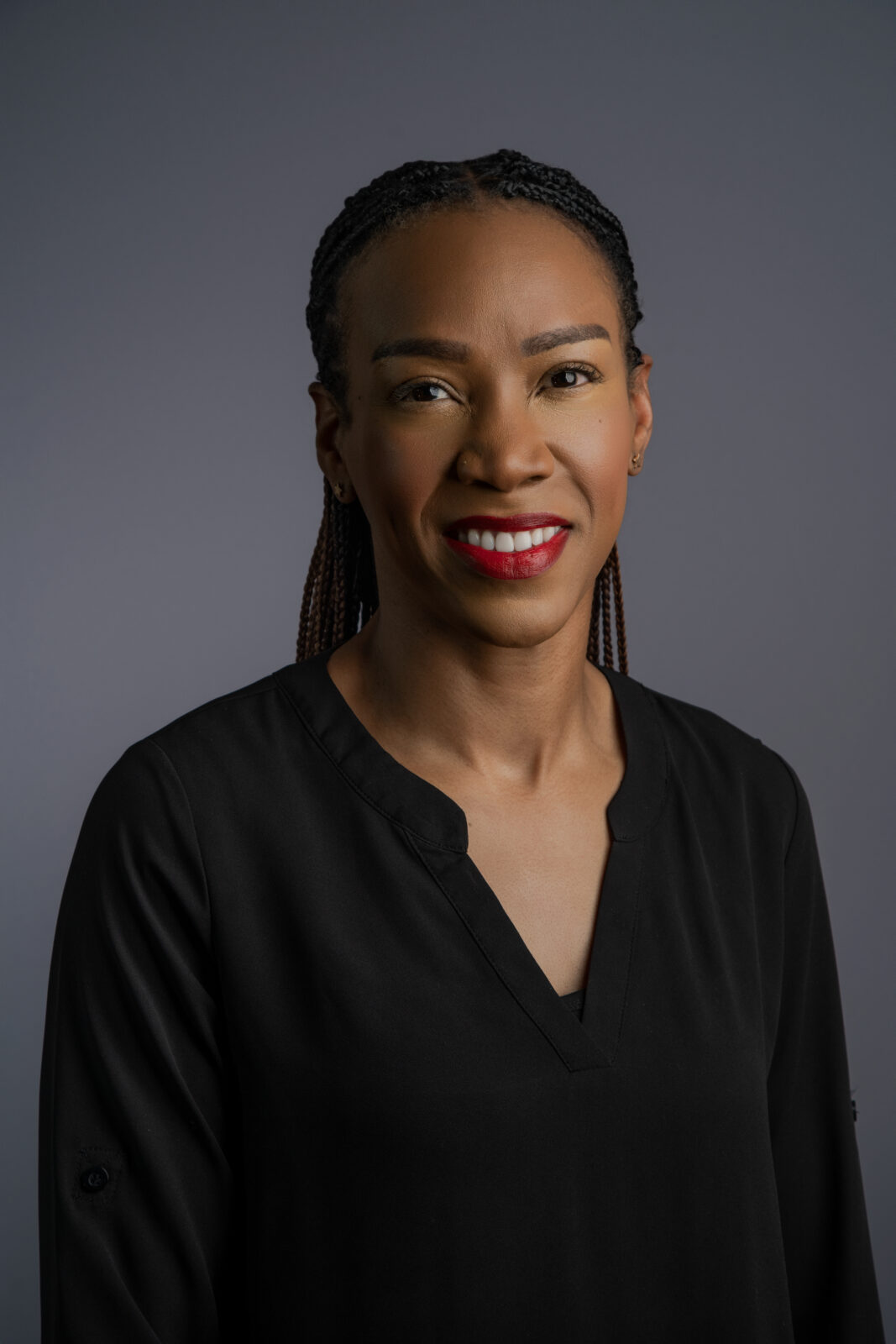
Director of The Raceless Gospel Initiative, an associate editor, host of the Good Faith Media podcast, “The Raceless Gospel” and author of Take Me to the Water: The Raceless Gospel as Baptismal Pedagogy for a Desegregated Church.