
When Americans say “religion and politics,” they mean the religious right. Evangelicals vote Republican. Democrats treat faith the way some families treat money: real, private, and better left unspoken.
On Tuesday night, there was a snapback.
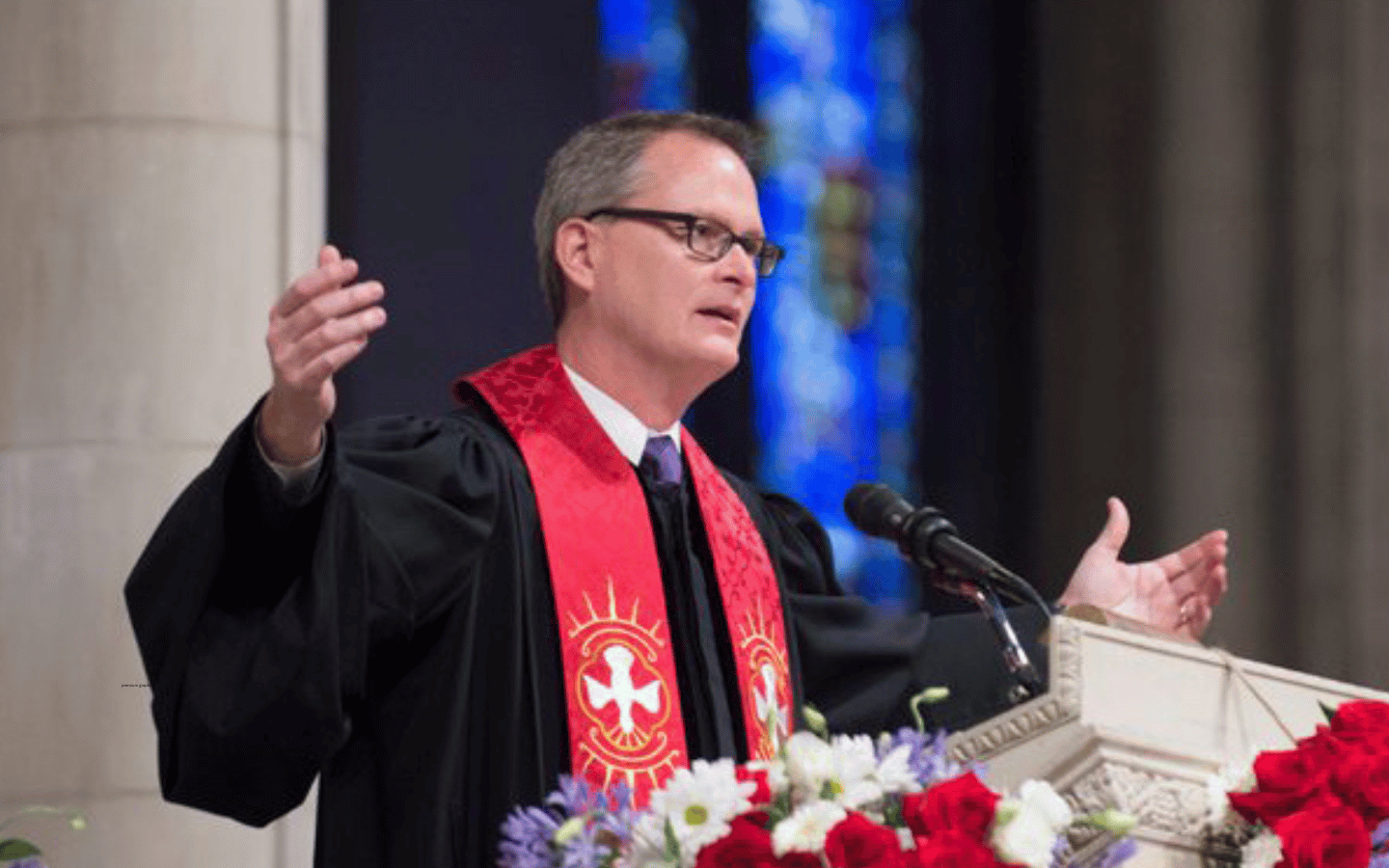
In my home state of Texas, James Talarico, a Presbyterian seminarian and former middle school teacher, beat Ken Paxton with about 55 percent of the vote. He’s the first Democrat elected to the Senate from Texas since Lloyd Bentsen in 1988 and the first Democrat to win any statewide race here since 1994. At his party in Austin, supporters held signs that read “Love Thy Neighbor.”

James Talarico
In Kansas, the Rev. Adam Hamilton, founding pastor of the largest United Methodist church in the country, unseated incumbent Senator Roger Marshall. Kansas had not sent a Democrat to the Senate since 1932.
In Michigan, Abdul El-Sayed, the son of Egyptian immigrants, became the first Muslim elected to the United States Senate. In Pennsylvania, Gov. Josh Shapiro, whose Jewish faith has been part of his public identity from the start, won a second term easily.
The races were different, but the candidates shared one trait: None of them kept their faith a secret.
Talarico’s campaign launch video opened with him standing in front of a church. He argued about scripture on the floor of the Texas House and quoted it on the stump. Early on, he admitted, “There’s sometimes a resistance in my own party to talking about faith so openly.”
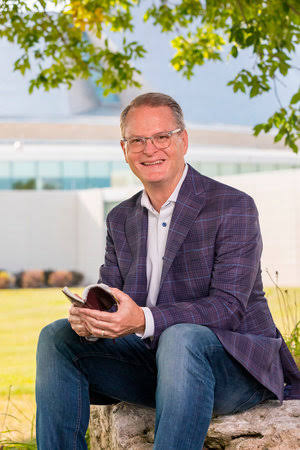
Adam Hamilton
Hamilton took a break from preaching while he campaigned, but he never stopped sounding like a pastor. “I didn’t plan to run for office,” he said the night he won his primary. “I’ve spent my life as a pastor and I try to care for people.”
El-Sayed described his day as starting with fajr, the dawn prayer, at six every morning. “It’s a spiritual practice that reminds me that I am accountable,” he told Baptist News Global.
Shapiro took his oath of office on Hebrew Bibles and has said, “I have made clear that my faith is what called me to service.”
Talarico and Hamilton got the headlines, but they weren’t the only people elected Tuesday who were trained for ministry. When the new Congress is sworn in, it will include multiple people with seminary or divinity school training:
- James Talarico (D), U.S. Senate, Texas. Earned a Master of Arts in Theological Studies from Austin Presbyterian Theological Seminary in 2025 and is still enrolled in a Master of Divinity program. (I should admit a small personal connection here. My own seminary education began at Austin Presbyterian Theological Seminary, the same school where Talarico studied. We weren’t there at the same time, so I can’t claim him as a classmate.)
- Adam Hamilton (D), U.S. Senate, Kansas. Master of Divinity, Perkins School of Theology at Southern Methodist University, 1988.
- Sarah Trone Garriott (D), U.S. House, Iowa’s 3rd District. Ordained ELCA pastor with a Master of Divinity from the Lutheran School of Theology at Chicago and a Master of Theological Studies from Harvard Divinity School. She unseated Rep. Zach Nunn.
- Lindsay James (D), U.S. House, Iowa’s 2nd District. Ordained Presbyterian minister and former college chaplain with a Master of Divinity from Fuller Theological Seminary. She won the open seat over Republican Joe Mitchell. She has said she came into politics “through the seminary.”
- Frederick Haynes III (D), U.S. House, Texas’ 30th District. Senior pastor of Friendship-West Baptist Church in Dallas, with a Master of Divinity from Southwestern Baptist Theological Seminary, a Doctor of Ministry from the Graduate Theological Foundation, and a 2025 PhD in preaching from Christian Theological Seminary. He succeeds Jasmine Crockett, who is a member of his congregation.
- Emanuel Cleaver (D), U.S. House, Missouri’s 5th District, reelected. Master of Divinity, Saint Paul School of Theology, 1974; pastored St. James United Methodist Church in Kansas City for nearly four decades.
- Mark Harris (R), U.S. House, North Carolina’s 8th District, reelected. Seminary-trained Southern Baptist minister and former president of the Baptist State Convention of North Carolina. He won with about 50.4 percent of the vote in a district that is usually safe for Republicans.
- Chris Coons (D), U.S. Senate, Delaware, if reelected. Master of Arts in Religion, Yale Divinity School, 1992, earned alongside his law degree.
This list spans Presbyterians, Methodists, Lutherans, Black Baptists, Southern Baptists, and a Yale-trained ethicist. All but one are Democrats. With Sen. Raphael Warnock, there will be three black pastors in Congress in January.
Not every pastor on the ballot made it.
Robb Ryerse, a progressive pastor in Arkansas, lost to Rep. Steve Womack. Anna Golladay, a former Methodist pastor, lost in Tennessee. Matt Schultz, a Presbyterian pastor in Anchorage, dropped out of Alaska’s House race in July.
Still, the religion reporter Jack Jenkins had counted twelve pastors, former pastors, and seminarians running for Congress as Democrats this year. That’s an unusual number by itself, and an unusual share of them won.
Historians have reminded us all year that none of this is new. The political scientist Ryan Burge traces the religious left back to the 19th-century fight over slavery and he notes that it has always been more religiously diverse than its counterpart on the right.
You can follow that thread a long way back. Thomas Jefferson, who enslaved people and was nobody’s evangelical, still wrote in Notes on the State of Virginia, “Indeed I tremble for my country when I reflect that God is just: that his justice cannot sleep for ever.”
Frederick Douglass, in 1845, split American religion in two: “I love the pure, peaceable, and impartial Christianity of Christ; I therefore hate the corrupt, slaveholding, women-whipping, cradle-plundering, partial and hypocritical Christianity of this land.”
Writing from a Birmingham jail, Martin Luther King Jr. recalled a time when the church “was not merely a thermometer that recorded the ideas and principles of popular opinion; it was a thermostat that transformed the mores of society.”
King’s pulpit at Ebenezer Baptist now belongs to Warnock. For years, he has been saying that “a vote is a kind of prayer for the world we desire for ourselves and for our children.”
One night doesn’t make a movement. These candidates won in a midterm with an unpopular president and nobody can yet say how much of the result came from faith and how much from the national mood.
Hamilton has said his own congregation is split roughly evenly among Republicans, Democrats, and independents. That reminds us that the people in the pews have never voted as one bloc. Still, some things are already clear.
In Texas, a Democratic victory party was full of “Love Thy Neighbor” signs. A senator-elect from Michigan will pray at dawn before he votes. A Methodist preacher from Kansas is heading to the Senate and a whole pew of seminary graduates is going with him.
Tuesday night settled whether the religious left exists.
- About the Author
- Latest Posts

CEO of Sean Palmer Coaching, Homiletician in Residence at Bammel Church in Houston, and co-host of the “Sacred Frames” movie podcast.