
Living abroad changes your relationship with home. Distance has a way of sharpening both affection and disappointment. And in recent years, those feelings have personally intensified on both sides of the proverbial coin.
As an American living as an immigrant, I have often felt more aware of my mother country’s shortcomings. I can see more of its fractures than its virtues, particularly as I watch it unfold from afar. From political polarization to plain old cultural divides, there have been moments when I have not felt especially proud to call myself an American.
And yet, most unexpectedly, some of the things that have helped me hold onto both community and hope here, in France, have been unmistakably American.
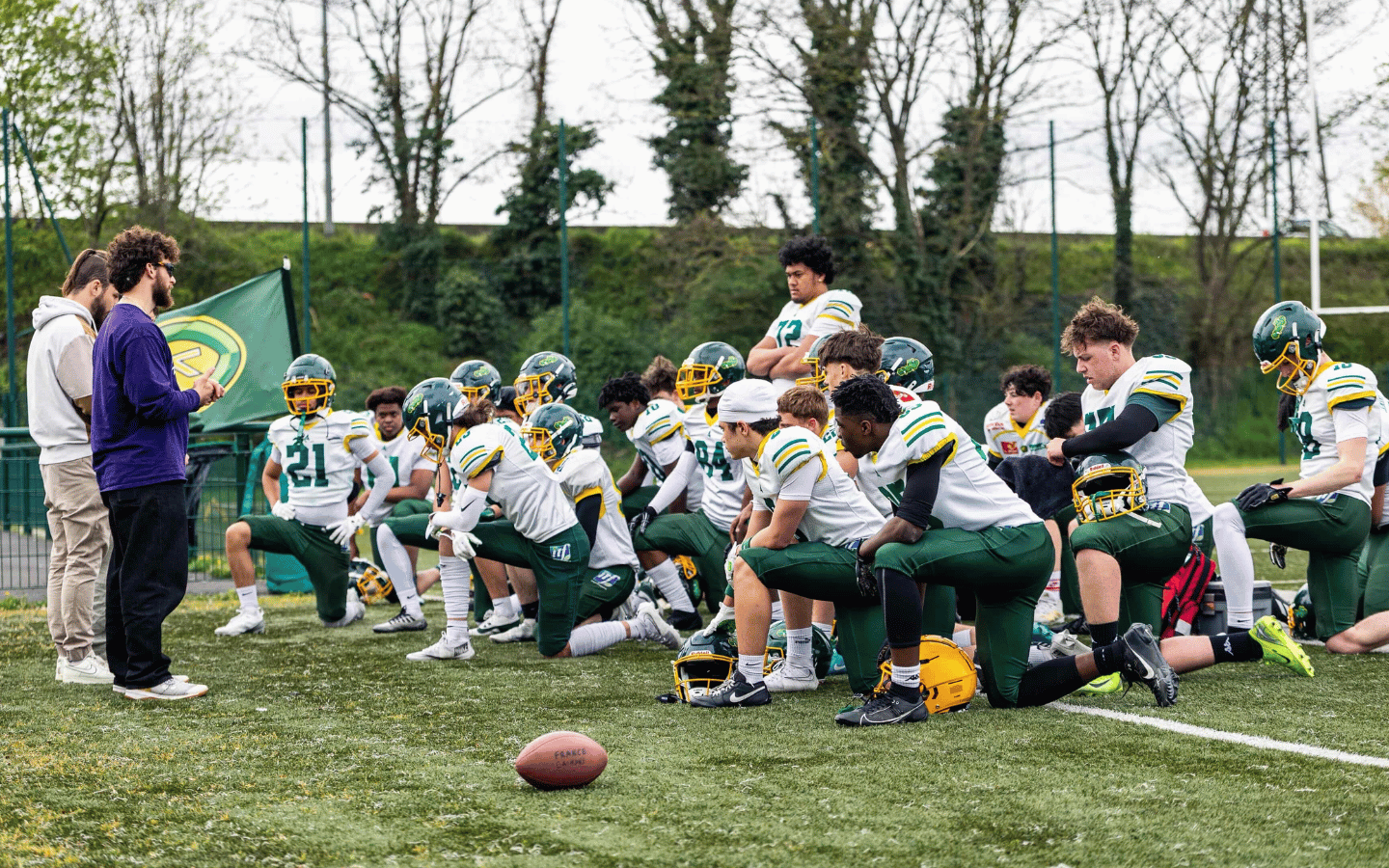
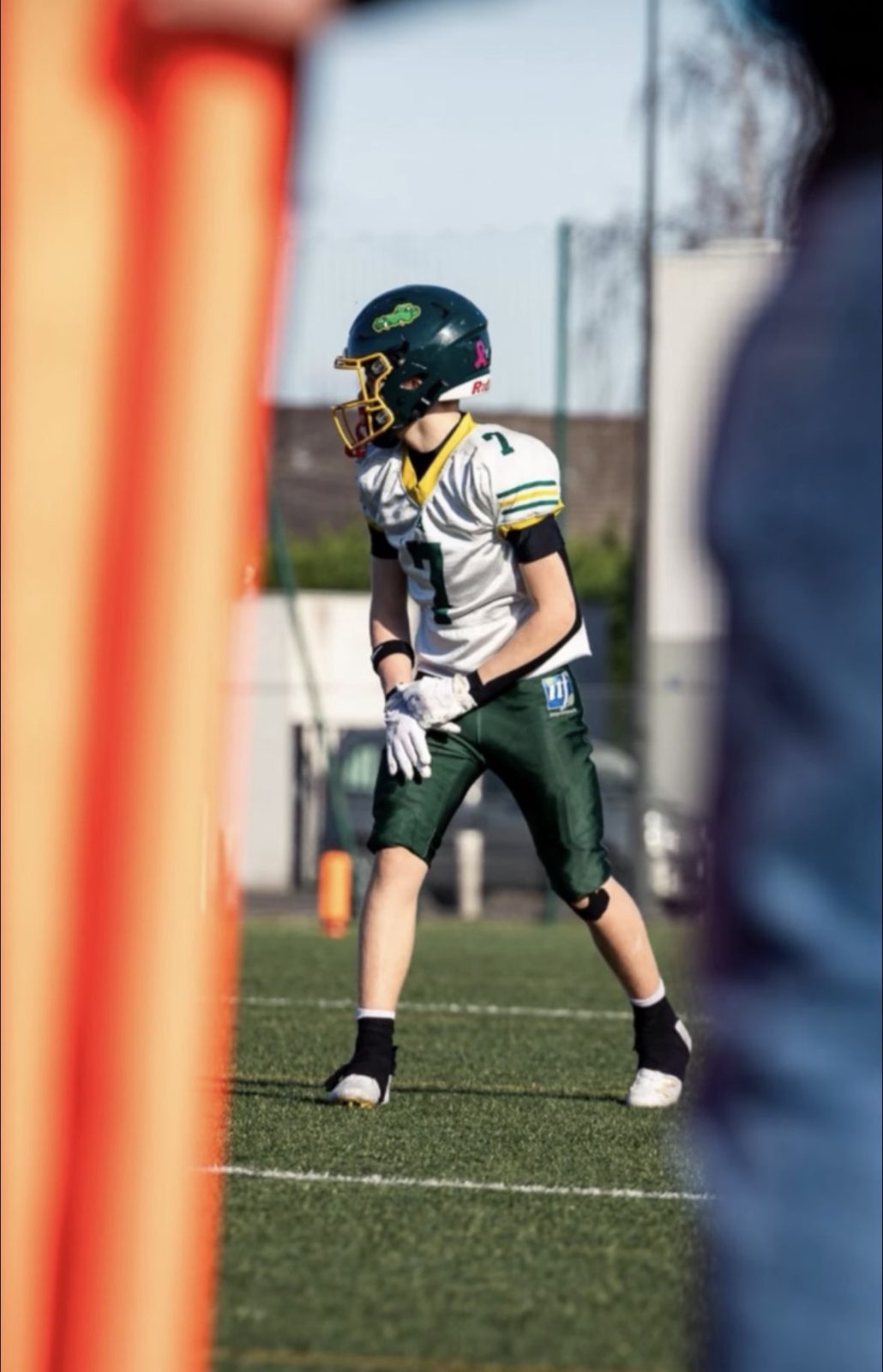
I never imagined that American football in the French countryside would become one of the places where my family would feel most at home. Yet, somewhere between cold weekend practices, snack bar sandwiches and frites, and long drives across the countryside for games with the Caimans 72, our family found an unexpected “home.”
Unlike in the United States, our American football is a “club sport,” not tied to school athletics. This means my boys play year-round, and games can either be played under the squelching sun or in the rain and near-zero temperatures. For spectators and parents, year-round play means I have football gear made of fleece, and also of the lightest material I own.
The kids play from late August until the end of June or beginning of July, with a small “off-season” break in the summer for the sacred French vacation period. So they don’t just spend a single season together, but every season together—through every weather and every stage of growing up and growing into themselves.
(Credit: Guy Canuel)
Sideline Community
A few weeks ago, my sons traveled to Paris for the U18 Championship game. Our season ended in disappointment and, for one of my sons, a broken collarbone. However, it wasn’t the difficult loss or even the trip to the Urgences that has stayed with our family.
Instead, it was the coaches, teammates and families rallying around one another. What will stay with us forever is exactly what the kids yell every time they put their hands into the circle before a “break”: 1, 2 Caïmans, 1, 2, Family!

(Credit: Guy Canuel)
And watching French teenagers put their hearts into a game practically synonymous with American culture has felt strangely healing at a time when I haven’t wanted to claim that culture for myself.
Part of that healing has come through the ordinary rituals that surround the game itself. The barbecues that have felt like a tailgate after practice, lasting until the wee hours of the morning. The conversations on the sidelines that move awkwardly but affectionately between French and English, for me, the weakest French speaker in my family. Decking ourselves out in green and gold gear at every game.
Over time, my husband and I somehow became “football parents” not just to our own children, but to much of the team. We show up bundled against the cold with cowbells, snacks, a foam finger and far more enthusiasm than anyone expects. But the players notice.
Before games, our sons and their teammates give all the parents who have come out to watch a “check,” a small gesture of acknowledgment before taking the field. Over the season, we have seen injuries, improbable catches, and moments of real courage, and we have grown deeply proud of these players and their coaches.
Sometimes “home” is the feeling you get when you’re screaming after that touchdown. On the surface, it might seem ridiculous that things like cowbells, cleats and sparkly football-shaped earrings could matter to anyone. But immigrants deeply understand that memory attaches itself to the most ordinary of things, and that sometimes those same things remind you of who you were before you crossed an ocean to begin a new life.
Living abroad thrusts you into liminal space. You are no longer fully at home in the place you left behind, but you never entirely stop being foreign in the country in which you now live.
In France, my kids are the “Americans” despite living here most of their lives, speaking perfect French and going to French school. In the U.S., though, they are very much foreigners, except for their love of football and chicken wings.
Over time, living this way can make one’s identity feel fragmented. But you learn to exist “in between” languages, cultures and expectations.
Rooted in Exile
(Credit: Guy Canuel)
Faith has helped me understand the tension of liminal space differently.
Scripture is filled with stories of exile, pilgrimage, and displaced people trying to remain faithful far from home. The people of God have always carried a complicated relationship with place and belonging. Christianity itself emerged from communities that understood what it meant to live as strangers, foreigners and resident aliens within larger empires.
Throughout those stories, God consistently meets people through community, hospitality and shared tables.
That truth feels especially poignant. While so much of our modern lives is pushing us away from one another and toward deeper isolation, more outrage, and increasing suspicion, I am reminded that we do not form identity in isolation but in community.
Culture is about connection. It is about people gathering around shared rituals and remembering that we belong to one another.
In many ways, American football should not work here. It is loud, complicated, and deeply foreign to much of French culture. Most of the parents do not know the rules, though we do try to help.
But perhaps that is part of what makes it so beautiful. It has created a space where people can gather around something intensely joyful, whether or not they understand the rules. There is both common purpose and shared meaning on the turf.
There is something quietly sacred about that.
Sometimes sacredness shows up as teenagers wearing shoulder pads. Sometimes it shows up in a post-practice barbecue with people who have become family. Sometimes it shows up in a field thousands of miles from home, where it unexpectedly reminds you who you are.

- About the Author
- Latest Posts
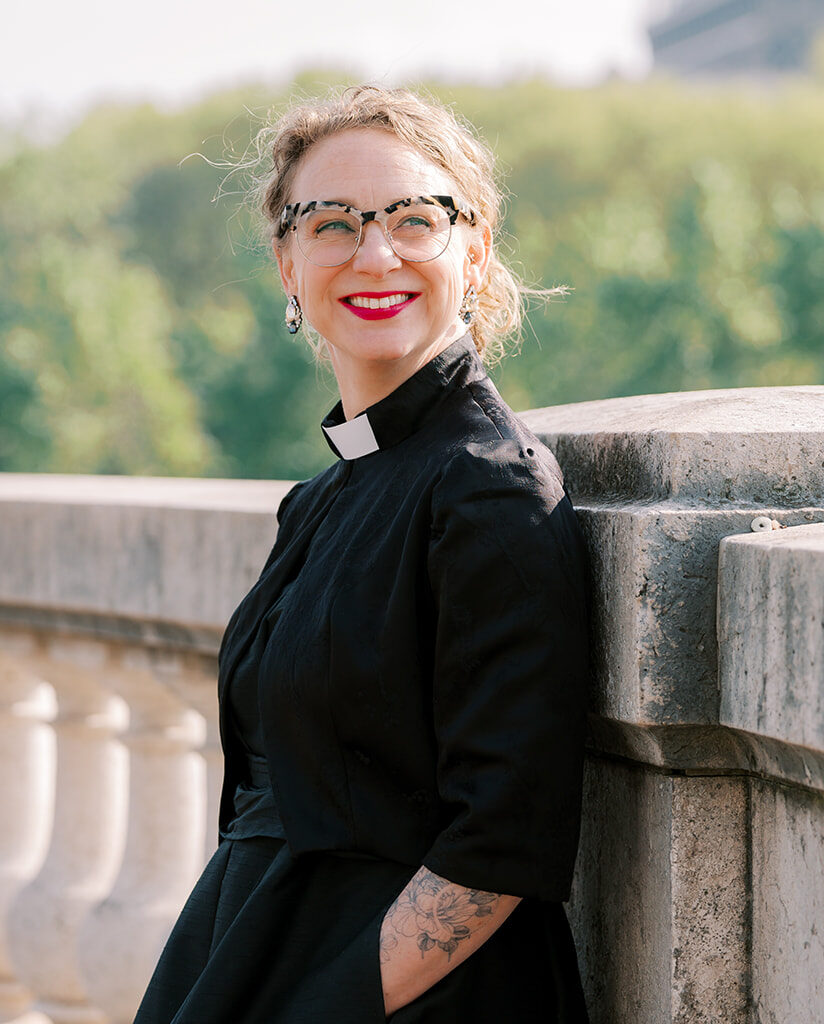
Rev. Michelle Wahila is an ordained PCUSA pastor, founder of Ruffled by Grace, and sought-after officiant and retreat leader. She creates heartfelt celebrations and soulful experiences that blend tradition with imagination. Now living in a 19th-century farmhouse in rural France with her family and a menagerie of pets, she enjoys gardening, making jam, and savoring a good cup of coffee.