
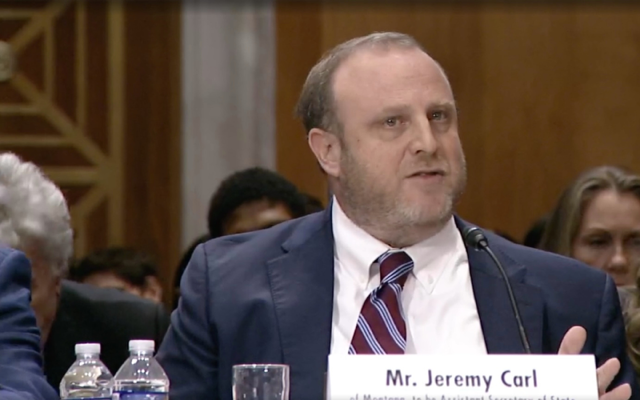
Jeremy Carl, a Trump nominee for the State Department’s outreach to international organizations, lamented the loss of white identity during a recent hearing with the Senate Foreign Relations Committee. When pressed by Senator Chris Murphy (D-Conn.) to identify “the values that stitch together white identity” and explain his views on its supposed erasure, he listed the white church, white food and white music, evidenced by Bad Bunny’s Super Bowl halftime performance in Spanish. In summary, he couldn’t.
It was painfully obvious Carl doesn’t understand the difference between race, ethnicity and nationality. Instead, he spouted off a few of the talking points of white fragility, which is rooted in a collective angst and fear of being replaced as the core culture of American identity.
From his response, it appeared Carl hadn’t given white identity much thought. Perhaps this is because white identity has been considered the blameless identity, doubling as a defense mechanism. Big Bill Broonzy sang about this well-documented expression of racism and Jim Crow-era colorism in “Black, Brown, White”: “They say if yous white, she’s all right/ If yous brown, stick around/ But if yous black, oh brother/ Get back, get back, get back.”
The witness of W.E.B. DuBois must also be brought to bear when persons speak ahistorically about white identity. “It must be remembered that the white group of laborers, while they received a low wage, were compensated in part by a sort of public and psychological wage,” the pioneer civil rights leader and historian said. “They were given public defense and titles of courtesy because they were white.”
Treated as the default identity, white identity has long been able to exist unchecked and thus, unmarked. But increasingly persons “who believe themselves to be white,” as described by Ta-Nehisi Coates, are identifying with this racial category to assert authority when their dominance becomes questionable.
But what does it mean to identify as white? Give examples of white culture, as the claim of white cultural genocide is also making the rounds. Fear of becoming the minority in the U.S. also undergirds this whitelashing or political and economic backlash against communal progress by persons racialized as white.
During this hearing, Carl didn’t demonstrate a working knowledge of the history of immigration in this country, namely Ellis Island, where roughly 12 million immigrants passed through between 1892 and 1954. Those immigrants came from countries like Germany, Ireland, Britain, Russia, Italy, Poland, Hungary and Greece.
“No one was white before he/she came to America,” James Baldwin, who talked about whiteness as a metaphor for safety and power, explained in an essay titled “On Being ‘White’… and Other Lies.” “It took generations and a vast amount of coercion before this became a white country.”
A part of “the racial contract,” which is named and outlined by Charles W. Mills, but not before identifying white supremacy as a political system, white identity was created to consolidate power, privileges, systemic advances, and resources into the hands of certain immigrants. This required an agreed-upon cultural erasure.
“This pseudo ‘white’ identity… was not something that just fell on us out of the blue, but something that many Italian Americans grabbed with both hands,” poet Diane di Prima said, cataloguing what her parents gave up in exchange for this so-called white identity. “This pseudo ‘white’ identity… was not something that just fell on us out of the blue, but something that many Italian Americans grabbed with both hands. Many felt that their culture, language, food, songs, music, identity, was a small price to pay for entering the American mainstream. Or they thought, as my parents probably did, that they could keep these good Italian things in private and become ‘white’ in public.”
Further, Carl supports Baldwin’s historical knowledge and personal experience, naming “certain types of Anglo- derived culture,” “Scot-Irish military culture,” and “sub-elements of that culture,” identifying the Italian and Irish. But he also conflates the social category of race with ethnicity. Though biologically unfounded, race is attributed to physical characteristics, while ethnicity is rooted in a shared ancestry, history, language, religion, and traditions.
“Where were you born?” is a question of nationality. It often comes up in discussions about birthright citizenship, which used to be self-explanatory. However, due to recent national attention on U.S. Immigration and Customs Enforcement surges in select cities, some Americans are wondering whether they need to carry identification.
“The narrative that white people should see the wellbeing of people of color as a threat to their own is one of the most powerful subterranean stories in America,” Heather McGhee wrote in The Sum of Us: What Racism Costs Everyone and How We Can Prosper Together. “Until we destroy this idea, opponents of progress can always unearth it and use it to block any collective action that benefits us all.”
McGhee continued, “Today, the racial zero-sum story is resurgent because there is a political movement invested in ginning up white resentment toward lateral scapegoats (similarly or worse- situated people of color) to escape accountability for a massive redistribution of wealth from the many to the few. … This divide-and-conquer strategy has been essential to the creation and maintenance of the Inequality Era’s other most defining feature: the hollowing out of the goods we share.”
Because this is a game of racial capitalism, and the only color that has ever mattered is green.
- About the Author
- Latest Posts
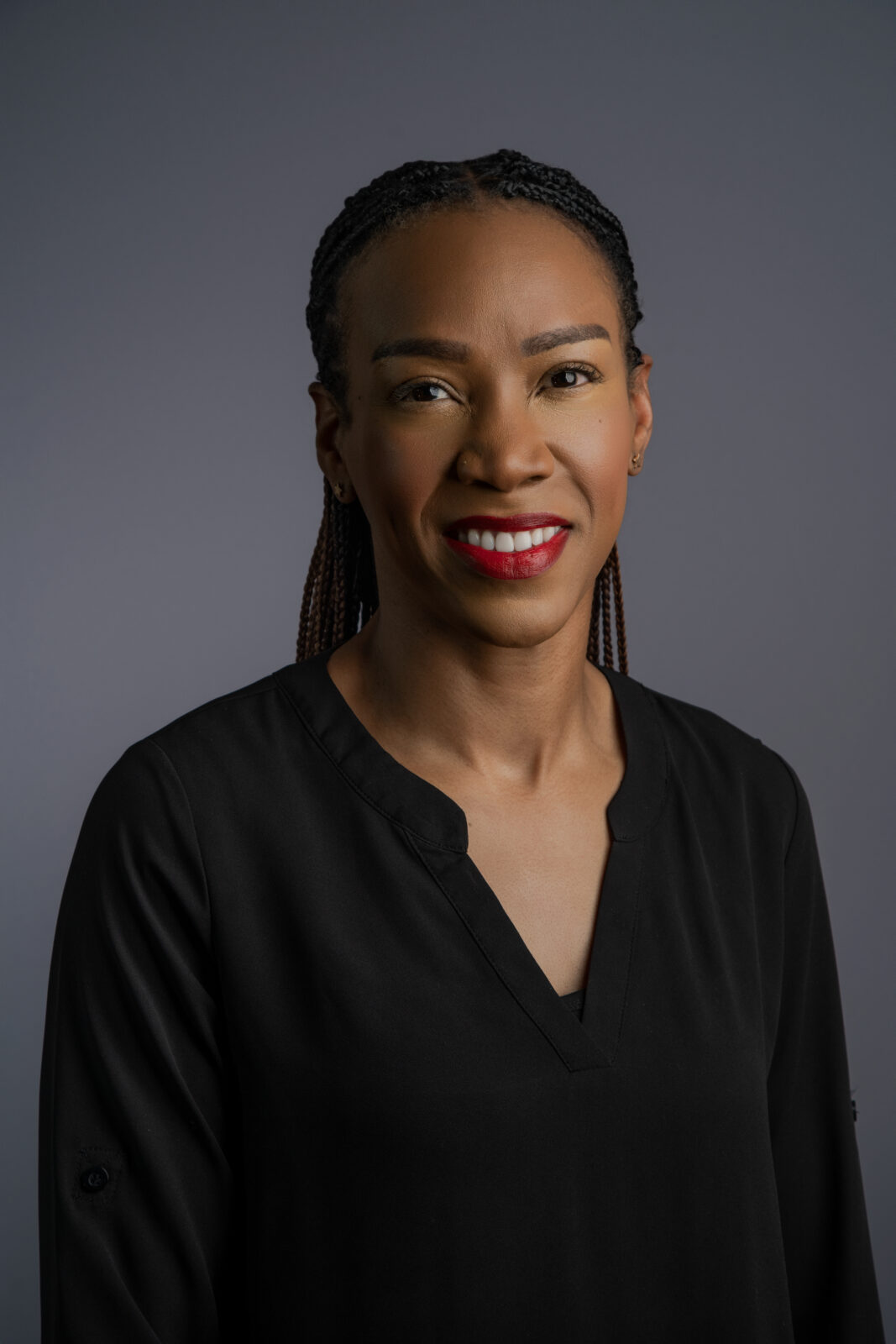
Director of The Raceless Gospel Initiative, an associate editor, host of the Good Faith Media podcast, “The Raceless Gospel” and author of Take Me to the Water: The Raceless Gospel as Baptismal Pedagogy for a Desegregated Church.