

This February marks the 100th anniversary of African American History Month.
A century ago, African Americans officially began to reclaim their time in history, pass on their stories, protect their memories, recognize key and lesser-known historical figures and celebrate their accomplishments. To combat cultural erasure, African American History Month also serves as a time to educate the public on the neglected history of African Americans, which includes historical efforts towards freedom and equality.
In 1926, the commemoration began as “Negro History Week” in honor of the achievements, contributions, and resilience of African Americans. The week-long observance was aligned with the births of Abraham Lincoln and Frederick Douglass. Established by Dr. Carter G. Woodson, a historian and the founder of the Association for the Study of African American Life and History (ASALH), the recognition and preservation of African American history remain central to the community’s wellspring of cultural awareness, moral fortitude, and dignity.
The father of African American history, Woodson wrote in The Mis-Education of the Negro, “No thought was given to the history of Africa except so far as it had been a field of exploitation for the Caucasian.” He continued, “You might study the history as it was offered in our system from the elementary school throughout the university and you would never hear Africa mentioned except in the negative. … The education of the Negroes, then, the most important thing in the uplift of the Negroes, is almost entirely in the hands of those who have enslaved them and now segregate them.”
On February 10, 1976, during the country’s bicentennial, President Gerald Ford officially established the observance, though many communities had already elected to make it a monthlong celebration. “We can seize the opportunity to honor the too-often neglected accomplishments of Black Americans in every area of endeavor throughout our history,” he said in an official message. The act was further solidified in 1986, on the sixtieth anniversary of the celebration, when Congress passed Public Law 99-244, wherein the joint resolution stated: “To provide for the month of February, 1986, as ‘National Black (Afro-American) History Month.”
One hundred years later, how will we celebrate? When White Christian Nationalism is white-washing history, removing historical markers and forcibly enshrining America’s myths of “Promised Land” and “chosen people” in our collective memory?
I say we remember as prescribed by Lucille Clifton in her poem titled “why some people be mad at me sometimes”: “they ask me to remember/ but they want me to remember/ their memories/ and i keep on remembering/ mine.” Remember Mother Africa, the drumming codes, the Spirituals, the slave rebellions, the maroon settlements, the Underground Railroad, the Great Migration, the Harlem Renaissance, the Back-to-Africa Movement, the Civil Rights Movement, the Black Panther Party, the Me Too and Black Lives Matter movements.
I say we read. Read the slave narratives and the folktales. Read David Walker’s appeal, Sojourner Truth’s speech to the Women’s Rights Convention, and Henry Highland Garnett’s “An Address to the Slaves in the United States of America.”
Read the works of Frederick Douglass, Booker T. Washington, Charles W. Chestnutt, Frances E.W. Harper, Anna Julia Cooper, and Ida B. Wells-Barnett. Read the writings of W.E.B. DuBois, Arthur A. Schomburg, Ann Spencer, Alain Locke, and Georgia Douglas Johnson.
Read the testimonies of Marcus Garvey, Claude McKay, Nella Larsen, Jean Toomer, Sterling A. Brown, and Arna Bontemps. Highlight the pages of writings by Countee Cullen, Dorothy West, Richard Wright, Robert Hayden, Bob Kaufman and Lorraine Hanberry, especially.
Read Zora Neale Hurston’s observations. Read Maya Angelou’s autobiographies. Read bell hooks’ teachings—all of them.
Read Toni Cade Bambara’s The Salt Eaters and Alice Walker’s The Color Purple. Mark the pages of The Autobiography of Malcolm X, Martin Luther King Jr’s “Letter from a Birmingham Jail,” and Amiri Baraka’s “Preface to a Twenty Volume Suicide Note.”
Read James Weldon Johnson’s The Autobiography of an Ex-Colored Man, Ralph Ellison’s Invisible Man, James Baldwin’s Notes of a Native Son and Toni Morrison’s The Bluest Eye as a series of instructions. Then, read aloud the poetry of Phyllis Wheatley, Paul Lawrence Dunbar, Langston Hughes, Gwendolyn Brooks, Sonia Sanchez, June Jordan, Audre Lorde, Lucille Clifton, Nikki Giovanni, and Rita Dove for starters.
Read while listening to the secular rhymes and work songs. Read with the blues of B.B. King, Etta James, John Lee Hooker, Muddy Waters and Howlin’ Wolf playing softly in the background. Listen to John Coltrane’s “Love Supreme” or Prince’s “Purple Rain.”
Read while listening to the conscious rap of Gil Scott Heron’s “The Revolution Will Not Be Televised,” Grand Master Flash and the Furious Five’s “The Message,” Public Enemy’s “Don’t Believe the Hype,” Tupac Shakur’s “Keep Ya Head Up, Mos Def’s “Mathematics,” and Kendrick Lamar’s “Alright.” Or settle into the rhythm and blues of Marvin Gaye, Stevie Wonder, Aretha Franklin, Michael Jackson, Whitney Houston or Beyonce.
Just keep your eyes on the page and on the prize. Because all along, you should be reading between the lines as it is how we have survived all these years, which is worthy of celebration this month and every day of the year. Haven’t you received Lucille Clifton’s invitation: “come celebrate/ with me that everyday/ something has tried to kill me/ and has failed?”
- About the Author
- Latest Posts
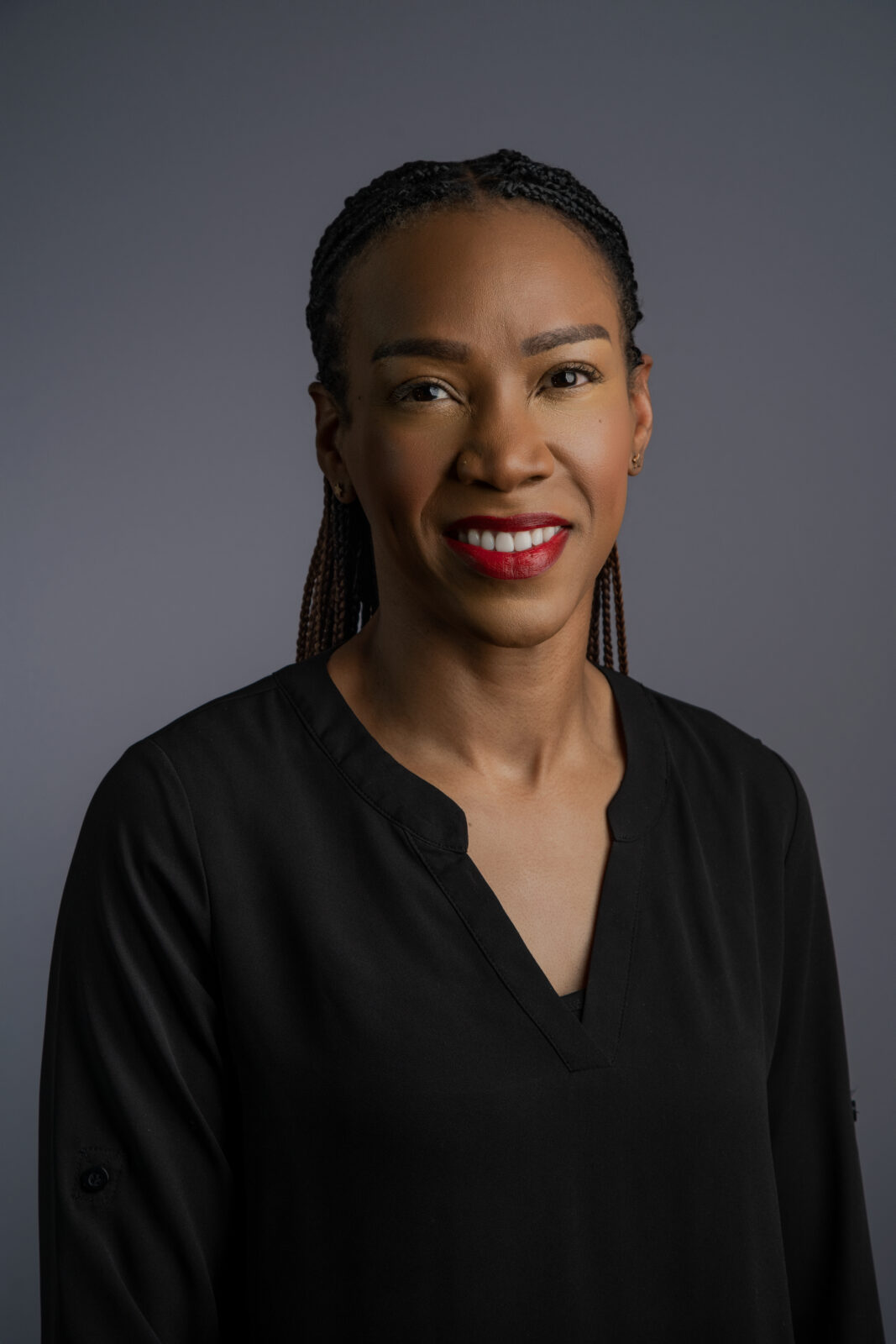
Director of The Raceless Gospel Initiative, an associate editor, host of the Good Faith Media podcast, “The Raceless Gospel” and author of Take Me to the Water: The Raceless Gospel as Baptismal Pedagogy for a Desegregated Church.