
I am a year into learning how to live without my dad, doing the delicate dance, back and forth, between the stages of grief. Somewhere between anger and acceptance, I remembered that the world does not get quieter just because your heart is hurting.
The sun rises each day, and responsibilities remain even when we are grieving. Life keeps going and it asks us to participate, to pay attention, and to care. We still need to show up for our people— the people who need us. Meanwhile, we are trying to make sense of a world that feels difficult to understand and navigate.
There has been a steady accumulation of things to worry about, new things to grieve, and other things that demand my attention. And that is without turning on the nightly news. It all feels like too much, especially to my grieving heart.
Ecclesiastes reminds us that there is a time for everything: “a time to weep and a time to laugh, a time to mourn and a time to dance.” There is great wisdom in acknowledging that our lives move through different seasons, each with its own set of demands and its own grace.
Yet it can feel like we are living in the midst of every season, arriving all at once. We are grieving and worrying, trying to find joy while confronting suffering, attempting to care for others while trying to tend to our own struggling hearts. All while we go on adulting.
We don’t get to set aside the rest of the world while we learn to live with our own losses.
There is no pause button on our human-ness. There is also no designated season for grief or tending to our own hearts before turning our attention to the suffering of our neighbors.
We are expected to keep going, to keep caring, and to keep showing up. Sometimes that all feels like too much. We forget that we are human with our own human limitations because we are living in a world that rarely likes to acknowledge finitude.
There is always another headline, another tragedy, another injustice. We know that indifference is not the answer to these horrors.
And yet, we cannot absorb everything, respond to every crisis, or carry every heartbreak as though it were our own. Nor should we have to prove our compassion by trying. Being human means having needs of our own, even when the world doesn’t give us permission to tend to them.
I worry we have begun to treat this kind of spiritual exhaustion as a moral failing. We encourage one another to care, speak up, and take action— and we should. We need our collective voices to make a difference.
Our Christian faith calls us to love our neighbors, seek justice, and care for the vulnerable. But what happens when someone has reached their limit? What happens when grief has already taken so much energy that there is very little left to give?
Exhaustion and the need for rest are not moral failings. We do not know what another person is carrying.
The person who has stepped away from the news may still care deeply about the suffering it reports. The person who is quiet may be grieving a loss we cannot see. The one who has stepped away from church leadership may already have too much on her plate.
We cannot measure another person’s compassion by how visibly they express their outrage or how readily they respond to every new crisis. Compassion should draw us toward one another, not become another measure by which we judge worth.
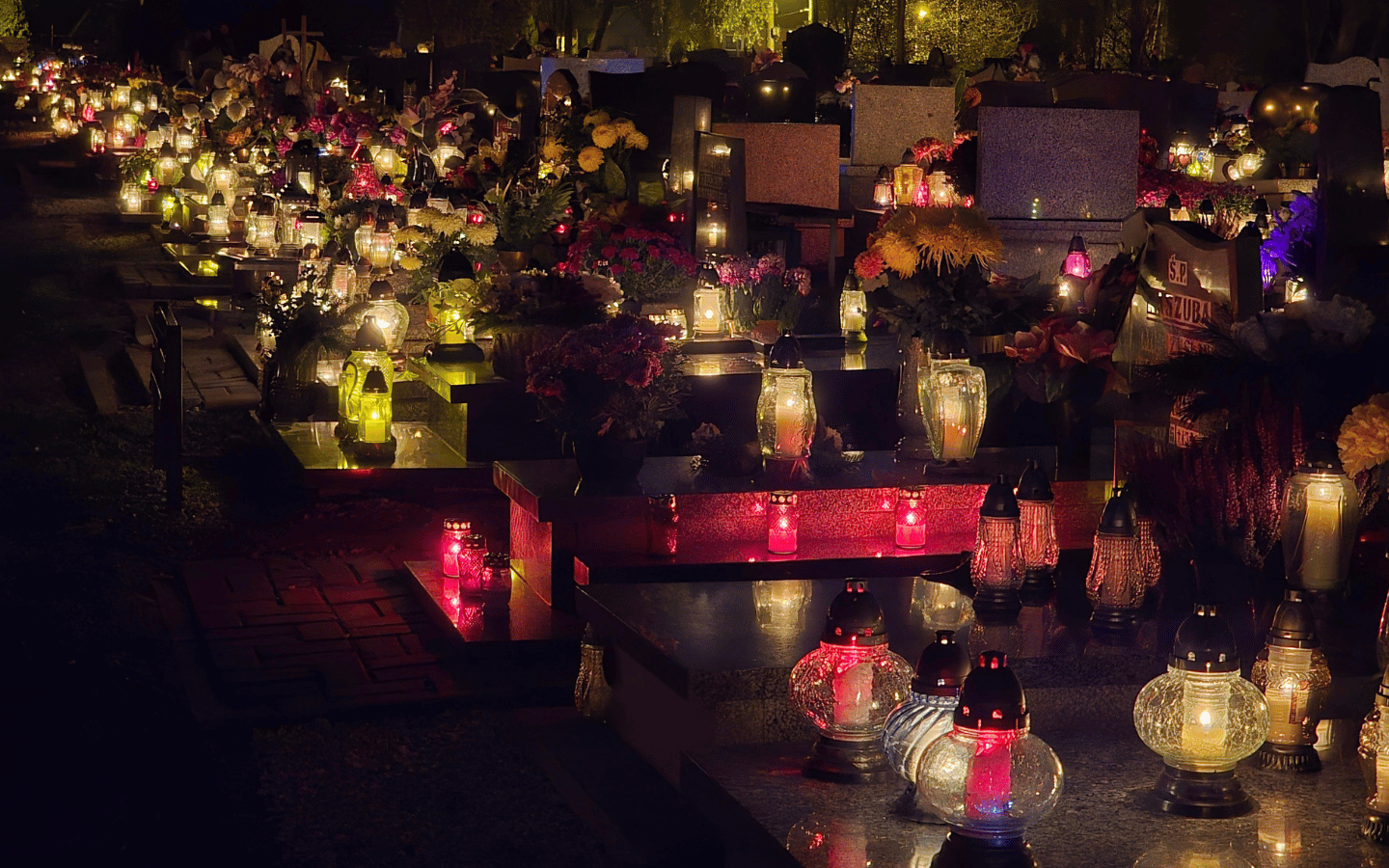
On All Saints’ Day, I find myself thinking about the people we remember and what their lives might teach us about being human in difficult times.
All Saints’ Day invites Christians to remember the saints who have gone before us and to celebrate the communion that connects us across generations. It reminds us that faith is not simply an individual undertaking.
We belong to a community shaped by the lives, witness, sacrifices, and love of those who came before us. We belong to each other.
This year, I approach that remembrance with a deeper understanding of grief, grace and love.
I am learning that remembering someone is not the same as remaining in the past. Love continues to shape us, even when the person we love is no longer with us. We also carry their absence alongside the ordinary demands of living, and sometimes we need an abundance of grace to navigate those demands.
Perhaps this remembrance also invites us to reconsider the burdens we ask one another to carry.
The saints were not superhuman. They were human beings just like you and me. They were people who sought to live faithfully amid uncertainty, suffering, and circumstances they could not always control.
Our faith does not ask us to be superhuman. Our faith asks us to be human in a messy world. We are called to love our neighbors and bear one another’s burdens, not pretend we have no limits.
There is a difference between encouraging people to care and shaming them for being exhausted. Equally, there is a difference between inviting people into meaningful action and expecting them to remain perpetually available in every crisis. We can take suffering seriously without requiring ourselves to be overwhelmed by it.
The communion of saints reminds us that we were never meant to do this alone. We need one another to help carry what has become too heavy, and to offer grace when simply being human in this messy world feels like too much.
The world will keep asking much of us. There will always be things to grieve, deep suffering, and more that need our attention and care.
We can’t opt out of the human condition and we cannot carry the breadth and depth of life’s burdens alone. But we can be gentler with one another as we navigate it all.
This year, when we honor the legacies of the saints who taught us faith, how to live with love, and how to persevere, maybe we can also make space for the humanity in the saints around us: the grief, the weariness, the uncertainty, and the hope that persists within us all.
Perhaps at the heart of sainthood is learning to hold these things with greater tenderness, for ourselves and for one another.
- About the Author
- Latest Posts
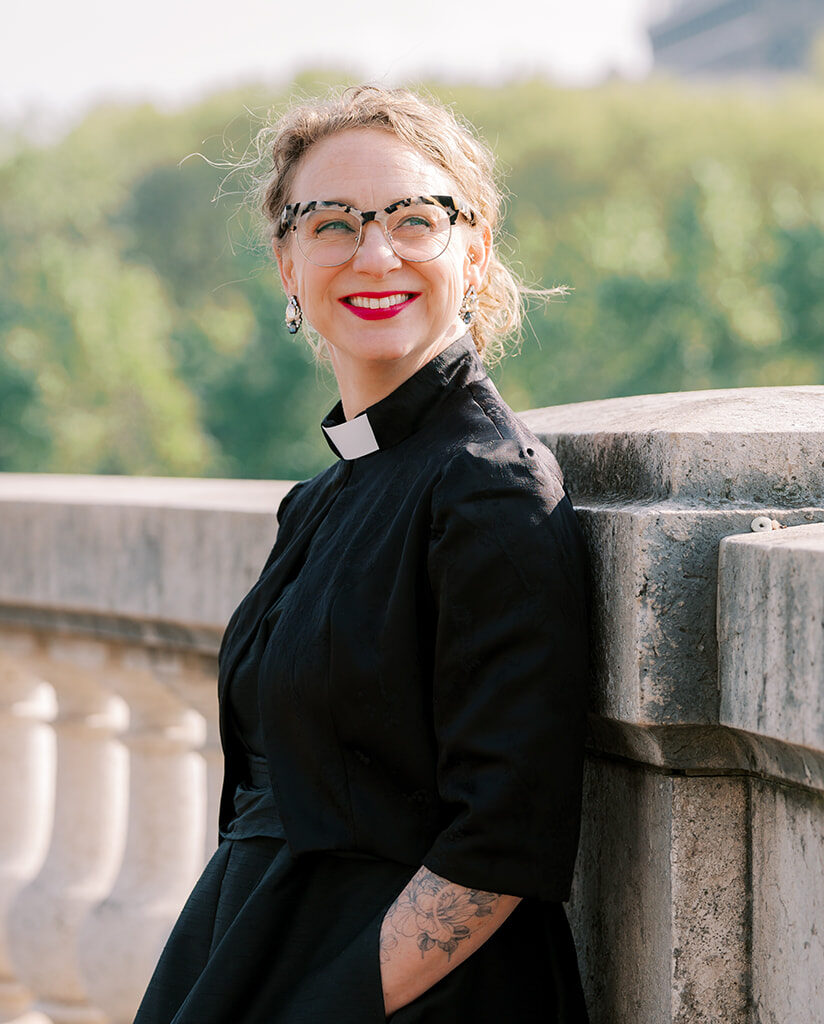
Rev. Michelle Wahila is an ordained PCUSA pastor, founder of Ruffled by Grace, and sought-after officiant and retreat leader. She creates heartfelt celebrations and soulful experiences that blend tradition with imagination. Now living in a 19th-century farmhouse in rural France with her family and a menagerie of pets, she enjoys gardening, making jam, and savoring a good cup of coffee.