
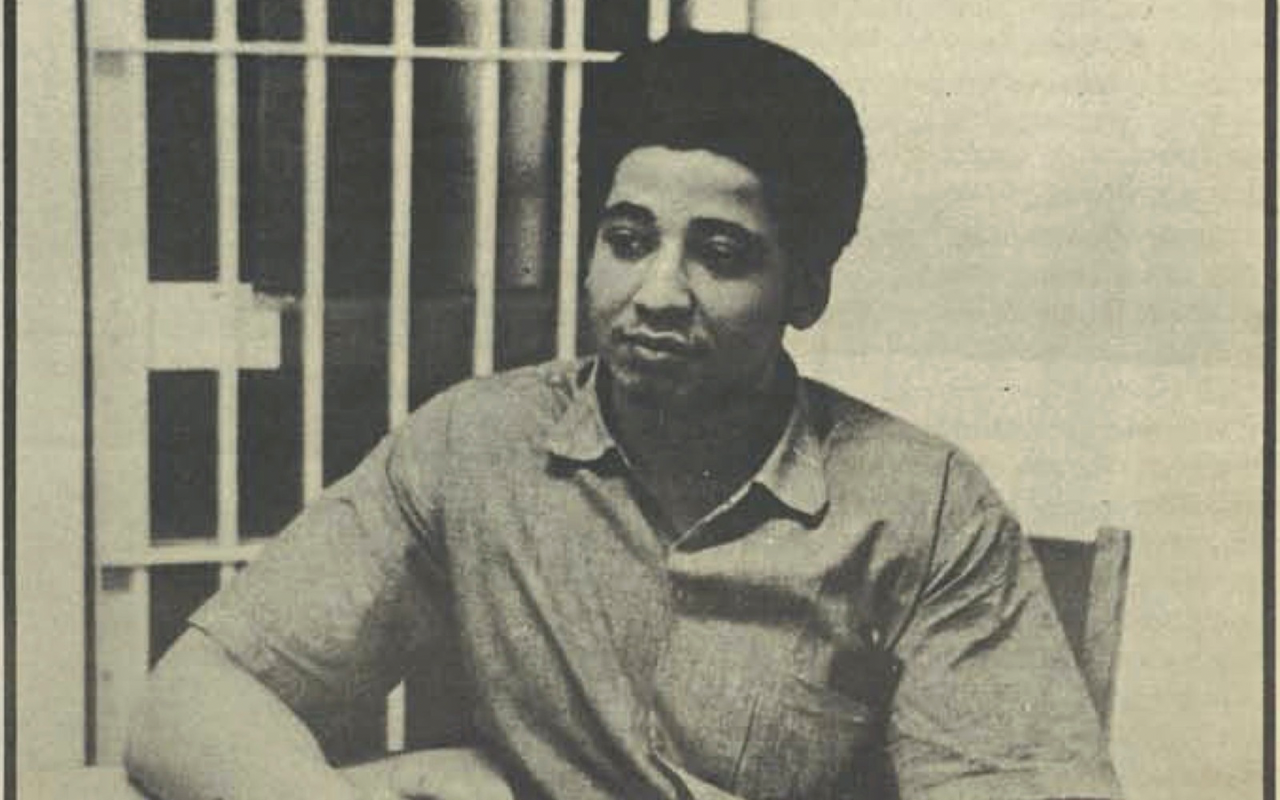
Black August honors African American radicals, revolutionaries and political prisoners. The final summer month celebrates African American resistance against systemic, racialized oppression and state violence.
The tradition emerged to commemorate the death of Black Panther Party member and revolutionary thought leader George Jackson. He was assassinated by guards during a prison rebellion at San Quentin on August 21, 1971, to which James Baldwin responded, “No Black person will ever believe that George Jackson died the way they tell us he did.” Jackson was 29 years old.
An annual observance was later established in 1979 by incarcerated individuals there. It has since spread beyond prison walls and is now a monthlong global commemoration.
Jackson was radicalized after witnessing a tower guard kill three African American men during a fight in the exercise yard: Cleveland Edwards, Alvin Miller and his friend, W.L. Nolen. On January 13, 1970, Opie G. Miller opened fire with a carbine rifle without firing a warning shot, resulting in their deaths. The guard was cleared of wrongdoing after a grand jury ruled the deaths as “justifiable homicide.”
Thirty minutes later, John Vincent Mills, a prison guard, was dead and George Jackson, Fleeta Drumgo and John Clutchette stood accused of his murder. They became known as the Soledad Brothers. Supporters viewed the charges as a targeted attempt by the state to eliminate vocal, radical leaders, prompting them to organize defense campaigns.
Jackson began demanding protections for incarcerated people while serving an indeterminate sentence, one year to life, for allegedly stealing $70 during a gas station robbery at age 18, at California’s Soledad Prison. He spent seven of his 11 years of incarceration in solitary confinement.
During this time, Jackson educated himself, studying political economy and using these frameworks to analyze systemic racism and capitalism. He became an autodidact, learning from revolutionary theorists: “I met Marx, Lenin, Trotsky, Engels, and Mao when I entered prison and they redeemed me.”
Jackson became a prominent Marxist writer and organized prison strikes. He led study groups, became a foundational prison rights organizer and co-founder of the Black Guerrilla Family, working to unite prisoners against systemic brutality, racism, and harsh conditions. This resulted in Jackson being targeted for abuse.
His letters from prison were compiled, published and titled Soledad Brother: The Prison Letters of George Jackson. Jackson’s life and writings remain a major touchstone in American history regarding racialized injustice, mass incarceration and political activism.
August was also chosen for pivotal events in the history of African American resistance: the Haitian Revolution on August 21, 1791, the Nat Turner Rebellion on August 21, 1831, and the Watts Rebellion on August 11, 1965. Observers are also invited to reflect on other defining events in African American history that occurred in August: the arrival of the first Africans to North America’s shores in August of 1619, the murder of 14-year-old Emmett Till on August 28, 1955, and the Rev. Dr. Martin Luther King Jr.’s delivery of his iconic “I Have a Dream” speech on August 28, 1963.
These three events form a tragic and defining through-line in African American history, marking the origins of race-based bondage, the brutality of the Jim and Jane Crow era, and the ongoing fight for civil rights. They also trace a continuum of oppression, survival, and resistance.
Black August is dedicated to political education, reflection and recommitment to liberation. Observances involve disciplined practices like studying revolutionary literature, participating in fasts, engaging in physical fitness, and abstaining from drugs and alcohol to honor the sacrifices of those who fought against systemic oppression: “Study, Fast, Train, and Fight.” The goal is, as George Jackson said, “Discover your humanity and your love of revolution.”
- About the Author
- Latest Posts
Director of The Raceless Gospel Initiative, an associate editor, host of the Good Faith Media podcast, “The Raceless Gospel” and author of Take Me to the Water: The Raceless Gospel as Baptismal Pedagogy for a Desegregated Church.