
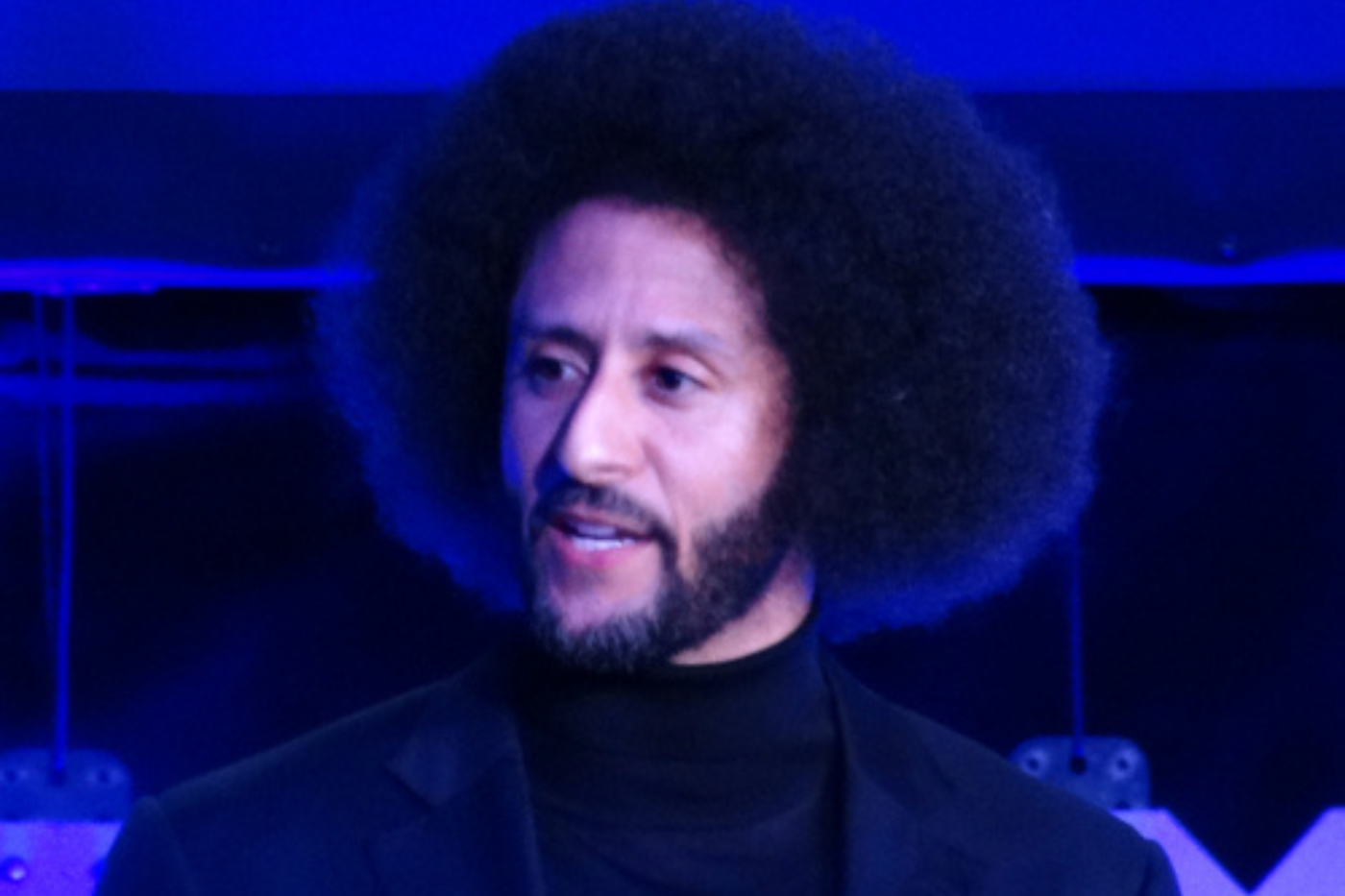
Colin Kaepernick began kneeling during the national anthem in 2016 while playing quarterback for the San Francisco 49ers to bring attention to police brutality and injustice. He was a football player who became a civil rights activist. Time would quickly tell Kaepernick that he couldn’t be both.
Sports became a high-stakes arena for debates over patriotism, systemic racism, and free speech. After boycotts and intense public backlash, Kaepernick was effectively blackballed by the NFL and remained unsigned after the 2016 season, which prompted years-long litigation and a polarized political divide.
Political figures and commentators weaponized the act of athlete activism, reframing systemic calls for civil rights into debates over patriotism, flag desecration and disrespect for military veterans. By defining the act of protest as “anti-American,” commentators successfully moved the debate into a binary cultural conflict: either you supported the country’s symbols or you supported the protesting athletes.
This created a polarization loop and an in-group/out-group dynamic. What began as a sideline protest quickly evolved into a modern culture war.
The act of kneeling was heavily leveraged by politicians to mobilize voting bases. By framing the protest as an attack on national identity, it became a powerful tool for cultural division, forcing citizens and institutions to pick a side.
Known as wedge politics or identity framing, Kaepernick’s decision to kneel during the national anthem was tied directly to national identity, transforming a specific dispute into a broad, emotional conflict over values and belonging. It shifted the focus to whether the act of protesting itself was a demonstration of loyalty: “I’m with Kap” or an act of betrayal against the country.
Commentators noted that his action and the intense backlash it provoked exposed a deep anxiety in the American consciousness. It challenged the fragile expectation that equality is a settled reality rather than an ongoing demand for systemic change.
Kaepernick became a free agent in 2017, but no NFL team signed him. Kaepernick later filed a grievance against the league for collusion, which ended in a confidential settlement in 2019.
Ten years after Kaepernick’s decisive action, his expectation of equality continues to serve as a cultural mirror, highlighting a profound, ongoing tension over race, patriotism, and the foundational ideals of the United States. His protest also exposed a core friction, which did not stem from a simple disagreement over football etiquette, but from an ideological clash over national ownership. When Kaepernick took a knee, it exposed a rigid, dominant ideology that views national symbols—the anthem, the flag, the military—as exclusive properties. In this view, dissent during a ritual of national unity was seen as a literal and symbolic violation of that shared “ownership.”
Conversely, Kaepernick’s protest operated on a different ideological plane: that true citizenship and civic ownership include the right and the duty to demand accountability when the nation fails to uphold its stated ideals of liberty and justice for everyone. The friction occurs because one side views patriotism as unconditional reverence, while the other views it as an active, critical engagement.
In response, the protests were co-opted by the league with no other players following in Kaepernick’s footsteps. He challenged the status quo, but Kaepernick ultimately did not change it as the American electorate voted to maintain the status quo, electing Donald Trump—twice. And to ensure the body politic gets the message, ICE agents now roam city streets, killing both citizens and immigrants alike.
Despite the NFL’s shifts toward social justice messaging in the years following the global protests of police brutality in 2020, Kaepernick said in recent interviews that the league continues to blackball him from returning to the field. While some corporate entities embraced his likeness as a global symbol of resistance, institutional barriers in professional sports remain rigid.
“I’m not gonna support an organization that one, is actively blackballing me, but two, has targeted my brothers who have been protesting as part of this as well,” Kaepernick told NBC News. “I watch college football.”
A decade later, the country has not learned the lessons of courage, conviction and embodied witness to injustice that Kaepernick tried to teach. Because it doesn’t want to and that’s a lesson for all activists.
Systemic resistance to change is a choice, not an accident. This country is right where it wants to be and millions of its citizens will fight to maintain this position rather than to ensure that people like Kaepernick can freely communicate theirs as an expression of their civic duty. Still, “I’m with Kap.”
- About the Author
- Latest Posts
Director of The Raceless Gospel Initiative, an associate editor, host of the Good Faith Media podcast, “The Raceless Gospel” and author of Take Me to the Water: The Raceless Gospel as Baptismal Pedagogy for a Desegregated Church.