
In his August 2026 column, Sojourners’ José Humphreys III introduced readers to Barbara Holmes’s notion of “crisis contemplation.” He wrote, “When the ordinary isn’t ordinary anymore and the crisis is upon us, the self can center in…refuge.”
Crisis contemplation is where hearts and minds must center as things appear to be falling apart, when trauma erupts outside of emergency rooms or natural disasters. It occurs when calamities shutter normality and threaten despair, when illusions are exposed. It is when the dream of a beloved community seems beyond the pale, and when whole armies of animosity terrorize and mock every testimony of hope and expectancy of a new heaven and a new earth.
The Secret to Balance
One revelatory moment that shaped my spiritual formation came from my oldest daughter, Jessica, a professional bodyworker. It occurred in a group Pilates class as we practiced balancing exercises.
“The secret to balance is movement,” she repeated. Not stasis, which seems more like common sense. Learning to balance on one leg does not mean stopping effort, but relying on many muscles working in tandem.
Stillness, a more familiar term in contemplative practice, and one of Scripture’s reiterated appeals (Psalm 46:10: “Be still and know that I am God.”), is not inactivity. It is a collaboration between initiative and receptivity. It is knowing when to stand at the city gate relaying heaven’s demand that justice flow like the waters and when to take shelter under the Beloved’s wings.
Squeezed between the deep Red Sea and Pharaoh’s war chariots, God told Moses: “Do not be afraid. Stand firm and you will see the deliverance the Lord will bring you today” (Exodus 14:13).
It’s not quite “know when to hold’em, know when to fold’em,” but you get the idea. There is a time for hallowed action and a time for holy idleness, for taking to the streets and for solitude’s sequestering.
There are grounds for lively debate on just how serious a threat President Trump is to our constitutional order and basic human rights. He’s threatened to declare a national emergency on several occasions, and appears most poised to act on this promise with the upcoming mid-term elections.
Not to put too fine a point on it, but I happen to believe that our republic is in deep trouble. It’s up to you to make your own assessment.
Balance in the Waters
And so we existentially face the ancient question, “How then are we to live?” How do we live neither in passive resignation (which is, in fact, spiritually cancerous) nor in visceral, reactive outrage and murderous bloodlust?
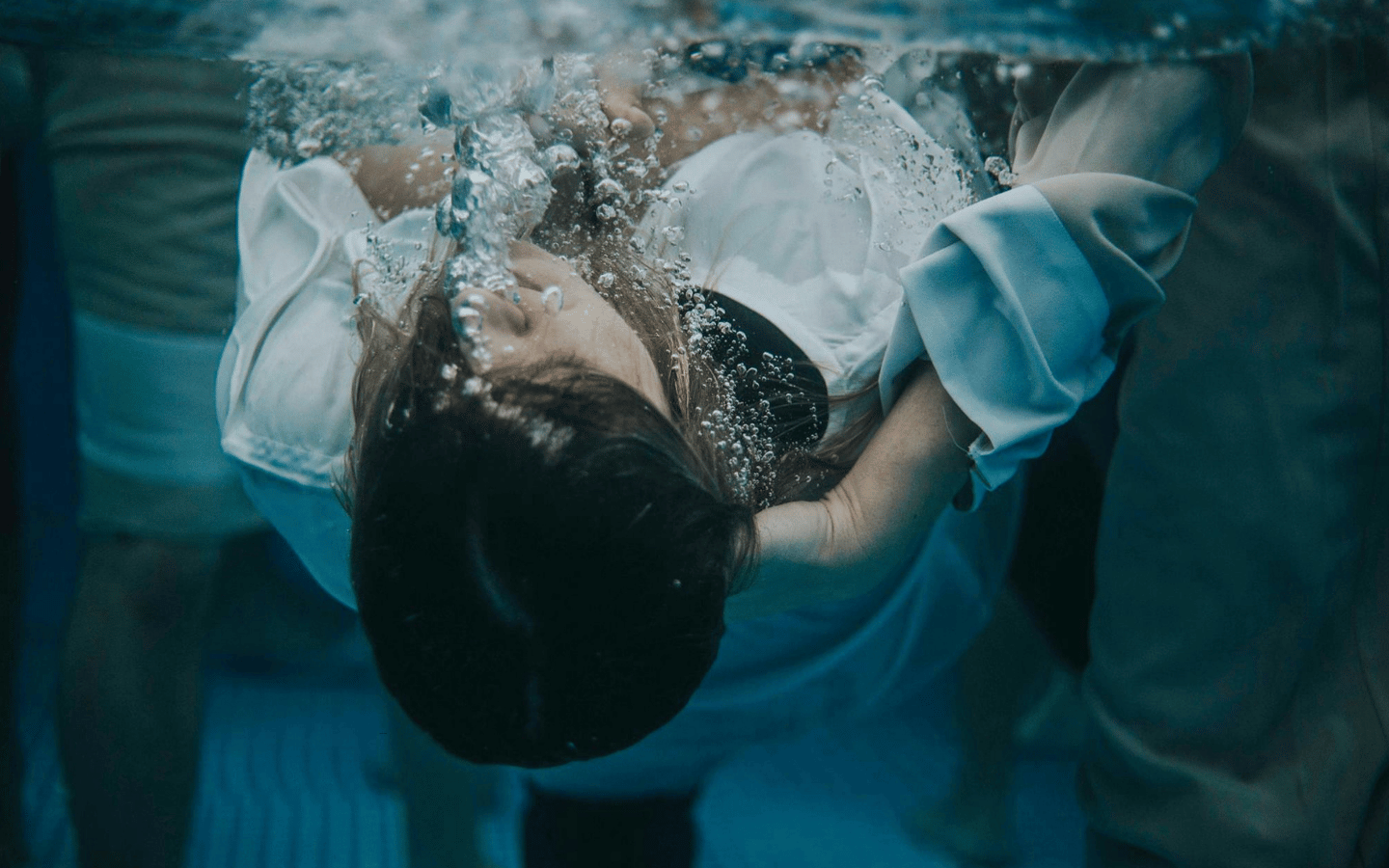
Many worthy responses to that question exist. But for us on the Way with Jesus, the wellspring is located in the recovery of our baptismal vows.
It is in the buoyancy of stilled water, the catharsis that begins with a renunciation (“of the Devil and all his ways”) premised on an affirmation (“nothing can separate”). This leads—over time, and through too many setbacks and missteps—to a disarming of the heart essential to disarming the nations, and to the rejection of current norms (“the strong take what they can, the weak suffer what they must”). It ends with the glorious affirmation of the psalmist: “I believe that I shall see the goodness of God in the land of the living” (27:13).
I love the way Debra Dean Murphy frames this: “Baptism is the rite of initiation into the life of the church, indeed, into the very life of God. It is an act of disaffiliation [emphasis added], conferring an identity at odds with the ways we are named and claimed by family, nation, and ideology. It is also a process of conversion: old allegiances shattered; initiation into a new polis (thus a “political” act).”
Then there’s this summary of baptism’s aftermath from Catholic theologian James Alison: “Faith [is] a habitual confidence given us by Another in whose hands we can relax. It means that what causes us to belong is a pattern of desire produced in us by someone we cannot see, who is giving us the strength to live in the midst of this world as though death were not.”
And, of course, Alison knows that our practice of communion, of Eucharistic participation, serves as our repeated reminder that the Spirit’s presence “is designed to feed us with the capacity to work our way out of being moved by the winds of victim-aimed desire, and instead to teach us how to stand up against that and begin, however tentatively, another way of living together.”
Baptism is the key because, at root, baptism is about power. With our confidence in the resurrection—God’s power over the realm of death—we can risk much, because we are safe, even in a despotic political climate. Not even death can take away anything important.
This is the secret of our freedom and our joy. Nothing frightens imperial agents of any sort more than joyfully free, fearless people.
As the prophet Zechariah records, “‘Not by might nor by power but by my Spirit,’ says the Lord” (4:6).
§ §
Postscript. Nothing in this moment is complete without a grateful acknowledgment of the life and legacy of Dolly Parton, whose sum was so much greater than the total of her many exemplary parts.
- About the Author
- Latest Posts
Curator of prayerandpolitiks.org, an online journal at the intersection of spiritual formation and prophetic action, and author of, most recently, In the Land of the Willing: Litanies, Prayers, Poems, and Benedictions. He was the founding director of the Baptist Peace Fellowship of North America and founding co-pastor of Circle of Mercy Congregation in Asheville, North Carolina.