
I have felt out of place most of my life.
I was the Korean immigrant child in the classroom who couldn’t speak English. I spent four years in ESL classes learning the language. I became fluent, but the fluency came much later.
Even as a small child, I knew what it was to walk into a room and wonder whether I belonged. The church didn’t fix that.
I was a girl in a Korean immigrant congregation. Like many immigrant churches, ours carried a heritage that preferred men over women. Men held sole leadership responsibility. Women were largely relegated to the kitchen and the Sunday School classroom.
So when I felt a call to ordained ministry, the call itself made me feel out of place. Women were not encouraged to go to seminary, and certainly not to the pulpit.
The academy did not fix my feelings of displacement either. When I finished my Ph.D. and began teaching theology, people assumed I had finally arrived at belonging. I had not.
My discipline has been shaped by more than two thousand years of predominantly white, patriarchal, Eurocentric thought. As an Asian American woman theologian, I have spent a career wondering whether there was room for my voice, or for a different way of doing theology altogether.
I brought what I had. It was often disregarded, or moved to the margins, or treated as a specialty item rather than as theology proper; as though I were doing this work from somewhere outside the room.
Waiting For a Room
I kept waiting for the room where I would stop feeling like a guest. But perhaps those of us who feel out of place have something to offer precisely because of this. Our questions are different, and so are our insights.
I am not alone in this, and I don’t think the feeling belongs only to immigrants or to women. Many Christians who have left evangelical and conservative churches know it intimately. They no longer fit within the theology or the structures of the churches they grew up in and genuinely loved. Some, whom sociologists call the “nones” and “dones,” have left the church altogether.
But many others have not stopped looking. They are searching for community in a world that does not quite accept them as they are.
They want a faith that makes sense. They want somewhere to deconstruct and reconstruct without being handed a label on the way out. They are looking for rooms where they can ask a hard question without being called a name, where doubt is not treated as failure, where theology is permitted to grow and change, and where they do not have to leave part of themselves at the door. That is not complicated to describe, but it is remarkably hard to find.
I have spent a long time writing about that kind of community. Walking into one is another thing entirely.
Belonging at Beer Camp
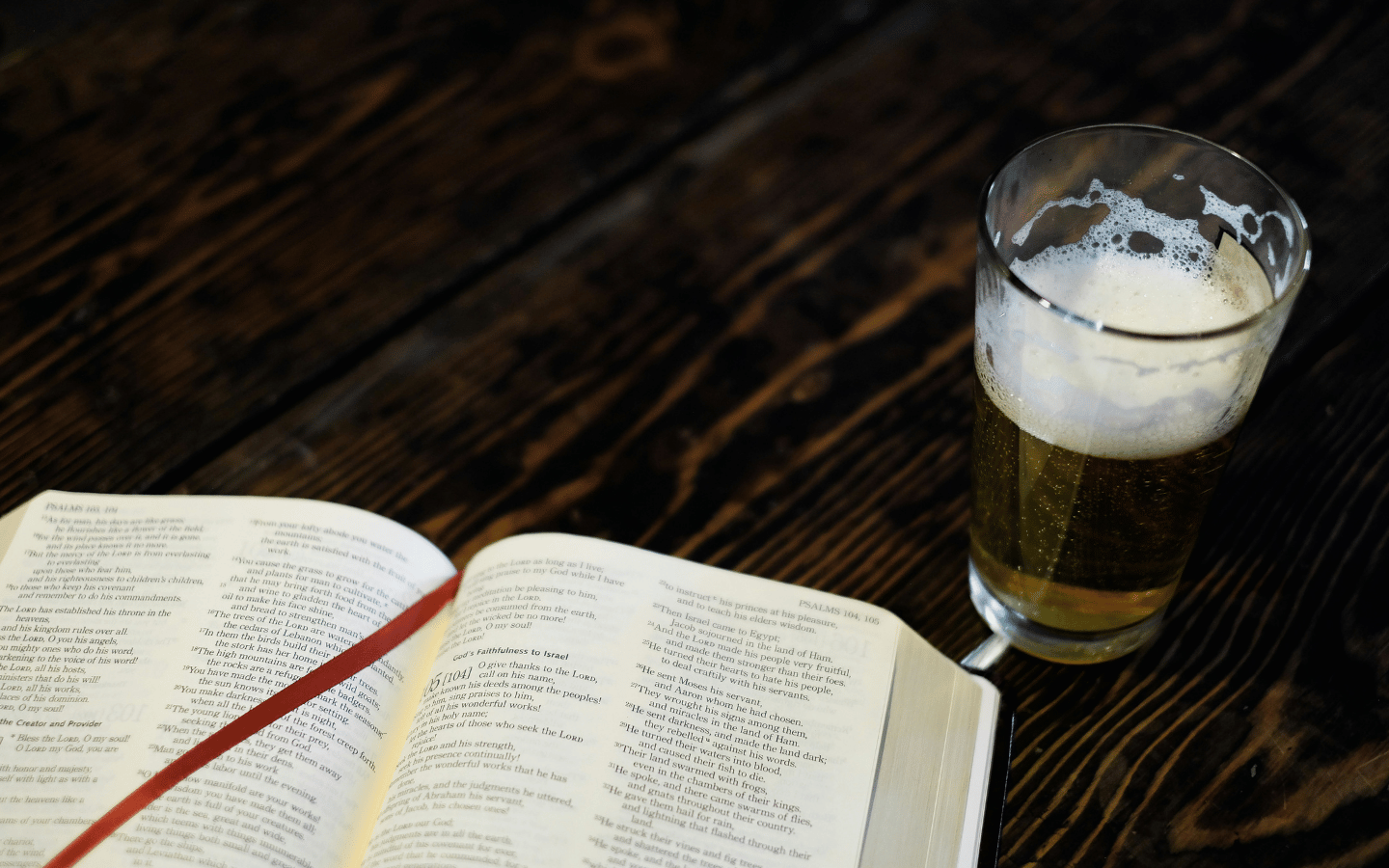
For the past three years, I have spoken at Theology Beer Camp, and this fall I will bring my podcast, Madang, there as well. The three-day conference that brings together theology nerds and craft beer was founded by Dr. Tripp Fuller, a theologian and podcaster. Tripp has spent fifteen years making serious theology available to people outside the academy.
What interests me is that he did not set out to build an institution. He was doing live podcast events at breweries in Los Angeles and listeners elsewhere kept asking why he only did them there. So he tried one somewhere else.
He expected fifteen or twenty people. A hundred and fifty came.
The first full camp was in January 2017. The timing was deliberate, allowing Rosemary Radford Ruether, the great feminist theologian, to speak the day after the U.S. presidential inauguration. That inauguration was not what most people expected when Tripp scheduled the first event.
It happened anyway and it has happened every year since. Nine years later, it draws hundreds, most of whom buy a single ticket and arrive knowing no one.
Ask Fuller what he loves about it and he does not talk about the lineup. He talks about meeting the person he has only ever known from a chat thread or an online class—someone who shows up convinced they are the only person they know who cares about this stuff, and who leaves knowing they are not.
I have come to understand that this kind of belonging does not simply happen because everyone means well. It is built, decision by decision, and most of the decisions are unglamorous.
Theology Beer Camp has no green room, so speakers and attendees eat, drink, and argue in the same spaces all weekend. I have poured beer for people who had just heard me lecture.
Trauma-informed counselors and clergy are on site and clearly marked, with no job other than to sit with anyone who needs it. There are AA meetings throughout the weekend for people in recovery, because “beer” is in the name and no one wanted that to function as a closed door.
The host congregation is fully open and affirming. The venue was chosen on the Missouri side of Kansas City rather than the Kansas side, specifically so that queer attendees would be safe.
None of that is simply atmosphere. It is architecture.
The results show up in what people say afterward. “I knew I had ‘people’ that existed somewhere (not just in my head),” one attendee wrote. “At camp, I found ‘my people.’”
A seventy-two-year-old woman who came by herself reported meeting people older than she was and much younger than she was and being reassured that she was doing just fine in deconstructing her faith. Another described a weekend in which she was surprised to feel spiritually moved at an event that skews intellectual and openly invites skepticism to the table.
I understand the skepticism and I would rather name it than pretend it away.
The name sounds frivolous—Beer Camp. The biblical scholar James McGrath has attended repeatedly and put it plainly: the title makes it sound like a lark and it is genuinely fun, but every time he has gone, it has been profoundly spiritual and transformative. Both things are true at once and I think that is the point.
Seriousness and joy were never actually opposites. We were simply taught that reverence had to look grim.
What moved me most, though, came from a woman who wrote that at one point during opening night she looked around at a sea of bearded, flannel-clad men and existing in a female body, still felt entirely safe. She added that this is no small thing.
She is right. For those of us who have spent our lives scanning rooms to see whether we are welcome, that is very close to everything.
Real Community
Jesus did not preach community as a concept; he built one out of specific, unpromising people, and then he ate with them.
“We proclaim to you what we have seen and heard, so that you also may have fellowship with us. And our fellowship is with the Father and with his Son, Jesus Christ” (First John 1:3).
Fellowship with one another and fellowship with God are named in the same breath, as though the second is difficult to sustain without the first. This is why we go looking.
The longing for belonging is not a weakness in our faith. It is faith doing what faith does.
So here is what I have come to believe. Those of us who have spent our lives feeling out of place are not merely victims of a room that failed us. We know exactly what a room needs. We know where the doors are because we have stood outside them. That knowledge is a vocation.
We are called to build the rooms we were looking for and then to leave the door open behind us. There is something powerful about walking into a space and realizing you do not have to explain why you are there. You simply belong.
Beer Camp returns this October to Kansas City, in person and online, one month before the election, asking what the kin-dom of God looks like when the world feels like this. If you have been searching for people who take that question seriously and take you seriously too, then you would not be out of place there. Nobody is.
Editor’s Note: In-person tickets for this year’s event are sold out, although you can sign up to be on the waiting list here. Online tickets are available here.
- About the Author
- Latest Posts
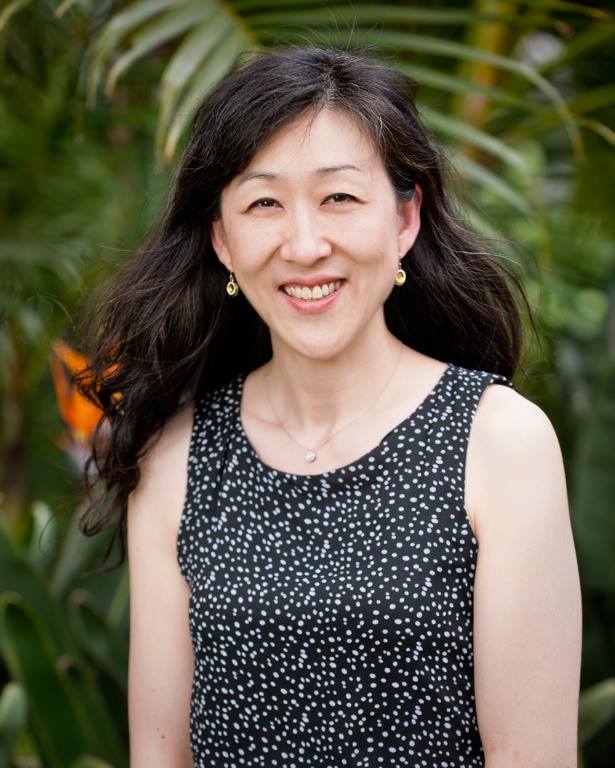
Grace Ji-Sun Kim (Ph.D. University of St. Michael’s College) was born in Korea, educated in Canada and now teaches in the USA as Professor of Theology at Earlham School of Religion, Richmond, Indiana. She is the author or editor of 26 books, most recently, Earthbound: God at the Intersection of Climate and Justice.
Kim is the host of Madang podcast which is sponsored by the Christian Century. She blogs on her substack: Loving Life: Loving Life and has written for Huffington Post, The Nation, Sojourners, Baptist News Global, Faith and Leadership and TIME. Kim has appeared on MSNBC, PBS and C-Span. She has been a guest on BBC Radio, Soul Search Radio, WBEZ Radio, and Keep Hope Alive Radio. She is an ordained PC(USA) minister and enjoys being a guest preacher on most Sundays.