
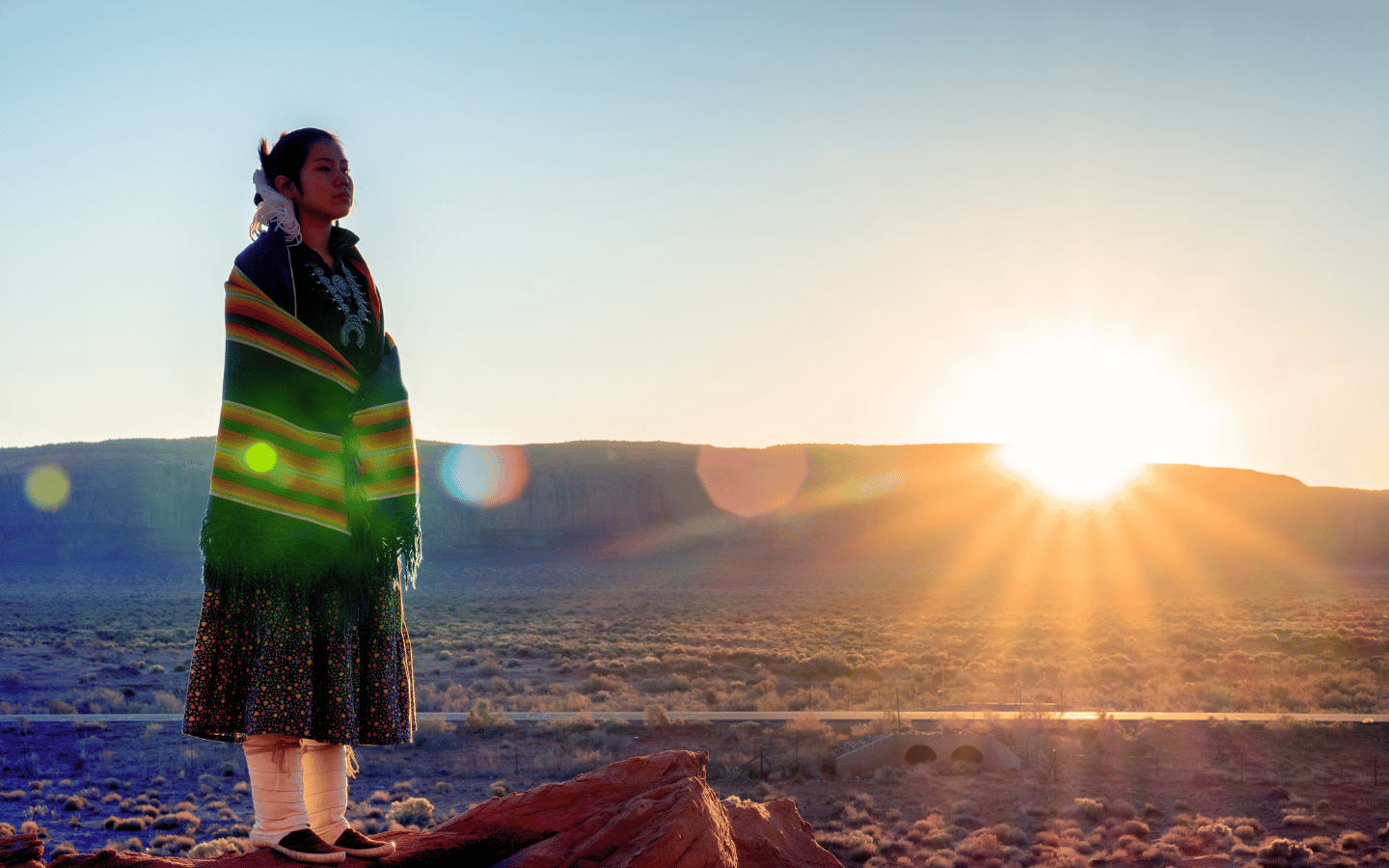
November is Native American Heritage Month, an important time to recognize and celebrate the contributions and resilience of Indigenous peoples. Americans often neglect our own history and forget the tragedies that shaped the United States of America.
We celebrated our 250th anniversary in July, but many still don’t know about the countless atrocities caused by America’s settler-colonial past. November is an important time to confront a painful history that still shapes us.
For Christians, this month should be a call for truth-telling, repentance, and justice. White European settlers came to this land, colonized it, forcibly removed Native Americans, broke treaties, suppressed Indigenous cultures, and committed genocide against Native Americans.
Through this terrible past, Indigenous communities experienced the loss of ancestral lands, the disruption of families and communities, and sustained efforts to erase their ways of being. These injustices are not confined to the past but continue to affect Indigenous communities today.
The Christian church was part of Native Americans’ horrific past, propagating Manifest Destiny and the Doctrine of Discovery.
Manifest Destiny was a 19th-century American belief that the United States was divinely ordained by a white male God to expand its borders from the East to the Pacific Ocean. It is rooted in American exceptionalism and a belief in the moral superiority of U.S. democratic institutions. This allowed the forced removal, violence against, and confinement of Indigenous peoples.
The Doctrine of Discovery is a 15th-century legal and religious concept that stated European Christian nations and people could claim sovereignty and land ownership over territories inhabited by non-Christians. This doctrine was issued by Pope Nicholas V.
This doctrine allowed Portugal to seize non-Christian lands, exploit resources, and enslave non-Christians in Africa and elsewhere. It provided religious and legal justification for European settlers to claim lands already inhabited by Indigenous peoples.
The Christian church was able to carry out these atrocities against Native Americans, all in the name of God, as Christianity upheld a white male God, which legitimized white supremacy, white privilege, and whiteness. Our understanding of God impacts our behavior, and a belief in a white male God reinforced colonialism, racism, and genocide against Native Americans.
Christians practice a missiology of whiteness. Missionaries go to Indigenous peoples and their lands around the globe to share an unbiblical image of a white male God. This image of God has become normalized, upheld, and preached by European men. This has allowed whiteness to legitimize the subordination of Native Americans.
In the 19th and 20th centuries, Christians and government agencies cooperated to create residential and boarding school systems, which separated Indigenous children from their families and attempted to suppress their languages and cultures. They forcibly assimilated Indigenous children into white culture, using racist mottos like “Kill the Indian, Save the Man” to justify their racist actions to erase Native lifestyles and beliefs.
Christians must honestly confront these horrific histories, and the church must be willing to truthfully examine its own role in this damaging colonialism against Native Americans. We must address what repentance looks like when the consequences of historical injustice remain present today.
Native American Heritage Month is important for the wider society and the church as a time to remember our past and to listen and learn. Indigenous voices remind us of our horrific actions and challenge the assumption that Christianity must be understood through exclusively European or Western frameworks.
Indigenous spirituality offers depth, new insights, and beautiful meaning to Christianity. It also helps us be open to the mystery of the divine.
Native American Heritage Month invites us to remember that justice cannot be separated from the land, and faith cannot be separated from our relationships with one another and with creation. It means confronting the ways our religious institutions have participated in injustice and committing ourselves to a different future.
Remembering Indigenous history is about accepting responsibility for the truth and allowing that truth to transform how we live together. Repentance must lead to action.
We are called to live into a faith that proclaims love of neighbor and calls us to confront the history of how neighbors have been dispossessed. We need to live with a faith that celebrates God’s creation and stands with those who have long struggled to protect the land, the water, and the generations yet to come.
- About the Author
- Latest Posts

Grace Ji-Sun Kim (Ph.D. University of St. Michael’s College) was born in Korea, educated in Canada and now teaches in the USA as Professor of Theology at Earlham School of Religion, Richmond, Indiana. She is the author or editor of 26 books, most recently, Earthbound: God at the Intersection of Climate and Justice.
Kim is the host of Madang podcast which is sponsored by the Christian Century. She blogs on her substack: Loving Life: Loving Life and has written for Huffington Post, The Nation, Sojourners, Baptist News Global, Faith and Leadership and TIME. Kim has appeared on MSNBC, PBS and C-Span. She has been a guest on BBC Radio, Soul Search Radio, WBEZ Radio, and Keep Hope Alive Radio. She is an ordained PC(USA) minister and enjoys being a guest preacher on most Sundays.