


Stephen Colbert
When news broke that Stephen Colbert’s late-night show would come to an end, many people responded with something more than disappointment. For many viewers, it felt like the closing of a familiar public space where satire and moral clarity still shared the same stage.
Colbert’s presence represented a rare thing in late-night television: Humor that was willing to press against the edges of public life without surrendering entirely to cynicism.
Even for those who regularly disagreed with his perspective, the loss of his voice in that space feels significant. Late-night television has often drifted toward entertainment that avoids friction altogether, preferring levity without reflection. Colbert, for better or worse, depending on one’s perspective, resisted that drift.
In a media ecosystem shaped by outrage cycles, political branding and algorithmic noise, he occupied a rare role: a comedian whose humor consistently engaged public power while still leaving room for moral seriousness.
Biblical Roots
For Christians reading that kind of cultural moment, there is a deeper resonance that reaches back far beyond television. Scripture itself is not unfamiliar with satire, irony or the disruptive force of humor.
Even Jesus Christ uses language that startles precisely because it refuses to be domesticated. When he speaks of religious leaders straining out a gnat while swallowing a camel (Matthew 23:24) or warns about noticing a speck in someone else’s eye while ignoring the log in one’s own (Matthew 7:3–5), the effect is not merely instructional—it is destabilizing and even funny.
These are images that expose contradiction in ways that are difficult to forget and, at times, difficult not to laugh at once the truth lands. The prophetic tradition in the Old Testament often works in a similar register.
Elijah mocks the prophets of Baal on Mount Carmel with biting irony, claiming that perhaps Baal is busy on the toilet (1 Kings 18:27), not as entertainment, but as exposure of the absurdity of misplaced trust. Amos addresses a prosperous religious culture with sharp summons that cut through moral pretense (Amos 4:4), and then offers one of Scripture’s most enduring refrains: “Let justice roll down like waters” (Amos 5:24). Isaiah describes idol-makers who warm themselves with half a log and then bow down to the other half as a god (Isaiah 44:14–17).
The effect is not subtle. It is designed to make the familiar look strange so that repentance becomes possible again.
Within that long biblical memory, where truth is often carried through image, irony and disruption, it is not difficult to see why satire still matters in public life.
Colbert’s work, especially across The Colbert Report and later The Late Show with Stephen Colbert, operated in that same cultural space, even if it did so through comedy rather than theological conviction. His gift was amplification: inhabiting political rhetoric so fully that its contradictions became visible.
The humor did not simply mock individuals; it revealed systems of thought that had begun to take themselves too seriously.
At the same time, Colbert’s imagination was shaped by deeper cultural and spiritual wells. He has spoken openly about his Catholic faith, about prayer, grief and the long work of learning to trust God in suffering after the loss of his father and brothers in a plane crash during his childhood. That suffering reshaped his understanding of providence in ways that resist easy sentimentality.
Whispers from Middle-earth
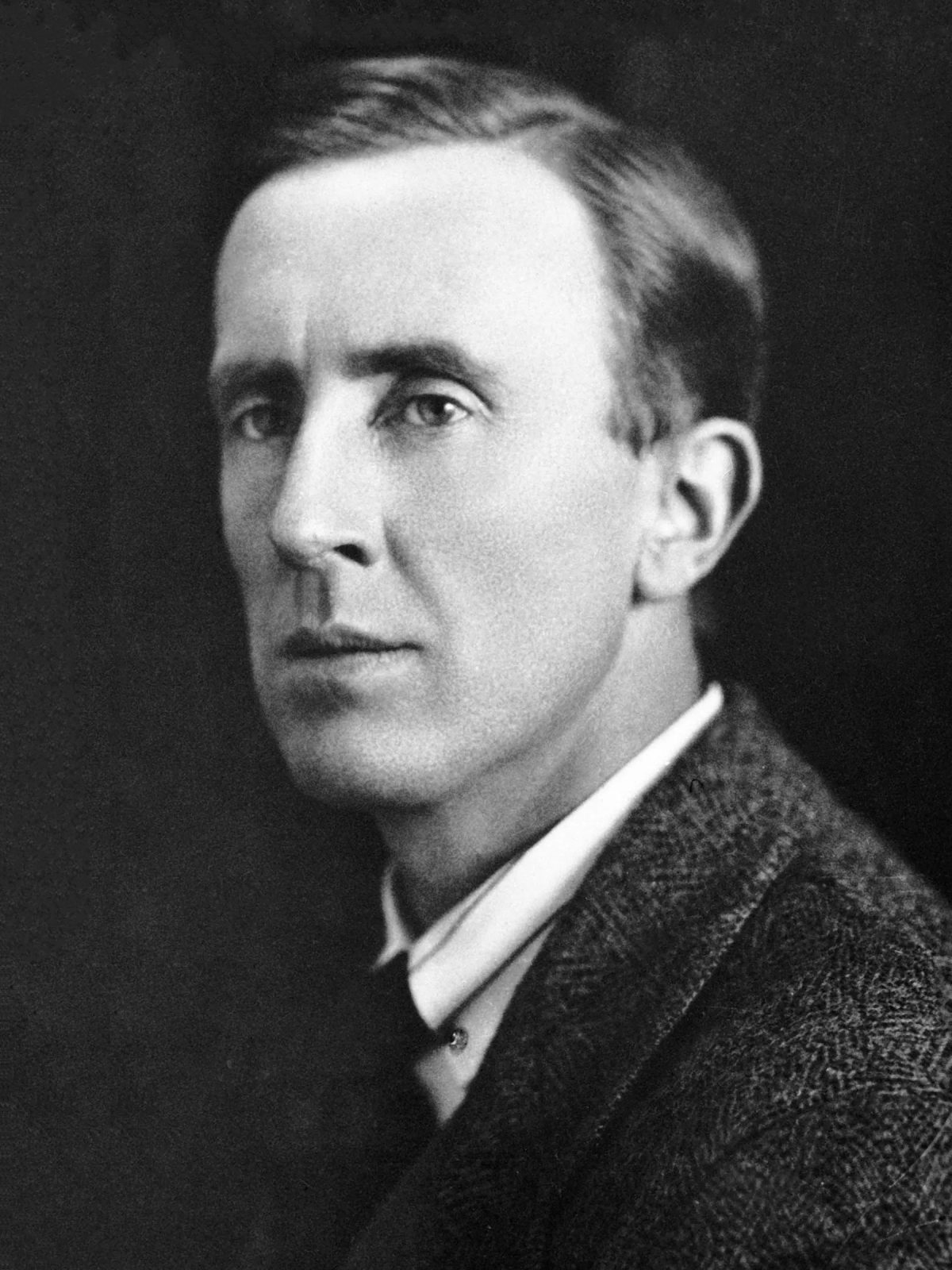
J.R.R. Tolkien
And there is another imaginative world that sits comfortably alongside that moral seriousness: J.R.R. Tolkien’s Middle-earth. Colbert is a well-known admirer of The Lord of the Rings, and I confess myself as a fellow Tolkien nerd.
Tolkien understood something profoundly theological about power: that the greatest evil is often not flamboyant but subtle and that the smallest, least powerful figures are frequently entrusted with the weight of moral repair. In that sense, Middle-earth is not an escape from reality but a re-enchantment of it—one where humility, friendship and perseverance carry more moral weight than domination or spectacle.
It is not hard to see why someone shaped by Catholic imagination, grief and stories like Tolkien’s would resist a purely cynical form of comedy. There is a difference between laughing because nothing is sacred and laughing because something still is.
The biblical prophets would recognize that difference. Their anger is never detached. It is covenantal. They are not outsiders amused by collapse; they are insiders grieving distortion. Their satire, when it appears, is born of love that refuses to go silent.
Laughter to Power
Across history, political power, in many forms and across many eras, has often grown uneasy with satire that refuses to flatter it. Humor has a way of making authority appear contingent rather than absolute. It punctures the aura of inevitability that power tends to construct around itself.
This is why comedians, artists, and journalists often find themselves in precarious cultural positions, especially when their work presses against the boundaries of political comfort. In recent years, observers have raised questions about how corporate consolidation in media, including institutions like Paramount Global, intersects with political pressures and public controversy, particularly in a polarized environment shaped in part by figures such as Donald Trump.
Whether any single explanation fully accounts for Colbert’s show ending is less important than the broader cultural anxiety it reflects.
There is a growing sense that satire itself has become more vulnerable, not necessarily because it has changed, but because the ecosystem around it has. A culture that grows uncomfortable with being laughed at is a culture at risk of confusing power with sacredness. When humor becomes suspect, something essential in public discourse begins to contract.
The prophets of Israel lived with that tension in a far more costly way. Jeremiah was thrown into a cistern (Jeremiah 38). John the Baptist was imprisoned and executed by a ruler more concerned with image than truth (Mark 6:17–29). Jesus himself was crucified by empire and religious establishment alike.
The pattern is consistent. Truth-telling becomes dangerous when it refuses to be ornamental. This is why lament, rather than certainty, may be the appropriate Christian posture in moments like this. Not a romanticization of satire, and not a collapse of theology into cultural commentary, but a recognition that the loss of any voice committed to unsettling complacency should give us pause—not because it is unique, but because it is symptomatic.
Cynicism laughs because nothing matters. Prophetic faith laughs differently—when it laughs at all—because truth still matters enough to expose what distorts it.
Colbert’s public work, formed by comedy, faith, grief and imagination, often seemed to inhabit that fragile space between seriousness and satire, between sorrow and hope, between critique and care.
The prophets remind us that truth-tellers are rarely secure for long. Their voices are often resisted, sometimes silenced, and frequently misunderstood. Yet their witness persists—not because they are immune to power, but because they refuse to let power define reality unchallenged.
I worry that the end of The Late Show with Stephen Colbert may be yet another sign of how easily cultural institutions bend under political pressure, especially in a moment when ideology too often crowds out the common good.
And there is nothing funny about that.
- About the Author
- Latest Posts

Tyler Tankersley is Senior Pastor at Ardmore Baptist Church in Winston-Salem, North Carolina.