

I first encountered the phrase “heart language” during cross-cultural training, years before I understood what it meant. At the time, it felt like a bit of mission vocabulary, a phrase you underline once and move past.
But later, living among immigrants and refugees in northern Thailand, the words grew heavier. The idea stepped out of theory and into the texture of daily life. Most of the hill tribe communities we worked alongside spoke several languages.
Northern Thai carried them through markets and bus stations. Central Thai opened doors in schools and government offices. Their tribal languages, such as Lahu, Karen, and Palaung, belonged to grandmothers, wedding feasts, and the tender vocabulary of home. Children often added English or Chinese as they grew. A child barely tall enough to stir a pot might move through three languages before noon.
What stayed with me was how each language seemed to draw out a different self. You could sense the shift even without understanding the words.
A mother bargaining in Northern Thai carried a firm, clipped cadence. When she turned toward her child and spoke her hill tribe language, her voice softened.
Laughter took on a different shape when people returned to the tongues they grew up with. Something in the sound settled deeper. And when grief arrived, and in refugee communities it arrived often, the language of home surfaced instantly. Pain reached for whatever vocabulary it trusted.
A heart language, I began to see, is not simply the first tongue learned. It is the one that gathers memory, the one the soul reaches for when something breaks open inside us.
Jesus Speaks
Years later, long after our time in Thailand, our pastoral resident, Jana Atkinson Morga, stepped into my office. “Can I ask you a random question?” she said.
I smiled and told her I rarely find questions entirely random. Then she asked about Jesus, whether he had a heart language, and how his language came to him.
I laughed at first, surprised. But her curiosity opened a door I’d not stepped through in years. It reached back to Thailand, to mothers praying in the accents of their grandmothers and to children racing across linguistic borders with ease. Her question carried a deeper wonder about the way language shapes identity and teaches a heart how to belong.
The simplest path into Jesus’ world begins with Aramaic. This was the language of family tables, dusty roads, shared stories, whispered prayers. When the Gospels preserve his exact words, such as “Talitha koum,” “Ephphatha,” or “Eloi, Eloi,” they hold the sound of his most intimate moments.
But Jesus’ world held several languages. Hebrew shaped the rhythms of worship and scripture. Greek threaded through Galilee’s public life in trade and travel. Latin lingered as the language of empire.
Together, they formed the linguistic landscape that shaped him.
If Jesus had a heart language, it was Aramaic, yet his imagination and spiritual instincts were influenced by the many voices surrounding him. The Word entered a world already full of sound and learned to speak with a human accent.
Human Tongues
Recognizing Jesus as a multilingual person helps us notice the shifting languages within ourselves. Immigrants, refugees, and third-culture children know this intimately. A heart language can endure for a lifetime, yet it can also fade or return in moments of joy or fear.
Psychologists describe emotional encoding, the idea that feelings take root in the language available when they first appear. A child comforted in one tongue and corrected in another grows up with emotional landscapes tied to each. Adults who lose fluency in a childhood language may still dream in it. Others shift languages without thinking when startled, homesick, or relieved.
Modern life has its own ways of shaping our speech.
Deaf communities often describe sign language as the place where identity feels most at home, a language of movement rather than breath. Children now learn entire modes of communication through screens, each one forming emotional habits. And machine translation allows people to hear another language as if it were their own, raising questions about what can be transmitted electronically and what meaning refuses to travel through a device.
Information moves easily. Meaning asks for more.
In the midst of this, I often think of Pentecost as a posture, a way of standing in the world rather than a moment confined to the liturgical calendar. The story gathers people from many places, each carrying memories in the syllables of home. People hear God in the language they trust most.
Pentecost honors the speech that has carried our beginnings and our sorrows. It affirms the tongues we borrow, the ones we forget, and the ones we learn as life unfolds. It reveals a Spirit fluent in the particularities of human sound.
Language Forms and Re-Forms
Jana’s question stays with me. It invites me to wonder about Jesus’ heart language and, just as deeply, about the forces that shape our own.
What language is forming your inner life these days?
Some live inside a vocabulary of anxiety sharpened by headlines. Others drift into the language of hurry absorbed from glowing screens. Many speak in the phrases of cynicism gathered without noticing.
Still others sense a rising pulse of longing or heritage or prayer returning after years of quiet. Some discover the language of silence where something holy stirs.
Our heart languages evolve as we do. They carry the imprint of joy and harm, memory and hope, loss and possibility. Through all of it, the Spirit remains fluent.
Jesus lived within the layered languages of his world. Aramaic shaped his earliest memories. Hebrew shaped his prayer. Greek touched the edges of his life. These languages held his questions, his stories, his cries. They formed the rhythms of his days and the relationships of his life.
If God chose to speak through those human tongues, then God speaks through ours as well, through whatever language the heart trusts enough to open.
Pay attention to the language forming inside you. Notice what rises when you are honest or afraid or grateful. Trust that God meets you there with a fluency you do not have to earn.
- About the Author
- Latest Posts
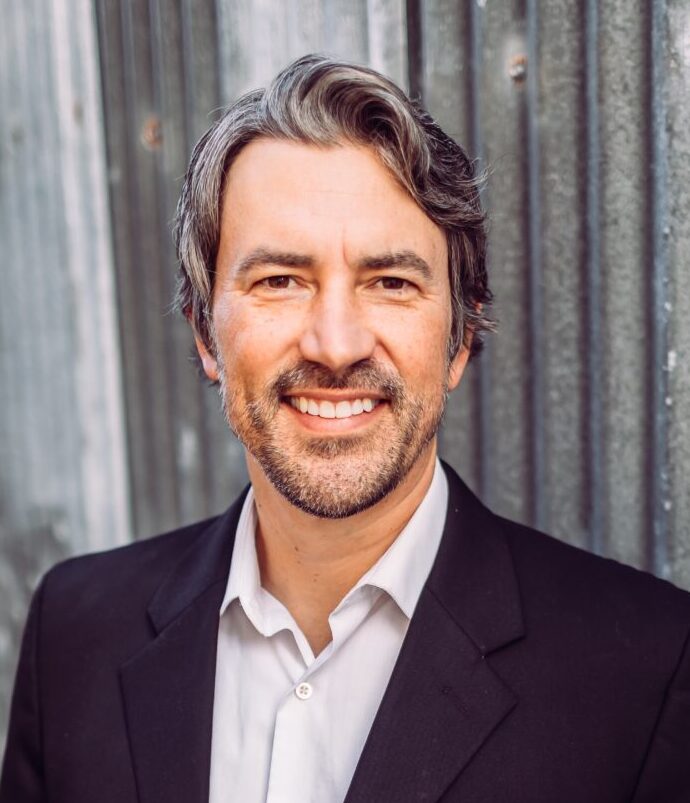
Senior Pastor of Second Baptist Church in Liberty, Missouri. His forthcoming book, At Home with God: How the Cross Transforms Us, will be available from InterVarsity Press in November 2026. His reflections appear at jasongedwards.substack.com.