
In churches, we offer youth groups, children’s ministry, young adult groups, and Bible teaching. Yet, did you know there are more updated practices to apply to ministry? Practices that would centralize material and make it more memorable throughout someone’s lifetime?
These practices often come from those on the margins, especially neurodivergent people who have more mental and emotional survival techniques than might appear on the surface. When the world was not made for you, me included, you learn how to add supplemental material outside of lectures and one-way communication.
In most classrooms, the students who struggle the most are not the ones who lack intelligence or motivation. They are the ones whose minds don’t match the narrow way we’ve been taught to teach.
ADHD visual learners and autistic bottom‑up processors often sit at the edges of traditional education, not because they can’t learn, but because the system wasn’t built with them in mind. The real issue isn’t the learner at all; it’s the way our classrooms are designed. To understand how design shapes learning, we first need to examine what ADHD visual learning actually looks like in practice.
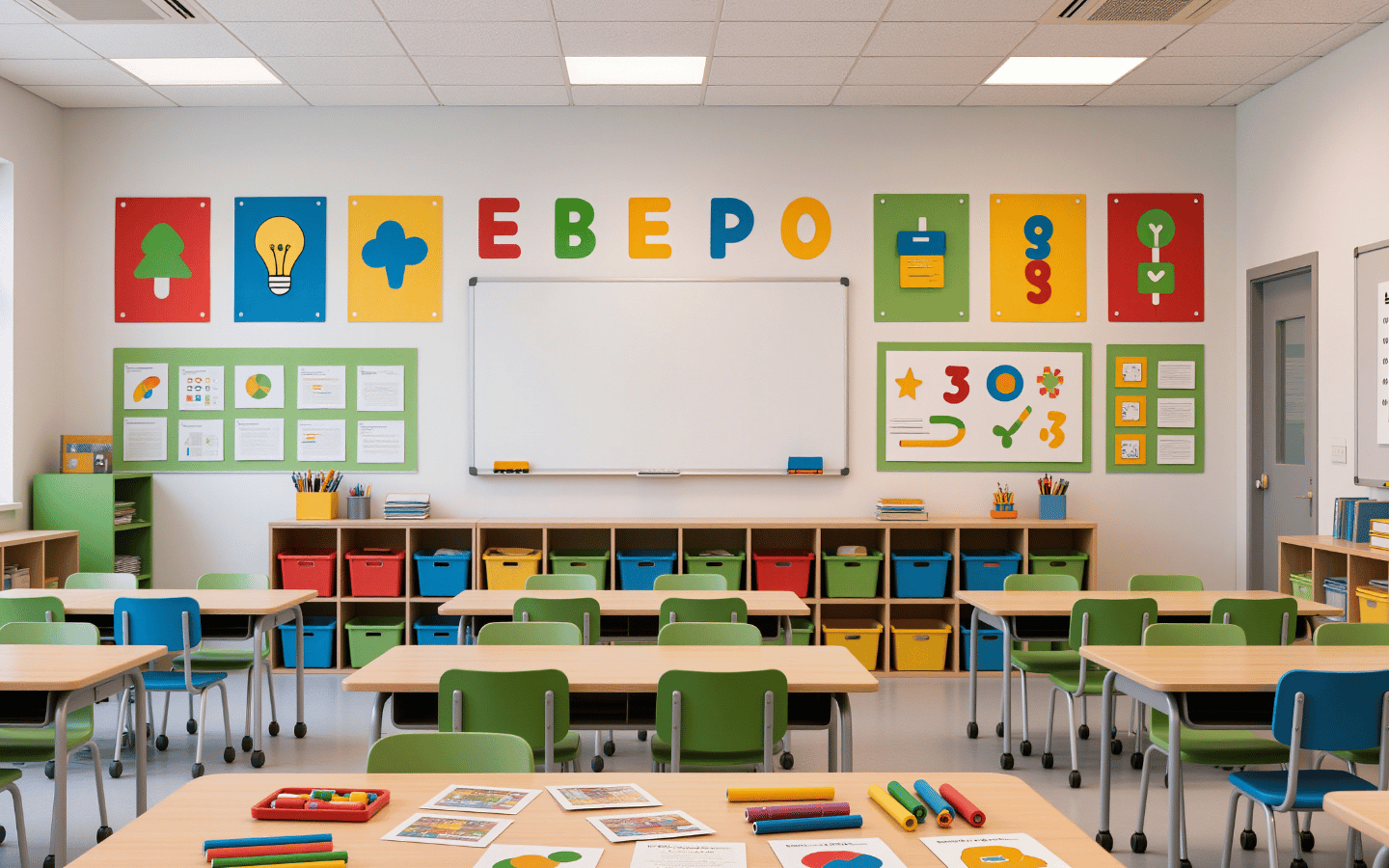
ADHD visual learners understand the world through images, movement, and spatial relationships (contrast). They remember what they see, not what they’re told. They often lose track during long verbal lectures, not because they’re inattentive, but because the information has no visual or emotional anchor.
ADHDers need to see the structure of a task before they can begin it.
They thrive when given:
- Short bulleted lists
- Color-coded steps
- Interactive activities
- Diagrams instead of paragraphs
- Visual schedules
- Discussions
- Timers they can see
- Examples and demonstrations
- Permission to doodle or sketch while listening
- Information broken down into smaller chunks
- Short, easy-to-read sentences
These supports don’t coddle. They clarify.
And as visual thinkers need to see information, autistic bottom‑up processors need something different. They need to start with the details.
Bottom‑up processors notice details first because they are centralized in the body. They build understanding from the ground up, starting with specifics before generalities, and with concrete before abstract.
When given vague or big‑picture instructions, they’re not confused. They simply haven’t been given the building blocks their brain requires.
They benefit from:
- Concrete examples before concepts
- Step-by-step instructions
- Written directions they can revisit
- Extra processing time
- Clear, literal language
When you give people on the spectrum the details, they can build the whole.
Even with their differences, these two learning styles share more overlap than most people realize. Both ADHD visual learners and autistic bottom‑up processors thrive when the environment offers:
- Clarity
- Visual structure
- Predictable steps
- Reduced verbal overload
- Permission to process differently
When you meet these needs, you’re not just supporting neurodivergent learners. We are improving the classroom for everyone.
One of the most effective ways to support both groups is surprisingly simple: show them what the task looks like through mirroring. Mirroring—modeling a task in real time—gives the brain a pattern to follow. It’s one of the most powerful supports for both ADHD and autistic learners.
Mirroring provides:
- A visible roadmap
- The sequence of steps
- Pacing and rhythm
- Sensory and spatial cues
- A concrete starting point
It looks like:
- Demonstrating the first step
- Writing a paragraph while they watch
- Body language
- Showing how to organize materials
- Modeling a social script
- Completing the first step of a project together
Mirroring isn’t hand‑holding. It’s cognitive survival.
And the beauty of these approaches is that they don’t just help neurodivergent learners. Neurotypical students benefit just as much. When classrooms incorporate:
- Visual clarity
- Slowing down
- Concrete examples
- Predictable structure
- Multiple formats of instruction
- Step-by-step modeling
…everyone learns more effectively. Universal design works because it honors the full range of human minds.
When we put all of this together, it becomes clear that these strategies aren’t special accommodations at all. They’re simply good teaching techniques.
Supporting ADHD visual learners and autistic bottom‑up processors isn’t about “fixing” them. It’s about refusing to punish their wiring. It’s about creating classrooms where difference isn’t a barrier to belonging and more neurodivergent students don’t walk away traumatized.
When we teach in ways that honor:
- Visual thinking
- Detail-first processing
- Nonlinear attention
- Sensory needs
- Diverse cognitive pathways
…we’re not just helping a few students. We’re reshaping education into something more humane, more accessible, and more faithful to the dignity of every learner.
Teaching at the edges doesn’t dilute the center. It makes it easier for everyone.
- About the Author
- Latest Posts
Baptist minister, graduate of Campbell Divinity School, and a neurodivergent advocate.