
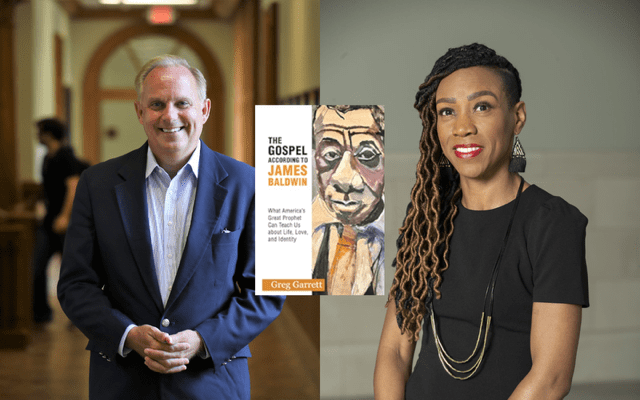
Editor’s Note: This is the third of a four-part interview with Dr. Greg Garrett, who will be a guest on the Good Faith Weekly podcast on Friday, March 15. The interview has been minimally edited for conciseness. (Part 1 can be found here and Part 2 here.)
In part three of my interview with Greg Garrett, author of “The Gospel According to James Baldwin,” we talk about the idea of “white sanity” and the cost of maintaining it. We also discuss Baldwin’s grace and radical hope, the 2024 election, “the welcome table” and the New Jerusalem built upon truth-telling.
Starlette: In the chapter titled “Baldwin on Race,” you write, “People need to believe in their innocence and will do much to preserve it. … Innocence and ignorance were and are essential tools in the maintenance of white sanity—and simultaneously of white supremacy”?
It seems that “white sanity” is determined by white supremacy, which is enforced by cultural domination, and capitalist exploitation. It is preserved, in part, by the African American cultural memory and experience of European chattel slavery and colonization, lynchings, race massacres, Jim and Jane Crow segregation, redlining, police brutality, income inequality, environmental racism, and various other means of violence. Given all that, to what end— save annihilation— are persons who are not socially colored white expected to perpetuate a belief in this feigned white identity and the delusion of white supremacy?
Why does the focus remain on how “terrifying” it is for them “to discover that the world is not what you imagined it to be,” to employ the words of Baldwin? When Baldwin argued that they are “at the same time the most innocent—and the most dangerous—people on earth”?
Greg: Everything you—and Mr. Baldwin—say about whiteness is true and some white insanity would be welcome if what it means is seeing the world clearly and offering repentance and repair. I think of Baldwin’s white character Parnell, considered crazy by other white characters in “Blues for Mister Charlie” because he has recognized how he has been an accessory to injustice. The white murderer Lyle shouts at him, “Have you forgotten you a white man?” But I digress.
Many—I might say most, although I’m not a sociologist—white people don’t think about their identity or their privilege; they simply coast on it. They walk through the world being white all day. Even white people who have a cognizance of injustice or that their experience is not everyone’s experience often don’t have the relationships that will allow them to make a heart-realization instead of that head-realization.
I have talked to so many white communities after George Floyd’s murder. There was a moment when their hearts were aligned with what their eyes saw daily but sadly, I think a lot of white Christians found it easier not to face that terror.
It’s important rhetorically to note that Baldwin wrote for a white audience (not just for them, to be certain, but his point of view in the early essays aligns him with his white liberal readers, and in bestsellers like “Another Country” and “The Fire Next Time” he is both writing about Black experience and allowing white readers to experience and imagine how it might feel).
It’s not that he doesn’t feel or communicate deserved rage and reproach, but it’s delivered in perfectly-balanced sentences, through artfully-drawn characters, in a way they can read and accept. One of my preaching mentors told me that I was free to preach whatever the Spirit led, but also to remember that medicine that killed the patient was the wrong medicine. I can simultaneously accept Mr. Baldwin’s judgment of white people and of American society as morally sick and recognize that, through his childhood faith and his literary greatness, he believes people are more than their sins.
Rather than simple hatred, which would be completely warranted (I think of Kimberly Latrice Jones telling the simple truth that white people broke the contract again and again, that we are “lucky that what black people are looking for is equality and not revenge.”), Baldwin recognizes from the early essay “Stranger in the Village” to the late book “The Evidence of Things Not Seen” that while hatred of and separation from white people are justly merited, love and movement forward together are the only possible remedies. “You must accept them and accept them with love,” he told his nephew.
I don’t feel I deserve that grace, but that’s how I feel about grace in general. I can’t earn it, but I can try to live into it.
Starlette: In “Baldwin on Justice,” you implore readers to take seriously the calling to be honest about who we are and the state of our world and to commit to faithful truth-telling with the hope of a new society, the “New Jerusalem.” How do Americans come to accept this as a communal calling?
Greg: We have seen some great communal movements, and they’re still possible, even though in the Trump Era America seems to have slid backward in our commitment to the rights of women, LGTBQ people, people of color, immigrants and indigenous people. It’s not unexpected, however much I might have hoped we were approaching the New Jerusalem.
Ibram X. Kendi and Ta-Nehisi Coates both argue we should have expected a white supremacist Trump after a Black liberal Obama. I do take comfort from the demographics—those following Trump and MAGA extremism tend to be older, and one scholar described the horror we’re living through right now as the death throes of the movement. But they are dangerous enough: I think of my girls here in Texas deprived of rights women (and men) had celebrated for fifty years. I think of students in Florida and across the South deprived of true American histories or library books that might offend (read: enlighten) them.
This 2024 election is pivotal for what America is going to be moving forward, and demographics suggest that more Americans are willing to engage with the whole truth of what we are and seek full rights for those folks I mentioned above.
I worked as a volunteer community organizer before and during seminary, and I listened to enough voices to know that there is so much desire out there for real justice and real equality. My fear—and I have a lot of it—is that the world can’t change. My hope is that it can.
Baldwin ultimately leans into hope, even working until the end of his life on the play “The Welcome Table,” about a place where all God’s children can be seen, known, and loved. We used to sing that spiritual as a communion hymn at St. James.
It’s a song of hope for a better world: “I’m gonna sit at the welcome table one of these days.” Baldwin can be and is a continuing voice of realism and radical hope, as are Dr. King, Malcolm X, Dr. Thurman, Kelly Brown Douglas, you, Starlette, and anyone willing to seek beloved community. We just have to keep singing.
Starlette: In Baldwin on Identity, you write about the social expectations and personal and vocational limitations of racialized identities. You write, “And what people think about us—the myths they’ve embraced, the identities that they imagine we inhabit—have broken us individually and communally.” Why then do we continue to identify ourselves using racial categories?
Greg: My friend Vann Newkirk said during a program we did during the pandemic that myths exist to solidify power for those who propagate them. Certainly, that’s my working thesis on my book on racist myths for Oxford University Press: that these identifiers that have been built and built upon by straight white Christian American men to establish a set of hierarchies, that define us and them, that benefit those who created the concept of race for this very reason.
Some people don’t even think all these separations and segregations are damaging, another harmful myth. They believe that being around people just like themselves reinforces their choices and their positions. That they’re preserving “our culture” or “our nation” (Robert P. Jones says these phrases are always a white supremacist tell!).
But a substantial number of us look at the divisions we’ve created, all the gated communities we’ve divided into, and see the very real losses in goodwill, in diversity, in political power and social change, in personal growth. I am a better Christian, husband, father, writer, preacher, and friend because I have sought friendships and partnerships with people outside my categories, and I know many others would testify to the same. We are better together and we need each other, as both St. Paul and Desmond Tutu testify.
America is not, despite what the U.S. Supreme Court has recently said, a nation that is colorblind, and when some white person tells me she, he, or they are colorblind, what I always think is, well, you can afford to be.
I’m a straight white Christian male. I have never had a bar on what I could be, where I could go, or what I could dream (okay, I did have a childhood dream of being in the Jackson Five, impossible for a number of reasons). So it is to my benefit for whiteness to be normative and for me not to examine the personal, social, and political costs of that too closely.
Colorblindness in our present situation is racism, yet I hope and pray for that reality of which Baldwin wrote (and which we both encountered in the Holy Scriptures) that someday those markers truly will not matter, that we will simply be radiant souls in that New Jerusalem.
- About the Author
- Latest Posts
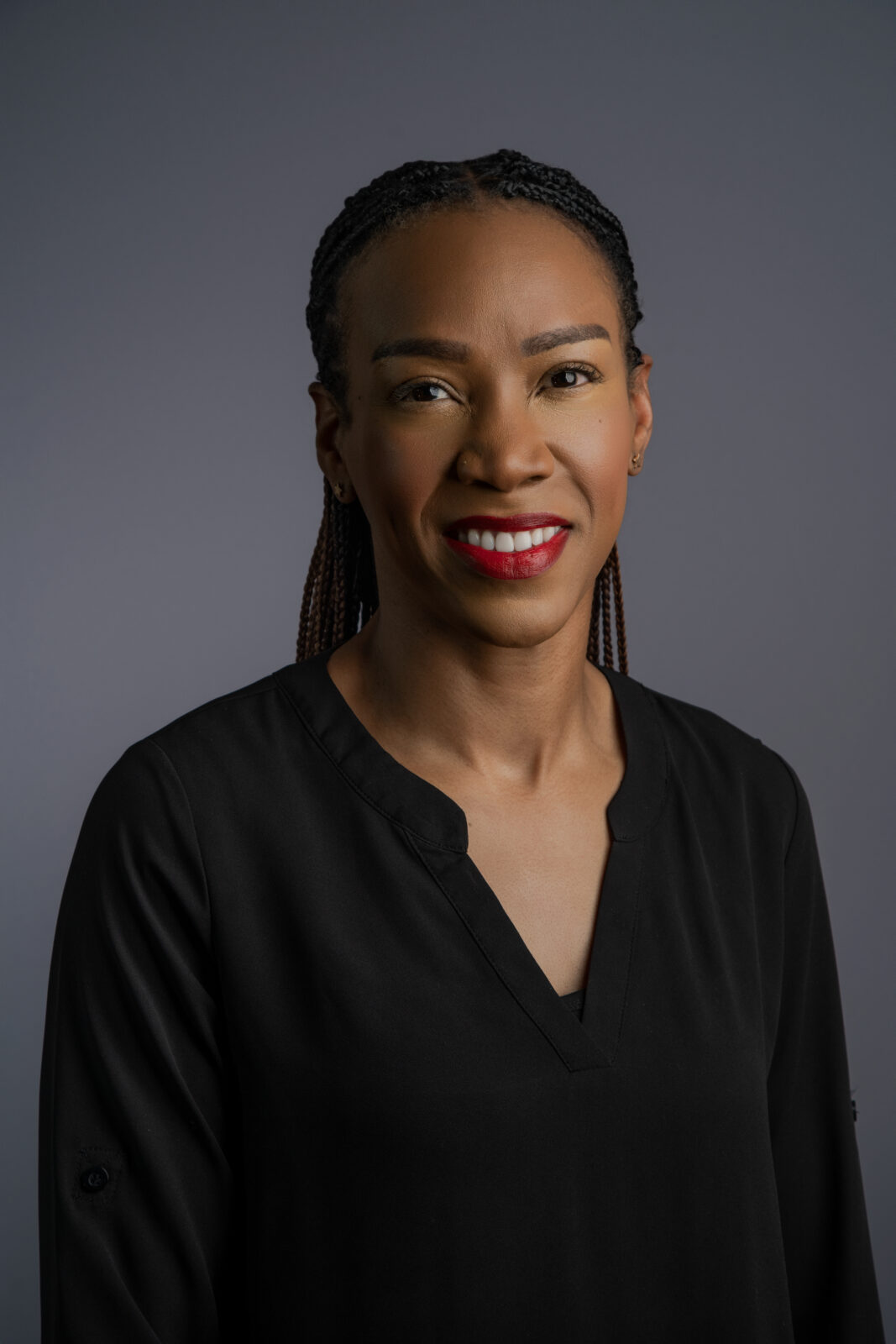
Director of The Raceless Gospel Initiative, an associate editor, host of the Good Faith Media podcast, “The Raceless Gospel” and author of Take Me to the Water: The Raceless Gospel as Baptismal Pedagogy for a Desegregated Church.