
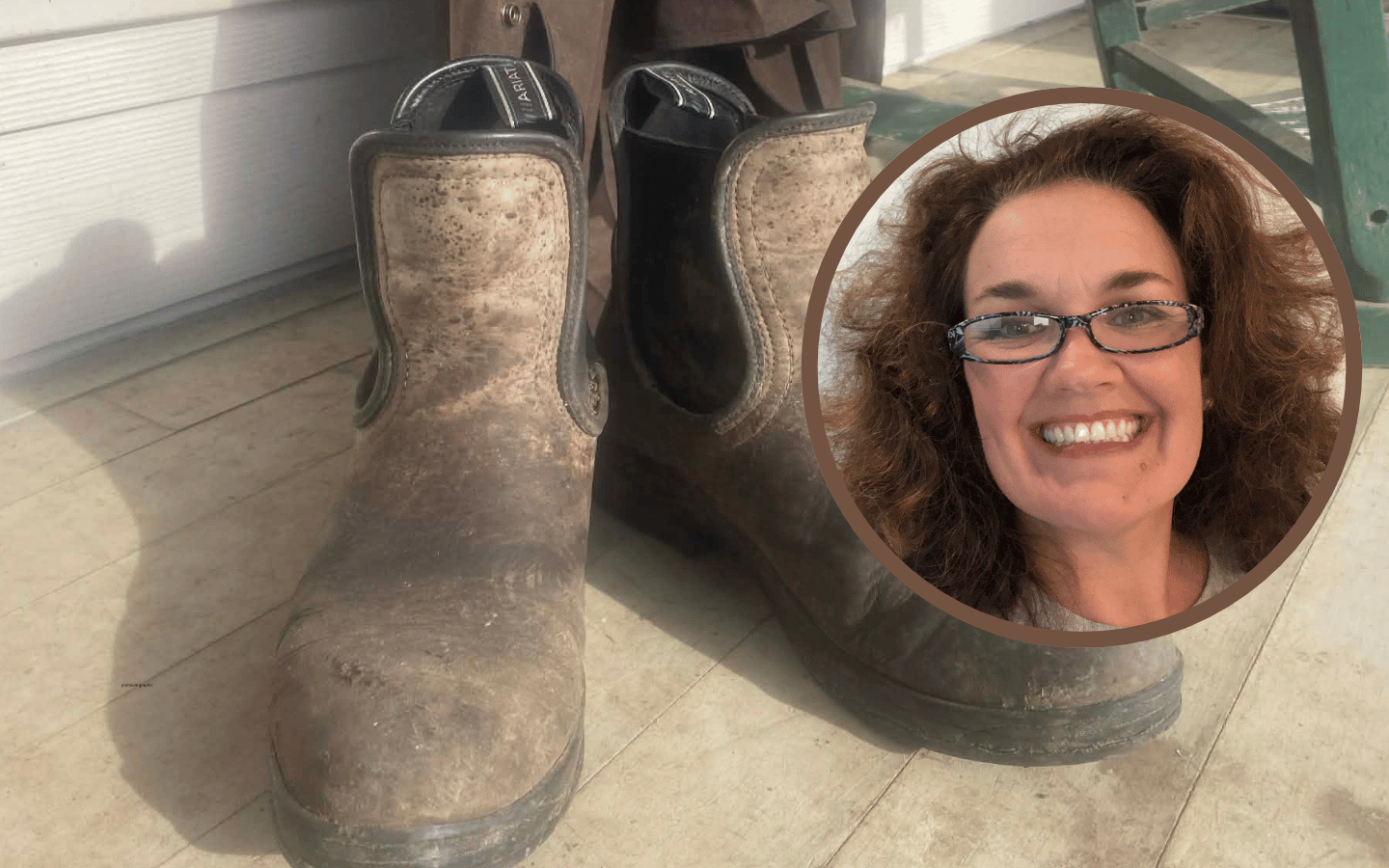
Editor’s Note: The following conversation has been minimally edited to preserve the speakers’ voices and linguistic mannerisms.
“I want to go to a summer camp.”
That’s how all this started. Our oldest daughter was bored with her summer freedom, so my spouse and I began looking for possibilities — sports camps, art camps, and finally, farm camps.
“I know one,” I said. “There’s a woman in my writing group who has a farm. I’ll look her up.”
This is how we came across Joy Combs and Providence Farm.
Every day for a week, I’d drop my oldest off in Joy and her husband Darrell’s care. When I picked her up, she’d tell me about baby pigs, what she foraged, and a goat named Hamilton. She loved it, and made quick friends with a couple of other girls there.
Joy and I would talk a little each day at drop-off and pick-up. “On Friday we’re having a meal,” she said. “Darrell is going to barbecue a few of these chickens, and I’m gonna make whatever. All the families are invited.”
“Alright if I bring biscuits?” I asked. Joy assured me it was.
That day Joy and I sat and talked in her kitchen as she worked. Her daughter was there. Her dogs were too, moving around and greeting people with the same hospitality Joy did. I sensed Joy has never met a stranger, and when you come into her house, you are invited to make it your home for as long as you are there.
We talked about all sorts of things, including chickens. I told her about the few we have, and how one wasn’t doing so hot.
“You should come out next Saturday. I’m teaching a culling class,” she said.
I did, and was taught the most ethical way to “dispatch” a yardbird.
Before leaving that day, I knew I wanted to talk to Joy more about who she was and what she does. I knew I wanted her to be the next subject of Diner Diaries.
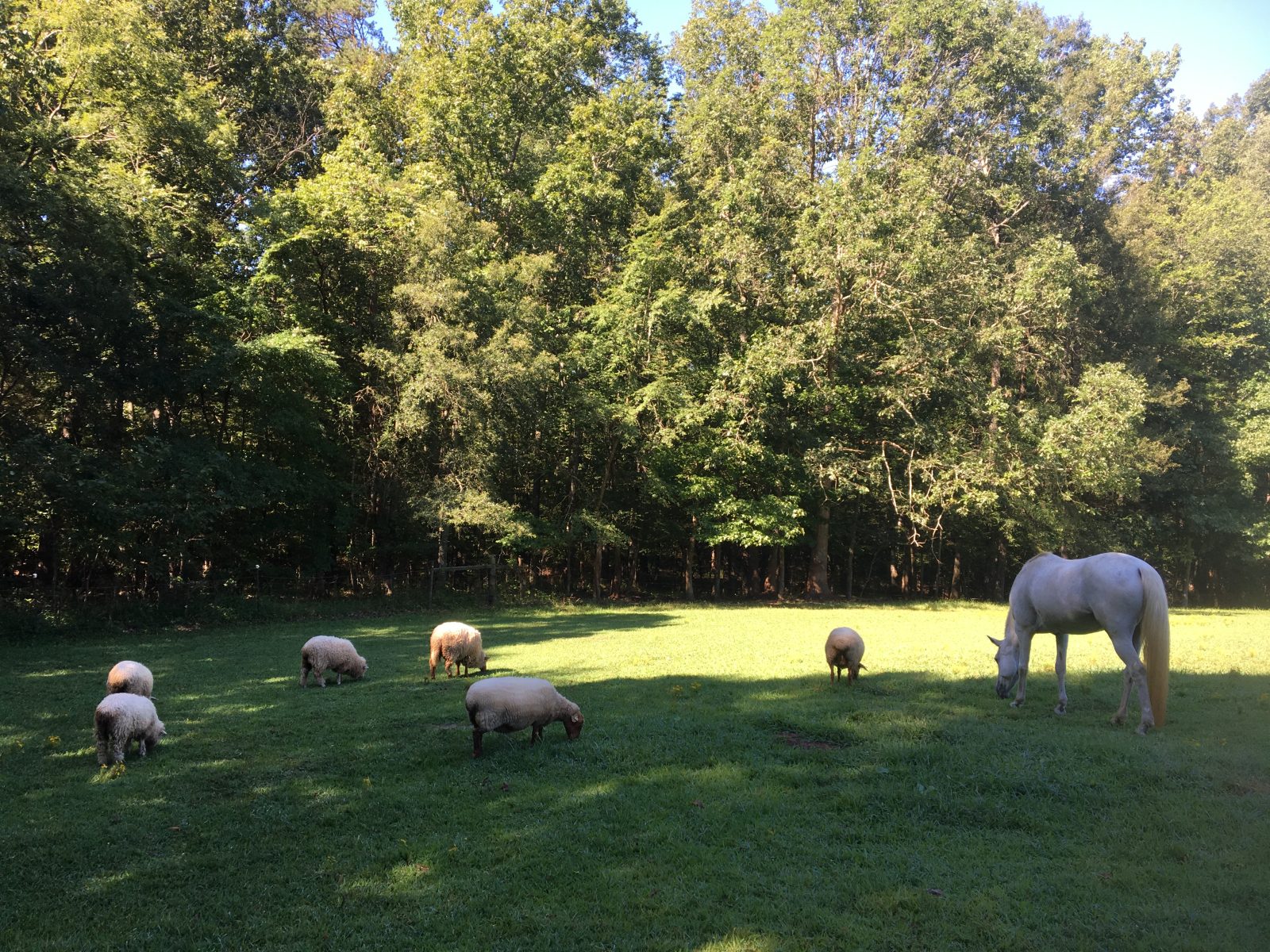
Providence Farm
‘Everything Has Gone to Seeds’
Justin: So when we first met, we were out on this farm where your spouse’s family has been for years. There’s all this history on this land that you inherited. How does it feel to get up every day and work on land with so much history?
Joy: All right, buckle up. Yeah, so the dirt and the lives on that dirt that we currently steward, that I’m intimately acquainted with every single day, were originally occupied by the Saponi. By the time the white folks got there and started colonizing it, those people—I don’t know if they heard white people were coming—were like, “We got to go.”
Justin: I know I’ve said that a few times.
Joy: I say it a lot these days. So that original piece of land, when white people acquired it, was actually part of the Lord Proprietor’s land, and the King of England gave it to Lord John Carteret, Earl of Granville. And the King of England needed to start funding and financing things. And he was kind of like, “I need some land back.” And John Carteret was like, “No, man, I’m good. I’m gonna sell it myself.”
And so he had various agents across the state. They started selling off pieces of land in one-square-mile increments. So that original farm and the surrounding farmland that became Buffalo Presbyterian Church, the North Buffalo and South Buffalo Creeks, and a lot of east Greensboro — that’s all right there where we are.
We were settled by what’s called Nottingham Settlement. They were a group of Ulster Scots-Irish Lowlanders displaced by the fighting between the Highlanders and the Northern English people.
And so they left Scotland and went to Ulster, then from Ulster to Pennsylvania, and then from Pennsylvania down the Great Wagon Road, formerly Highway 11. They settled in Eastern Guilford County. So that’s how this area was settled. That was in 1753.
In 1795, the farm I sit on had been sold off in little pieces. So what was originally a two-square-mile piece of land between North Buffalo Creek and South Buffalo Creek was now a variety of homesteads, and my husband’s great-great-great-great-whatever acquired some. That was the beginning of his family’s ownership, on his mother’s line.
So that land was passed down, and then when his great-grandfather came back from World War One, he started buying more land. He bought some from his parents. Then Darrell’s father bought other pieces of land. And so, at his dad’s passing, I think he was back up to 178 acres. And so his dad gave us 20 acres of that for us to farm.
So circling back to your question, that land has been in various hands, but I don’t tend to think of land like we own it. It’s stewardship. The word dominion sends me absolutely over the edge because we are called to be stewards of all of these things.
So when I go out on that land, as messy as things can be sometimes, I sit, and I look at my garden right now. It’s full of seeds. Everything has gone to seeds. So everything is home for something. Everything fits into that bio web, and my job is to leave the tiniest footprint I can while surviving responsibly.
Justin: So is there this kind of duality? You’re preserving your spouse’s land that’s been around, but also stewarding the land in a spiritual sense. But you’re doing something different. You’re inviting people there to experience something people 100 years ago weren’t experiencing. How do you deal with preservation and stewardship? Is there tension there?
Joy: Yeah, sometimes. You know, to have those animals on the farm, the animals have to eat. The farm doesn’t produce enough forage for those domestic animals. Doesn’t produce enough grain to maintain those chickens. It’s expensive. It’s really expensive to maintain all of that. So I constantly ask myself: how do we best use the resources entrusted to us to move the needle in a positive direction for the animals and other people?
I think about that and how we didn’t do anything to deserve that land. It’s an accident of birth. An absolute accident of birth that my husband ends up with that land. So I make the decisions about what I think is best for it, what we can bear financially, and what our obligation is.
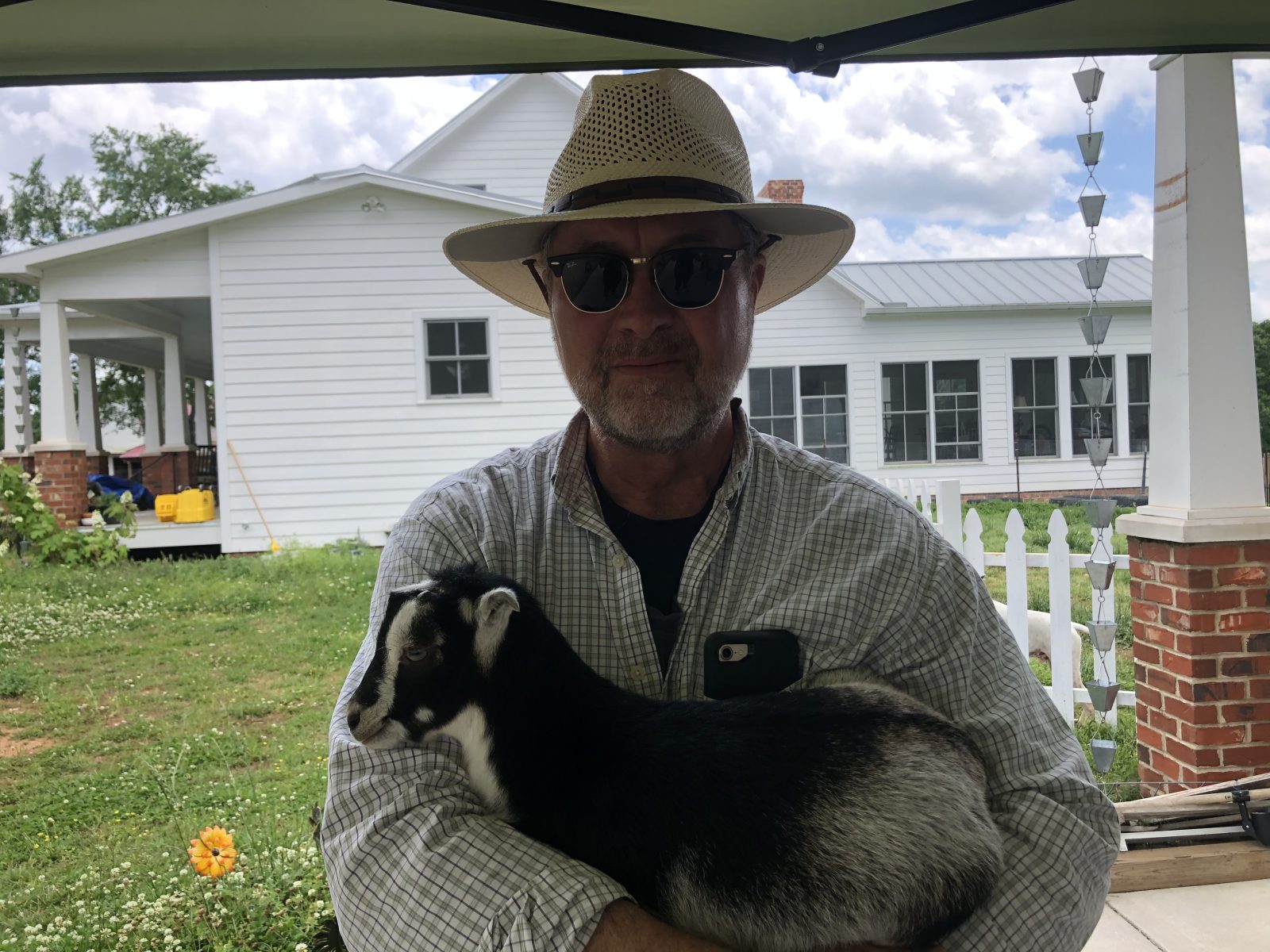
Darrell at Providence Farm.
Hands and Feet
Justin: You talk with such a deep-seated affinity and appreciation for creation. I’ve read some of your writing, and it comes up a lot. When did land and food become something more to you?
Joy: I accidentally started teaching middle school. That was not anything I ever intended to do. I taught in Title I schools, and so I dealt with kids who came from some really, really horrific situations. Situations where there’s this narrative that’s built around people that says they don’t have because they aren’t working hard enough.
Coming out of Appalachia, that’s my family’s background: poverty. When my mom was able to go to college, finances were so bad that she was selling her meal tickets in order to buy feminine hygiene products.
I knew people who had to make those tough choices: Do I buy Tylenol for my baby, or do I hold on to that money for gas so I can go to work, so I can pay the light bill when it comes in at the end of the month? And so, where does food fit into all of that?
I used to tell people, “How in the world are they (students) going to hear anything I’m saying to them over the rumbling of their stomach? How are they going to stay awake if they haven’t started the day with a decent breakfast?”
I’d hear, “Oh, the school feeds them.” Yeah, right. And the USDA program is Pop-Tarts. Those kids never saw grapes. It was nuts, and it didn’t matter how hard some of their parents worked. They worked two jobs, and sometimes they had a side hustle. People were pooling their resources for childcare.
And the feeding programs? We had free breakfast, right? So if I’ve got 30 kids on my roster, I’m always going to be doled out 30 breakfasts. If only 26 kids show up that day, I had to send the four breakfasts back that were not used, and then the cafeteria is going to throw them away because of food safety concerns. So when I left my job at the school, I started doing more.
I think that was part of the reason I started going back to church because I saw churches having a tremendous amount of resources. I don’t care if it’s a tiny church that is struggling to keep the lights on. If you’ve got people — 12 people, 15 people, 400 people — all of them bring something to the table in the way of boots on the ground. Hands and feet, right?
Justin: Supposed to be.
Joy: So the church I worked for had been given a gift of land, and I was like, “Why can’t we have a community garden? Like rural feeding programs? We’ve got to do this.”
So I did the legwork, and we got a little community garden started. Plenty of people writing checks. Not enough people interested in coming out and doing the work. Same old story, right?
Everybody wants to see something good happen, but agriculture is backbreaking. Everything wants to eat. The groundhogs want to eat. The birds want to eat. You know, you got to haul water over to this location. It failed, so I had to find another way.
So I said I want to get a food pantry going, and I want people to be able to come in and get what they need. They come in and get whatever. They get personal hygiene products. They get shampoo. They get baby formula if they need it. We’d just hand them a shopping cart and say, “I’ll be down the hall. Get what you need, and let me know if you need help loading it up.”
We tried to turn the church kitchen into a commercial kitchen. We had people who were ready and willing to volunteer. You know, there’s grant money through Duke University to do rural feeding programs.
We could have done a soup kitchen. We could have done all these things, but I ran into a church member who was using the kitchen to run her catering business, and she was a big donor to the church. She blocked it. She didn’t want anybody in her kitchen.
Justin: So you’re seeing all these practical things. You’re working with people. You’re working with children. You’re witnessing food insecurity and families trying to make it work.
Joy: Get me back on track, Justin (laughs).
The Myth of Self-Sustenance
Justin: I got you. I think I’ve seen, in the last few years, a movement. You said a minute ago that people don’t want to do this kind of work because it’s hard. They like the idea of it. They want to have land, and they want to garden. They want to grow their own food. But then you gotta do it, and it’s like, “Oh shit, this is hard work.” So what do you think of homesteading influencers and Tradwives taking over social media?
Joy: Oh my gosh, Justin, you should have sent me all of these questions!
Justin: (laughing) Like, really, what do people not get? What are they missing? What do they get wrong about this work?
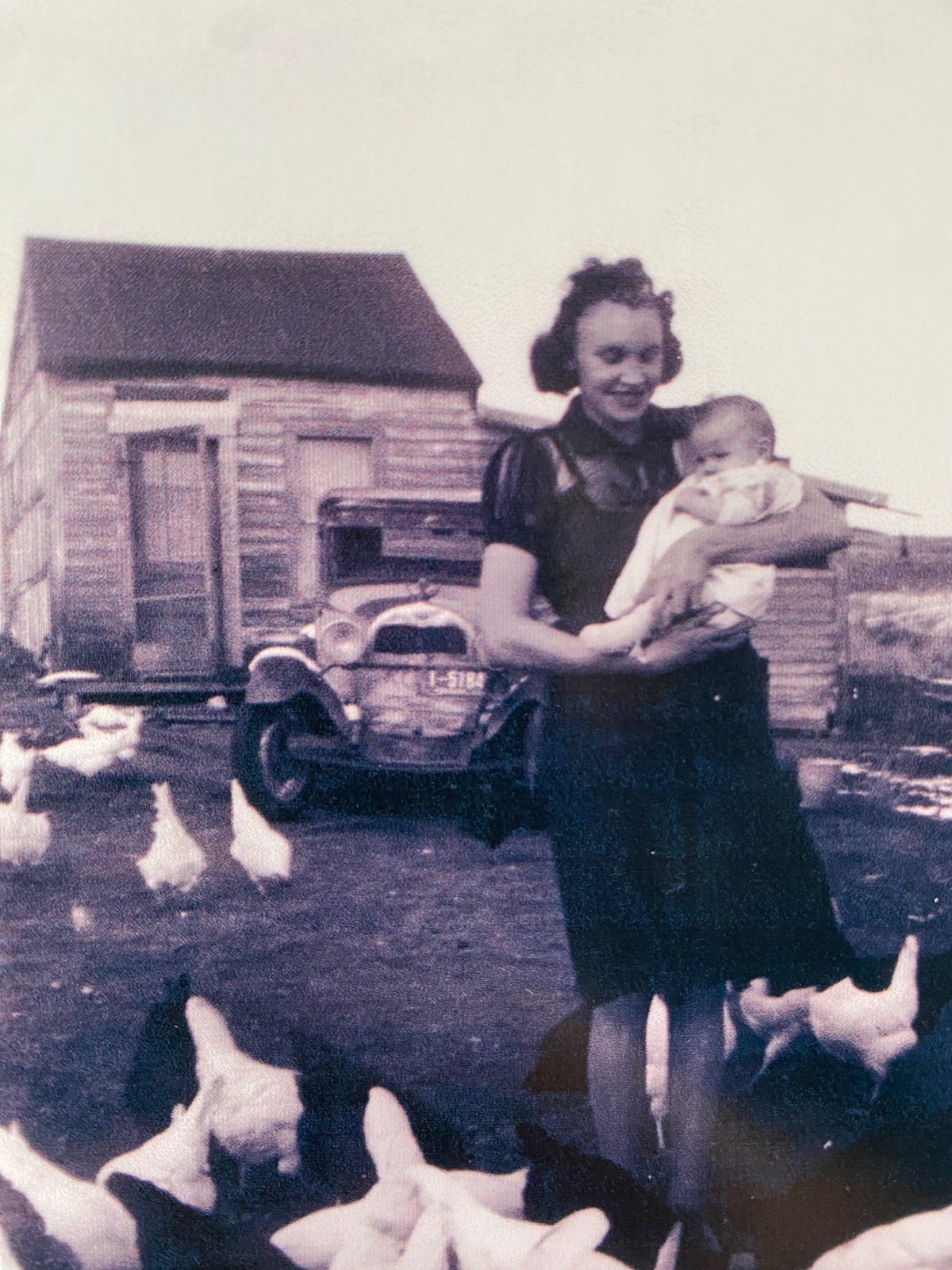
Joy Combs as a baby with her grandmother, Eva Mae Ellen Clark Finley.
Joy: Yeah, people want to do those things. Live off the land, plant a garden. They love the idea of doing it, but it costs everything.
If you’re going to do any kind of animal agriculture, you can’t just be like, “Oh, I don’t feel like it today.” The animals depend on you every single day.
And if you’re going to garden, I mean, yes, there are times when the garden is going to be fallow and not doing anything, and so maybe you get a little break. But anybody who’s gardening for production, there’s no break.
I think about that while I’m on that farm walking, and I’m having these crazy neuro spicy conversations where I’m communing with grandfather and grandmother’s spirits and saying like, “I don’t know what to do here. What should I do?”
My grandparents lived up in the holler of Appalachia, and if you didn’t grow it, if you didn’t trade for it, if you didn’t forage it, if you didn’t hunt it, then you didn’t have it. So if you were going to eat in February, the starving months, you better have been really clever about storing your pumpkins and canning whatever it was you were canning. Being able to feed yourself costs everything, and it’s survival.
So there are lots of people who think, well, I’m just going to get a little bit of land, and I’m going to homestead it, and I’m going to do this, and I’m going to do that.
Let me tell you, everything works against you. Everything loves your chickens: the foxes, your neighbors’ dogs, the hawks, the owls, the weasels, the possums, the raccoons, the skunks. Everything loves chickens. You better have a plan for that.
Gardening is the same thing. Moles get into your garden. The hornworms get into your tomatoes. The groundhogs eat your watermelons. It just costs everything.
So I think that it is incredibly admirable for people to say, I’m going to be self-sufficient. But my grandparents didn’t do it by themselves; they had six kids who helped on the farm. Everybody has to work together. So this whole idea of self-sufficiency and this idea of doing it all by myself is sort of laughable.
Justin: Yeah, we saw this when we lived up in Vermont. It was very community-driven. We’d grow tomatoes. Somebody else would grow zucchini. There was a feeling that you had to depend on somebody. I think you might be able to do some things on your own, but you really need to find your people. Self-sustaining is a myth.
Joy: It’s a joke.
Getting Still, Getting Quiet
Justin: Yeah, it’s a joke. You have to have community.
So let me take a step back and let’s talk a little bit about you. You have a very interesting background. You’ve got this background in education. You’ve got this veterinary experience as well. You’ve done social justice work.
Joy: You understand this is just unmedicated ADHD (laughs).
Justin: And you do these art activities at the farm. You write. All of this and the farming. So how’s that journey been? Do you think all those things kind of feed into who you are and how you do this work?
Joy: So without getting into predestination or anything, I don’t want to say that things are planned out for you from the time that you’re conceived or anything like that. I don’t think life works that way. But I think that at some point in time, if you get still and you get quiet, you allow yourself to kind of really be vulnerable to the whims of the universe.
So I did the vet med experience, but then vet med wasn’t sustainable. You can’t do that and make enough money as a technician to support yourself. So then I moved on to this and that. I have all of these different interests, and I want to try all these different things.
And I want to be totally transparent and honest: I didn’t want to move to that farm. I love agriculture. I love growing. I love farming. We were living on a little piece of property, and I had chickens, ducks, a turkey, and I was intensively gardening out front.
A friend of mine who works with Latino Family Services in High Point called me and said, “Hey, we know you’re doing some homestead stuff. I’ve got summer camp kids I’d like to bring out so they can see what you’re doing.”
And they came. And that’s how Providence Farm started.
And then our financial circumstances changed; Darrell was like, “We could have a real farm.” I’m like, yeah, that would be great.
And he says, “Well, if we’re gonna have a farm, it’s gonna be on family land.” And I didn’t really want to do that. I was dragged into vulnerability, kicking and screaming, and then COVID happened, and Darrell’s father passed, and my father passed, and just all these things happened. I had to get still and quiet and really have a meeting with myself.
So I guess now it’s easy for me to look back on it and say, “Oh my gosh, look how the vet med prepared me for this. Like how doing schoolwork prepared me. Working for the church prepared me.” And it’s just layer after layer until you start to see things more clearly, and it becomes more and more distilled about what I’m really being called to do.
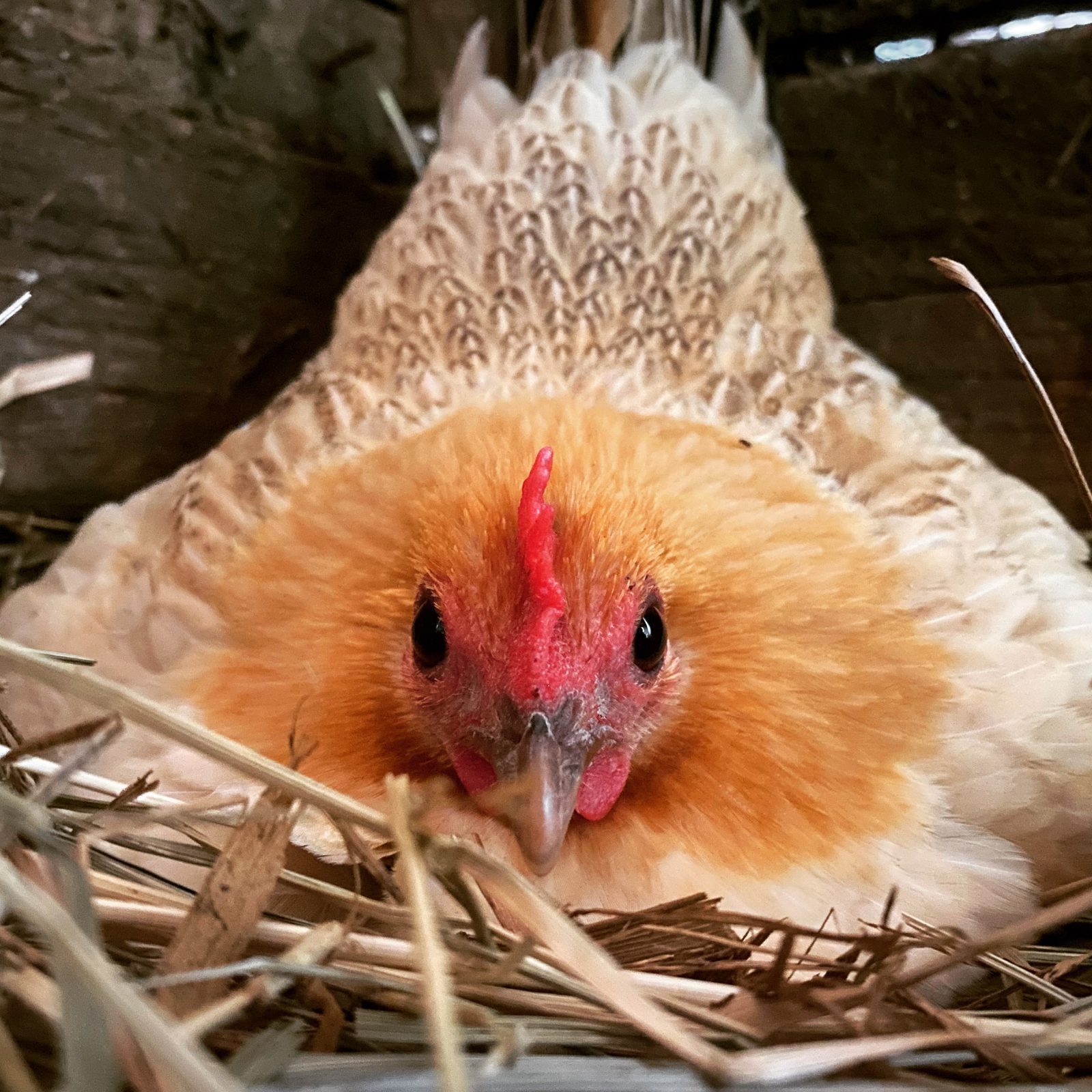
A Providence Farm Chicken.
Evidence of the Divine
Justin: So that’s kind of actually that leads into really well into the next thing. What do you find spiritually nourishing in working with the land and working with animals?
Joy: I struggle to find the words to qualify that, to condense it down into an answer that would be forever, right? I don’t think that I can put it into words because the evidence of the divine is in everything.
I mean, let’s just make it super sketchy and talk about a flea. The whole goal is to prosper, right? The whole goal is to survive and pass on your DNA within this system. A flea, something we don’t see any value in at all, can lay an egg, and that egg can insist on surviving some of the most ridiculous and harshest conditions we can conceive of, which is why it’s so difficult to get rid of them. And then, when the conditions are right, it can hatch and it can flourish and it perseveres. How is that not divine?
I’ve seen animals that I care for that really shouldn’t have made it because of whatever was wrong with them or whatever circumstances they were enduring, make it. Jeff Goldblum Jurassic Park stuff, right? “Life finds a way.”
Justin: Do you feel like we owe something to ourselves to do this kind of work? To be connected to co-create with something besides human beings? Do we get something out of it?
Joy: So E.O. Wilson wrote about this thing called biophilia. We are part of all this (gestures around). He juxtaposes science and faith, and you can really go down the rabbit hole with him.
But I read him, and it makes me think we’ve embraced this whole idea that we are somehow separate from everything. But we’re part of it, dude. You’re ashes to ashes. If you’re not embalming yourself and trying to preserve yourself in some kind of giant piece of Tupperware to get shoved in the ground, you are ashes to ashes. You are no different. You break down in exactly the same ways as absolutely everything else on this planet.
Justin: So you’re going to get yourself a green burial, right?
Joy: (laughs) Yeah, except that we talked about how difficult that was going to be, and when I say we, I mean my daughter and I. Darrell can’t be trusted to handle this because he’s too entrenched (laughs). He hasn’t deconstructed. So my daughter has instructions that if it’s cheaper, like if the green burial is easy, she can just do the green burial, but otherwise, just cremate me and then go on a deep-sea fishing trip on a head boat because that’ll be the cheapest and then toss me.
But really, I think we owe it to ourselves. I feel a little more angry and militant about that because I don’t think that it’s about us. I think it is about the bigger picture, and I think that we are obligated. I think that we are quick to unobligate ourselves from it.
Justin: So let me rephrase it a bit. I think what I was trying to get at was: are we missing the invitation? Like you, me, everybody aren’t separated from this — we’re part of it. You’re invited because I think we are made by a creator who enjoys it when we create too.
Did we lose something when we stopped getting dirt under our fingernails? When we stopped caring for everything else around us?
Joy: I think you can find inspiration in doing that sorta stuff. You can find inspiration in a lot of places, but if your primary way of finding inspiration is through a trip down the dadgum “Live Laugh Love” aisle at Hobby Lobby, you’re missing the point.
Real Cost
Justin: (laughs) You don’t think it edifies the soul to go down the aisles of Hobby Lobby?
Joy: It should wreck your soul. It should destroy you. I mean, aside from all the other ways that I feel about Hobby Lobby. My daughter and I get into huge fights over this because it’s one of the few fabric options we have.
So we get into arguments about it, and she’s like, “Oh, I saw this cute whatever,” and I’m like, “Yeah.” What’s the cost of that? And she’s like, “Oh, well, it was like $6.”
And I’m like, “No, no, no, no. What’s the real cost?” It’s just like the food system. With anything we engage with, there is a cost for us to live cheaply, seamlessly, and without any burdens. There is a cost being paid by something somewhere else for that, whether it’s child labor in Sri Lanka or 8,000 pigs confined to a grow-out house.
Red Letters
Justin: All right, we’re getting close to the end here.
Joy: I’m sorry I talked so much. Clearly, I don’t get out enough.
Justin: How often do you come to restaurants and diners?
Joy: This is a rare outing for me, for sure. He (Darrell) gets off the farm a lot. I don’t.
Justin: So the reason I choose to meet at diners is that I feel like they’re still one of the last third places that we have left that folks can go to. Diners are pretty affordable. They do equality pretty well. It seems nowadays we’re all getting priced out. But diners are still gathering spots. The same faces are usually there. Do you think we struggle to eat together anymore?
Joy: I mean, I can only speak to my experience. One of the things about doing the farm work is I am by myself 90% of the time. I have conversations with those animals. I talk to my deceased grandfather. In fact, I have some pretty cuckoo beliefs that probably would send your God Squad folks off.
I’m by myself a lot. So I think a lot. I think I ponder and ruminate over things.
Sometimes it’s like doomscrolling, kind of intrusive thoughts, but a lot of times it is about community because I think everyone wants community. And there’s this difference between fitting in and belonging. My personal experience has been that communities of faith are not about belonging; they are about fitting in.
Justin: That’s conformity.
Joy: Right, and that’s really unfortunate because that’s where I think a lot of us go to find community because we are stupid enough to read those Red Letters and think, “Oh, I’m going to go find other people who’ve read the Red Letters, and we’re going to do them together.” And then you’ve got people arguing over stuff that don’t matter.
The brilliance about gathering for a meal is that when you eat with people, you got to listen while you chew your food. And so, when you are sitting down and you are having a meal, if everyone’s actually consuming the food, and you’re not rude and tacky, and like prattling on with food flying out of your mouth, you aren’t talking. You are not filling the space with noise, and you hear what other people have to say and what other people have to share.
We silo ourselves off in different ways, and we can’t stand being challenged. I mean, I’m the same way. Like, I don’t want to be challenged about my beliefs about certain things. I know I’m right. I don’t need your opinion. So we find echo chambers, and we call that community, and it’s dangerous.
Justin: You’ve already said some really good things about this, but is there anything else you want to say about what faith communities and churches can learn from a space like your farm?
Joy: Well, here’s where I think that communities of faith get it wrong. The directives are very simple. Love your neighbor. Everyone is your neighbor. If the Samaritan can do it, then you can do it.
And love is an action verb. If you see somebody who’s hungry, don’t give them a blanket just because that’s the only thing you have. Figure out a way to share what you have. If you have some food, then you have food for you and them. I mean, you see what I’m saying? Ain’t love sort of sacrificial?
What Happens to Energy?
Justin: Should be. Love requires you to lose a bit of yourself for something else.
Joy: And you should. And you should just be able to show up, and that’s enough. Quakers do that. Just show up, and anybody who feels led can get up and speak during their quiet time, because we are made in Their image. So the presence of the divine is in all of us.
I mean, I’m not a theologian. I don’t know enough about all the different religions, but I think about this idea of Nirvana, right? And if, once you’re finished, like slugging it out here, once you’re through raw dogging life here, then eventually you can go to Nirvana or whatever.
I think about energy, and I think about how, when all things die, what happens to that energy? That tiny little, you know, electrical divine spark, right? Where does that go, and does it show up in other places because we’re all part of a bigger ball of energy that manifests itself in various ways?
The same energy that manifests you manifests everything else, which removes this whole idea that we are nothing but individual souls.
So what if everything’s tied together? On the farm, I need the fox to survive. I need the coyote to survive, because the coyote’s health is tied to the health of the prey it feeds on. Everything is interconnected. So if churches are going to do this, stop being an exclusive club and bickering over words we’ve decided are accurate because they suit us. Stop pushing people out. Stop marginalizing people.
Justin: Last question, and it’s a doozy. What makes you happy, Joy? Where do you find happiness?
Joy: (laughs) Oh my God! I hate you right now.
I think it is in the daily miracles. I’ve had some sickness running through a group of chickens. I know why they’re sick. You know they’re not designed to live the way I want them to. But I feel this huge weight in caring for everything on that farm.
I just want to say I’m happy when things go right. That sounds so lame and reductive.
When you told me that your daughter has kept up with those two girls she made friends with at summer camp… that is so fabulous and amazing. That makes me happy.
We have chickens that show up with babies all the time because I don’t know where anybody is or what they’re doing. I’m like, oh, did they die? And then they come back with 12 babies. I’m like, oh, I guess not. You were busy. You made it. I’m happy they made it.
Lingering
Joy and I start to close down shop. She’s got a place to be. A place that needs her. We argue over who gets the check, and I luck out and win this time. Like two good Southerners, we stand in the parking lot for another few minutes talking, leaving but not leaving, watching people come and go.
All sorts of folks walk past us a handful at a time. Each one looking for a table, a meal, maybe the face of a waitress they know.
I wondered how many of them are looking for the same thing. A little community, a little belonging.
I hope they found it in the middle of an ordinary day.
- About the Author
- Latest Posts
Justin Cox received his theological education from Campbell University, Wake Forest University School of Divinity, and McAfee School of Theology where he earned his Doctor of Ministry. He is an ordained minister holding standing in the Cooperative Baptist Fellowship and American Baptist Churches USA. When not spending time with his spouse and daughters, he can be found writing and baking late into the night. His thoughts and reflections are his own.