
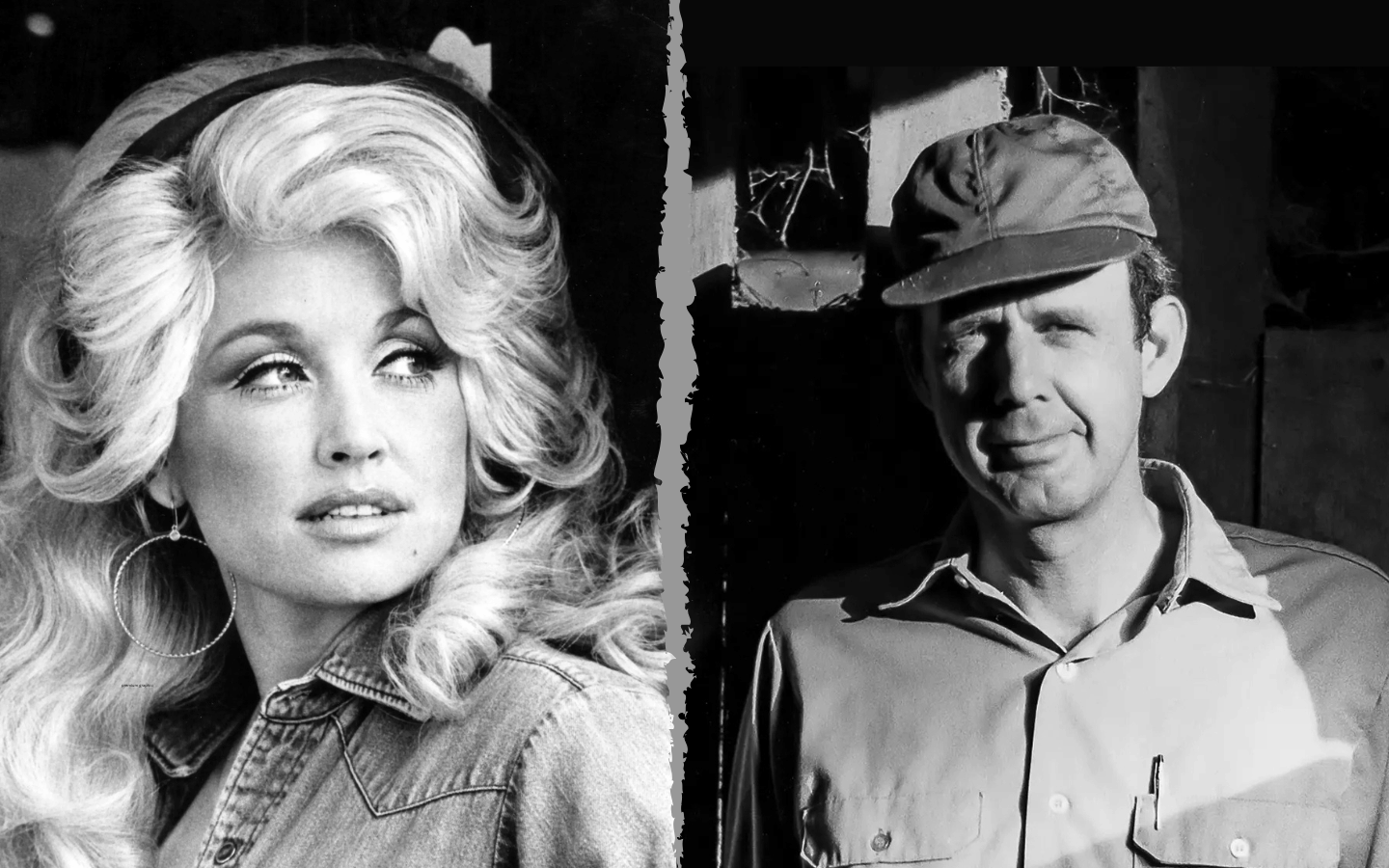
Dolly Parton died in Nashville on August 25. Six days later, Wendell Berry died in his home in Port Royal, Kentucky.
Parton spent most of her adult life under stage lights wearing wigs, acrylic nails, and rhinestones. Berry, on the other hand, could usually be found beneath a broad-brimmed hat with dirt under his fingernails, looking like he’d just been called in from pasture…and hoping this conversation wouldn’t take long.
Rhinestones and topsoil seem like an easy way to sort them; at least until we get to Port William, the fictional town that connected Berry’s various rural characters and stories.
Dolly in Port William
Dolly would have caused a stir there, though people would have warmed up to her. She’d start talking about her parents and her preacher grandfather. I’m sure a few of the respectable citizens might take longer than Burley Coulter to decide what they thought of her.
And Wendell Berry could’ve stepped into one of Dolly’s songs with hardly any alteration: a Kentucky man attached to one woman and one piece of ground, suspicious of machinery…and inclined to give a long answer when a short one might have done. Dolly knew men like that, and she knew the women who’d had to live with them too.
Stories and work moved through both of their childhood worlds. Berry remembered old names opening into other names and jokes that made the rounds so often everyone knew when the laugh line was coming.
Dolly eventually called herself a “Songteller,” with songs that seldom left people as categories for long. A poor girl had a mother who sewed. An office worker had a boss who leaned too close. A woman everybody had already judged got to tell what happened from where she stood.
Dolly herself was the kind of person Port William tended to lose. Nashville was already in view when she finished high school, though her appetite for elsewhere began earlier. She remembered seeing Spanish moss, swamps, the ocean, and even a banana for the very first time.
Berry left Kentucky also. First for Stanford, then for Europe, and finally New York, where a literary life began opening up to him. His father had traveled part of that road earlier and eventually found himself looking at Washington’s tar roofs while thinking about Kentucky bluegrass. So, Wendell and Tanya went home, raised their family there, and made a life in which farming and writing occupied much of the same ground. Berry later used the older meaning of amateur for the work he wanted: work done for love.
Berry wrote a poem called “Stay Home.” Dolly, who was rarely home, spent her career returning through songs. My Tennessee Mountain Home remembered what she’d loved there, and In the Good Old Days (When Times Were Bad) recalled what she’d escaped.
Decades later, the bluegrass musician Justin Hiltner told Dolly her song “Wildflowers” had helped him understand his own decision to leave a religious world that didn’t have room for the person he was becoming. Dolly understood that need to find different soil.
During those very same years, Berry watched as stores closed and farms changed hands and as people died carrying knowledge no one cared enough to ask them for. Sometimes a place needs its people to stay. And sometimes staying asks too much of a person.
Berry at Dollywood
Put Wendell Berry and Dolly Parton in a Dollywood golf cart, and I’m quite sure they would’ve had plenty to talk about. A park selling tickets to experience Appalachia, after all, would’ve given Berry plenty to question. But then they’d pass a blacksmith working with iron… or someone would be blowing glass… and the inquisition would have to wait a minute.
It was important to Dolly for Dollywood’s craftspeople to actually know the traditions they were demonstrating. She often said she wanted to keep “the soul of the place.” Berry might have asked her what happens when a culture begins selling a version of itself to survive. Dolly might’ve replied, “Well, Wendell, where is it that the people who stayed are supposed to work?”
Wendell’s father, John, had spent years trying to answer some version of that question for small Kentucky tobacco farmers. Dolly grew up watching Lee Parton make a living any way he could to feed his twelve children. The cart would keep on moving.
Long before anyone ever bought a ticket to Dollywood, Avie Lee Parton sat down with scraps of cloth to sew because there was no money to buy Dolly a new coat. As she sewed, Avie Lee told Dolly the story of Joseph’s own multicolored coat, so that Dolly went to school carrying her mother’s work along with the old biblical tale. The other children saw the scraps and laughed.
Years later, Dolly was riding with Porter Wagoner when the song began to come. She couldn’t find any paper, so she started writing “Coat of Many Colors” on a dry-cleaning tag from one of Porter’s garments—something meant to be thrown away after somebody collected his clothes.
On Berry’s farm, an old galvanized bucket hung from a fence post near a wooded hollow. Rain fell into it. Leaves landed there, with nutshells, insects, feathers, droppings; whatever the life around it happened to shed. Years passed, and several inches of dark humus formed at the bottom.
“The bucket,” Berry wrote, “is making earth.” He remembered people around that place too, including Floyd Scott and a blackened boiled egg that once made a farm crew laugh. Some of the men were gone by the time Berry wrote about them. But the story was not.
Sacred and Secular
Dolly grew up Pentecostal, where she experienced God through music and altar calls, her grandfather’s preaching and plenty of adults who often sounded more certain about God than she felt. Around twelve, Dolly said she began going alone to an abandoned church near her home. Its windows were broken, graffiti covered the walls, and a damaged piano sat inside. Dolly prayed Psalm 23 there and later said that it was in that ruined building that she found God…and also found Dolly Parton.
Berry once wrote that “there are no unsacred places; there are only sacred places and desecrated places.” Whether Dolly Parton ever read the sentence hardly matters. She had already found God in that ruined church.
Dolly had another phrase for what she hoped a human life might carry: “God spark.” Dolly spoke of praying that something she did or said, or simply something she was, might bring love to another person. She usually brought it back to the old command to love your neighbor as yourself.
Berry could get to the same command through a fence line or a creek: what does love of neighbor mean if the way you live damages the ground or water next door? Late in his life, Berry reflected on the Genesis 1 claim that human beings are made in the image of God. He wrote about the freedom of creatures who resemble God without being God, and about the responsibility that comes with having so much power over land and other life.
These two accounts don’t sound alike. And that’s ok. That old phrase “image of God” has to make room for actual people. And these two were very different people.
Gathering People
I’m so glad Dolly Parton was here. And I’m so glad Wendell Berry was, too.
Wendell’s daughter, Mary, spent her own working life on many of the questions her father raised about land and belonging. The day before he died, The New York Times published a story about Dolly Parton and the small rural churches that had helped form her world.
Mary Berry was one of the people the reporters called. She talked about the Baptist church she’d once belonged to in rural Kentucky, where she taught Sunday school, brought food to potlucks, and served as a deacon alongside a janitor, a tenant farmer, and the community doctor. As the surrounding agrarian culture began to disappear, so did much of what had held that congregation together. “What we were really losing,” she said, was the kind of gathering “where all kinds of people gathered as equals.”
It wasn’t perfect, she said. But it was pretty darn good.
Dolly, for all the size and spectacle of her crowds, had a strange gift for gathering people who might not otherwise have shared much of a room. Mary was talking about her own small rural church. She could have been describing her father’s whole shelf of books. She didn’t need to know that to be right.
Topsoil and Rhinestones
After their deaths, a friend of mine wrote that Dolly and Wendell probably knew very little about one another while they were alive but might be getting acquainted now. They would have plenty to talk about: fathers and work, songs and farms, Tennessee and Kentucky, people back home, as well as what money can do to a place, and what the lack of it can do to the people who live there.
Dolly might interrupt Wendell when his answer ran long. Wendell might ask enough questions about Dollywood to require another ride through the park.
When they were asked about heaven, Dolly would speak about seeing the people she loved again and about music continuing. And Berry spent so much of his life attending to soil and water, bodies and animals, meals and work that an eternity with none of those things in it seems like a strange destination for him.
Who knows. Maybe heaven has dirt. I can’t imagine Dolly arriving without the rhinestones.
After Dolly became famous, Sevier County placed a bronze likeness of her outside the courthouse in Sevierville. Her father, Lee, used to like to tease her about the pigeons that perched on it. Your fans might think you’re an idol, he told her, but those pigeons didn’t seem especially impressed.
What Dolly didn’t know was that Lee would sometimes put a bucket of soapy water and a rag in his pickup and drive into town after dark.
Then, once the courthouse square was empty, he got out and cleaned the statue himself. He worked across the bronze hair and shoulders, rinsed the rag when it grew dirty, wrung it out, and then went back over the places he had missed.
- About the Author
- Latest Posts

Senior Pastor of Second Baptist Church in Liberty, Missouri. His forthcoming book, At Home with God: How the Cross Transforms Us, will be available from InterVarsity Press in November 2026. His reflections appear at jasongedwards.substack.com.