

Editor’s Note: The following first appeared on Jason G. Edwards’ Substack. You can pre-order a copy of his upcoming book, At Home With God: How the Cross Transforms Us here.
The Question in Class
During my senior year of high school, an English teacher handed back a paper with an ‘A’ at the top. Later, in class, she asked if I would consider joining a writing group. Then she said something I have remembered ever since.
“Most good writers are good readers. Do you read much?”
I answered honestly.
“Just the Bible and TV Guide.”
She looked at me as if I had just confessed to kicking a puppy.
I did not have a bookshelf full of novels at home. I was not reading Hemingway under the covers or carrying around a battered copy of The Catcher in the Rye. If I had any literary formation at that point, it had come by an oral route.
I grew up around spoken language.
In the Baptist and United Methodist churches of my childhood, words were always in the air. Scripture was read aloud. Hymns were sung. Prayers were offered. Sermons rose and fell through sanctuaries and fellowship halls, revival services and ordinary Sunday mornings. Around kitchen tables and on back porches, grandparents, aunts, and uncles told stories, repeated family lore, swapped memories, and revisited events I had heard before but never quite the same way twice. I learned early that language had a sound before I learned much about how it worked on a page.
Martin Luther King Jr. became one of my first conscious fascinations with the power of speech. In fifth grade, I did a research project on King and the Civil Rights Movement. I admired the courage and moral force of the movement, and I listened closely to the way King spoke: the repetition, the pacing, the way a phrase could return and carry more weight the second time.
I did not know about anaphora or parallelism. I knew that a speech could move people, and I wanted to understand how.
My answer to my English teacher was accurate as far as it went. Poets, novelists, essayists, and theologians would come later.
The Recliner by the Bed
By high school, I had started writing in more private and personal ways.
There was an old recliner in my room, retired from some earlier usefulness in the house and given a second life near my bed. I spent a lot of time there with a notebook, though I doubt I would have described what I was doing as “writing practice.” Mostly, I was trying to get something out of me and onto paper before it disappeared.
Some of it was poetry. Some of it was prayer. Much of it lived somewhere between the two. I wrote when I was heartsick, when I was confused, when I had questions I did not know how to ask out loud. I also wrote when something amused me, including a poem about my Aunt Judy after a copperhead bit her pointer finger and she spent several weeks driving around town with it braced upright, unintentionally waving at everyone she passed.
That one made it into the Atlanta Citizen’s Journal. I wish I knew where the clipping went.
The recliner gave me a place to pay attention before the attention had to serve a public purpose. I could sit there with a pen and find out whether the ache in my chest could become a line on the page.
I started getting opportunities to preach when I was seventeen. They came here and there, enough to awaken something in me before preaching became the primary shape of my work. Those early sermons changed the notebooks. Bible study notes began showing up beside poems. Lines for sermons appeared next to private questions. The language of devotion started leaning toward proclamation.
I loved preaching (still do) and can see how early it began shaping the way I thought about language.
In college, I double majored in Religion and English. Scripture and literature sat on the same desk, sometimes uneasily, often fruitfully. I was drawn especially to British poetry, helped by a teacher who loved it in front of us with enough seriousness and delight that I began to love it too. Great teachers have a way of doing that. They let you see what loving a subject looks like, and before long, you’re leaning forward.
By the time I moved through college and seminary, the poems had faded into the background. I kept reading, studying, and writing, while more of my attention went toward scripture, theology, ministry, and the craft of speaking faith aloud.
Economy of Words
In 2008, I began work on a doctoral degree and became well acquainted with a phrase that kept appearing in the margins of my papers.
Economy of words.
Sometimes it was written beside a paragraph I had already revised three or four times. I would look back over the page and try to guess what still needed to go. Another supporting sentence? A quote I liked too much? One more phrase that explained what the previous phrase had already made clear? (Usually, yes.)
I had a habit of staying with a point after the reader was ready for me to move on. I would make the point, add another sentence to make sure it had landed, then add one more because I could see another connection. (This sentence is Exhibit A)
Some of that came from habits formed around speech. A sermon lives in time. Once a sentence passes, it is gone. A preacher sometimes repeats a word or image because the room needs a way to hold on to it. A thought may need to be turned slightly and offered again. People come to worship carrying a great deal with them: fatigue, sorrow, grocery lists, worry about a child, relief that they made it to church at all.
Readers can stop, reread, and linger.
Several years later, around 2017 and 2018, I tried an experiment that seemed reasonable at the time. I wanted to write a book by preaching it first.
I outlined twelve sermons that would become twelve chapters, arranged around three larger ideas. I preached the material, then tried to convert the sermons into prose. Sermons gave me deadlines, energy, and a living audience. The chapters would come from material already tested in a room.
The experiment drew out the worst of the preacher-writer wrestling match.
The chapters had energy, but they carried too much of the sermon with them. They kept the extra explanation. They repeated moves that may have helped listeners but slowed readers. The writing was sloppy, attempting to preserve the warmth of spoken material while also preserving much of its excess.
The pandemic made the border blurrier.
For a season, I often sketched a sermon rather than writing a full manuscript. I would gather the shape of the message, turn on the camera, and speak. That was a pastoral choice as much as a practical one. People were isolated. The sanctuary was empty. I wanted the sermon to feel less formal, closer to something offered in a living room.
That mode had its own gifts. It sounded more conversational. It left room for warmth and immediacy. It also let the sentences search for themselves while I was saying them. I could trim the video afterward, which meant I could speak first and refine later.
I keep finding the same problem in new places. A repeated phrase that steadies a listener can feel padded on the page. (Still learning this one.) Cadence can carry meaning in a sermon, but it cannot rescue a sentence that has already finished its work.
Sometimes I see these habits ten minutes after I share something: the repeated sentence, the paragraph that kept explaining after the idea had landed, the rhythm I liked too much to cut. (Rhythm has talked me into many bad decisions.)
Economy of words.
I can still see the phrase in the margin, waiting for me to cut the next sentence.
Learning the Page Again
That margin note has followed me into the pulpit, too.
In the last few years, a preaching mentor I trust has listened to several of my sermons and told me the truth.
More than once, he said he had trouble following me all the way through. There was good material there, but I had buried the path under the material. Too much freight for one sermon. Too many turns before the next clearing.
Because he loves preaching, I trusted him. He was listening for the people in the room, for what they could carry at 11:17 on a Sunday morning when attention had already begun leaking toward lunch, grief, medication schedules, restless children, and the week ahead.
His recurring counsel has been to read great fiction, especially for pastoral imagination. He has also pressed me toward short stories because a short story writer has limited space. The door opens, a world appears, something turns, and the writer has to leave before explaining too much. A sermon can learn from that kind of restraint.
Poetry never disappeared entirely. It surfaced and receded over the years. As poetry has returned with more intention, it’s reminded me that if you put two words beside each other in a poem, one of them may start sweating.
Sharing my writing has taught me in a more abrupt way.
I can read a piece six times before posting it and miss something obvious. Then I share it, and ten minutes later the flaw stands up and waves: the repeated phrase, the paragraph that kept talking after the thought had landed, the sentence I loved mostly for its rhythm.
I am still working out how preaching and writing belong together in me. What I know is that each keeps convincing the other to do something it shouldn’t.
So I keep revising — reading aloud, reading silently, cutting sentences that worked better in my voice than they worked on the page, trying to notice when an essay is becoming a sermon or when a sermon has grown too dense to be heard by people who cannot rewind me.
Somewhere in all of this, I keep returning to that old recliner by the bed, to the teenager with a notebook, trying to get something onto paper before it disappears. He was paying attention before he had a theory for what he was doing.
That still seems like a good place to begin.
- About the Author
- Latest Posts
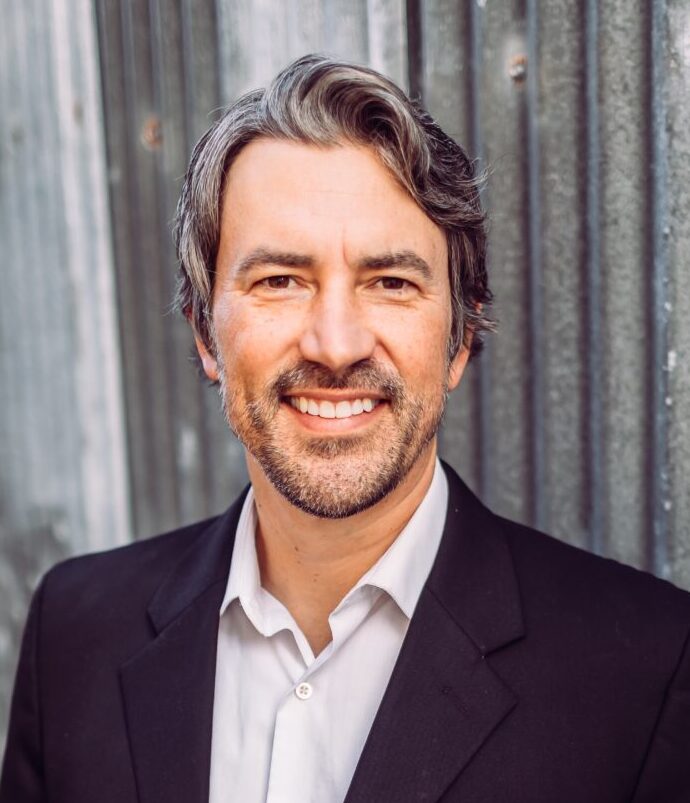
Senior Pastor of Second Baptist Church in Liberty, Missouri. His forthcoming book, At Home with God: How the Cross Transforms Us, will be available from InterVarsity Press in November 2026. His reflections appear at jasongedwards.substack.com.