
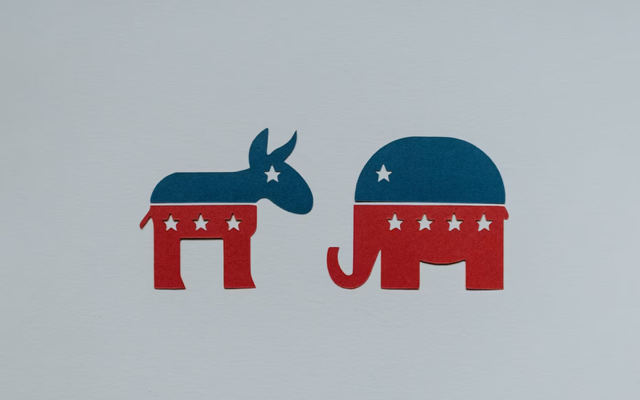
The politics of white-body supremacy make existence insufferable for marginalized people groups racialized as black and brown. That’s the point.
Systems of white-body supremacy create an untenable environment by deeply embedding trauma into our physiological, political and cultural realities. The persistent strain of navigating these discriminatory structures results in profound exhaustion and an unsustainable lived experience.
“We cannot heal what we do not first feel,” Resmaa Menakem explained in My Grandmother’s Hands: Racialized Trauma and the Pathway to Mending Our Hearts and Bodies. “And we cannot feel what we do not first acknowledge.” Menakem argues that racialized trauma lives in our bodies, not just our minds.
If this is the case, then a large part of the American body politic is numb. That’s intentional.
“Whiteness is one pole of an unequal relationship, which can no more exist without oppression than slavery can exist without slaves,” Noel Ignatiev made plain in Treason to Whiteness is Loyalty to Humanity. “The abolitionists study whiteness in order to abolish it—not to ‘reframe,’ or ‘redeem,’ or ‘deconstruct’ it, but to abolish it.” But unfortunately, the ayes don’t have it, so people racialized as white will continue to consciously or subconsciously detach from the emotional discomfort associated with race, privilege and historical trauma.
With this assurance, modern political scientists note that a defining feature of contemporary political alignment is “white identity,” where racial solidarity and feelings of perceived endangerment heavily influence voting behaviors and policy priorities. This is known as white identity politics.
It’s evidenced by policy dismantling. Recent political actions, such as the gutting of the Civil Rights Act of 1965 and executive orders dismantling Diversity, Equity and Inclusion (DEI) initiatives in the federal government, demonstrate an active rollback of institutional efforts to address historical disparities along racialized lines.
Political figures and advocacy groups utilize this rhetoric to claim diversity initiatives and civil rights protections intentionally discriminate against citizens racialized as white. By framing historical or structural progress as a targeted attack, a narrative of “reverse discrimination” is established.
This narrative is used to advocate for policies that redirect government resources toward communities populated by European Americans. Actions include tightening immigration and challenging affirmative action to preserve perceived “white” advantages.
Extremist rhetoric is also mainstream. Classic white supremacist and nationalist concepts like “white replacement” conspiracy theories and anti-immigrant rhetoric have increasingly been adopted by mainstream political figures.
Criticism of the “white replacement” conspiracy theory centers on its origins in white supremacist and antisemitic ideologies. Experts, civil rights advocates and political figures condemn the theory for denying democratic equality, stoking unfounded fears and inspiring race-based violent extremism.
Historian Kathleen Belew notes this “demographic panic” is “an apocalyptic state of emergency that foreshadows racial annihilation,” which is weaponized into a “mechanical exercise of disenfranchisement that’s attached to white supremacy.” This narrative, which falsely foreshadows racial annihilation, is consistently weaponized by white power movements to justify violence and systemic disenfranchisement in service to white-body supremacy.
According to Belew’s foundational research, this ideology spans well-organized paramilitary and white power factions that trace their roots to the Vietnam era. Rather than just isolated “lone wolves,” it is maintained by white power networks.
“White power should be recognized as something broader than the Klan, encompassing a wider range of ideologies and operating simultaneously in public and underground,” Kathleen Belew wrote in Bring the War Home: The White Power Movement and Paramilitary America. “Such an understanding is vital lest we erroneously equate white power with covert violence and thereby ignore its significant inroads into mainstream society, which hardly came under cover of night.”
The intersection of voting and “white protectionism” is a part of a longstanding political strategy, wherein political participation is influenced by the belief that the dominant social, cultural and political status of Americans racialized as white is under threat. These dynamics drive specific voting patterns and the implementation of restrictive voting laws across the United States.
Strategies to undermine the electoral power of predominantly African American and Latinx communities are frequently interwoven with narratives of voter fraud and political violence. Rather than operating merely as overt, fringe hate groups, white-body supremacy functions within democratic institutions through white protectionism, which mobilizes the state to preserve existing “white” advantages and institutional hierarchies.
“The U.S. has embarked on a political period defined by a still more polarized opposition between racial conservatives rallied to ‘white protectionism,’ explicitly mobilized to preserve or enhance existing white advantages, and racial reformers acting to end ‘systemic racism,’” Rogers M. Smith and Desmond King concluded in White Protectionism in America. White protectionism or white grievance politics is a political concept describing the shift where European Americans perceive themselves as victimized by shifting demographics and progressive policies. It is also a belief system that utilizes policy and rhetoric to defend the interests, status and perceived cultural dominance of Americans racialized as white.
This rhetoric reframes people racialized as white, specifically traditionalist and working-class communities, as being disproportionately marginalized, thereby arguing they are especially deserving of government aid and protection. At the core of this political ideology is the normalization of whiteness as the standard, while defining “non-white” racial groups as perpetual “problems” or threats to national identity.
The narrative of historical privilege is inverted, making people racialized as white perpetual victims but also the victors. In the case of white-body supremacy politics, this is a win-win.
- About the Author
- Latest Posts
Director of The Raceless Gospel Initiative, an associate editor, host of the Good Faith Media podcast, “The Raceless Gospel” and author of Take Me to the Water: The Raceless Gospel as Baptismal Pedagogy for a Desegregated Church.