
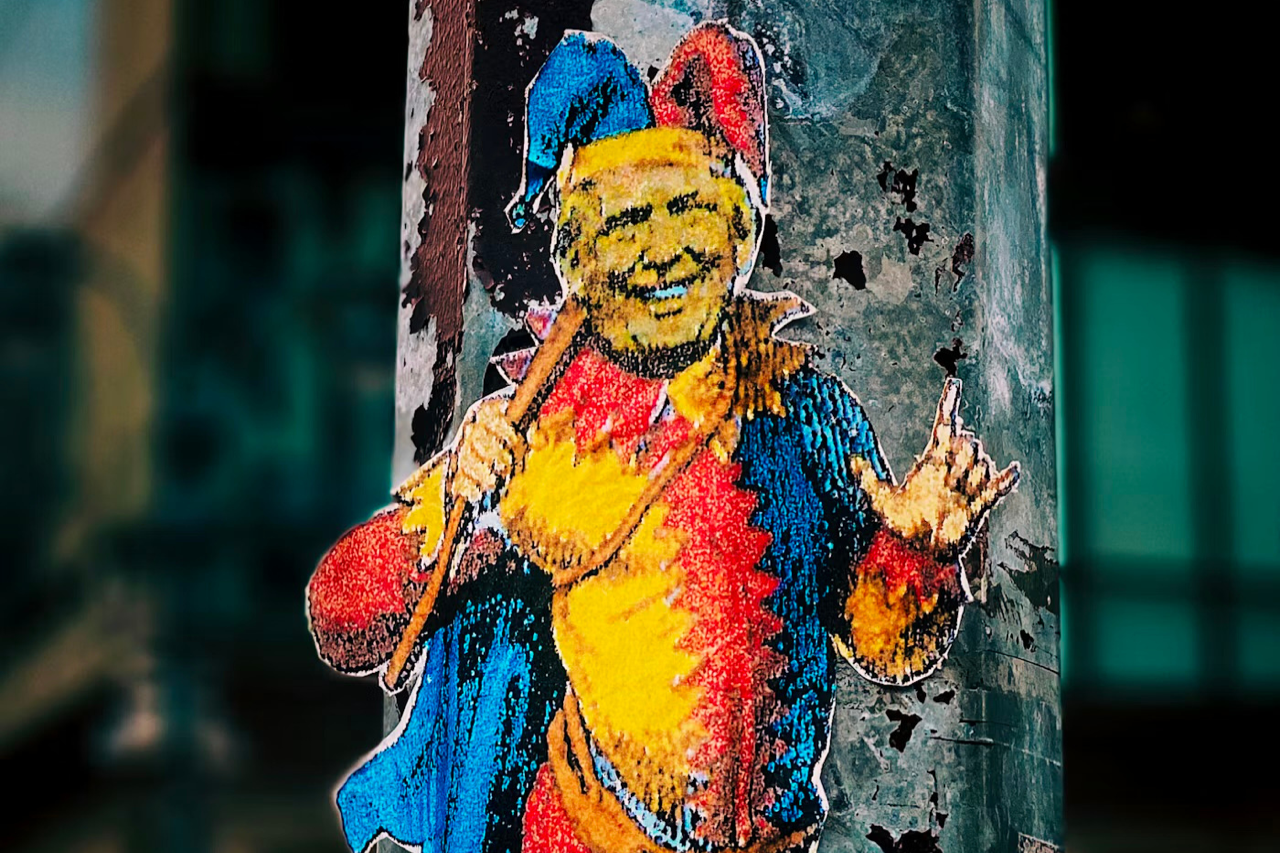
Donald Trump’s ignorance being treated as laughable and downplayed as comical is the white-supremafication of ignorance. Because what is so slap-your-knee funny about an unqualified, undereducated, undisciplined, underperforming and overpaid idiot running the country? Humor me.
What’s the punchline for electing a racist, a liar thousands of times over, an adjudicated rapist, and a thief? What is so gut-busting hilarious about his asinine behavior, his inability to think critically, to form coherent and complete sentences, his glaringly obvious lack of knowledge about the job of the president and the history of the country?
While Trump’s approach has been described by his allies as “direct,” his policy proposals and rhetoric triggered international reactions, ranging from public mockery to a serious breach of international relations. Instances including his remarks regarding African nations and his interest in acquiring Greenland are clear and obvious examples of a disconnect from diplomatic protocols, decorum and international history.
Still, Trump’s supporters reframe his communication style as “unorthodox.” His use of memes and provocative statements are treated as deliberate political tactics, anti-establishment humor, or negotiation strategies rather than actual ignorance.
So, “he’s just joking” and I’m taking things too literally or too seriously. This is a common defense tactic used to ensure Trump avoids accountability after saying something offensive or ignorant.
Trump has even repeatedly feigned ignorance or unfamiliarity regarding prominent white supremacists, white nationalist organizations, and extremist figures with whom he or his associates have interacted. Nick Fuentes, The Proud Boys, the Alt Right, Steve Bannon, and former Ku Klux Klan leader David Duke are on the list.
When asked by CNN’s Jake Tapper to disavow an endorsement from Duke and distance himself from white supremacists, Trump responded: “I don’t know anything about what you’re even talking about with white supremacy or white supremacists. … I know nothing about David Duke; I know nothing about white supremacists.”
But he did know Duke in 2015 and disavowed him. He, of course, knew his father, Fred Trump, who was arrested on May 31, 1927, at a Ku Klux Klan march and riot in Queens, New York.
These repeated professions of ignorance are both willful blindness and political dog-whistling. Extremists, white nationalist groups and the groups they target get the message. As Peter Baker, chief White House correspondent for The New York Times, pointed out in 2020: “Not in generations has a sitting president so overtly declared himself the candidate of white America.”
Trump also appeals to white protectionism and resentment. His political strategy relies heavily on racialized grievance, nationalist rhetoric, and “white” anxiety regarding demographic and cultural shifts in the U.S. He has defended Confederate symbols and monuments, grossly mischaracterized social justice movements, and his hardline immigration discourse stokes division for political mobilization.
This is not something to simply be voted out in November. Because this is not a mid-term election problem.
You cannot check a box and be done with this mindset. Because there are millions of Americans who agree with Trump and will continue to support him— if it will protect “white” identity.
And rather than talk about the “white lash” that resulted in his presidency— because he just can’t stop talking about former president Barack Obama— we are subjected to political commentators and media analysts who treat his norm-breaking rhetoric and behavior as merely silly, eccentric or comical. This is known as “sanewashing.”
We are lulled to sleep with downplayed commentary from late-night comedians, who seem to find all of it funny. This treatment is known as “clown washing.” The laughter is cover for relief but also a pressure valve for those most impacted by Trump’s idiocy.
An article written by Matthew Cantor for The Guardian poses a question worth sitting with in its title: ‘Packaging evil into something funny’: Is making fun of Trump now just ‘clown washing’?
“During Donald Trump’s first term, as his lies distorted reality and gaslighted Americans, Stephen Colbert said his goal was to remind his audience: ‘Hey, you’re not crazy,’” Cantor begins. He continues, “But watching political comedy during Trump’s second term— be it a deranged Saturday Night Live impression of a cabinet member or a rapid-fire late-night monologue full of ICE jokes —it’s hard not to wonder: Are we placating ourselves from the enormity of Trump-induced horror?”
This comedic treatment of Trump risks turning this wannabe dictator into a harmless comedic clown, which deflates real-world accountability. Reducing his highly offensive speech and behavior to late-night caricatures, comedy acts as a societal “safety valve.” But it also releases public anger through laughter rather than channeling it into sustained political action.
And that’s nothing to laugh about.
- About the Author
- Latest Posts

Director of The Raceless Gospel Initiative, an associate editor, host of the Good Faith Media podcast, “The Raceless Gospel” and author of Take Me to the Water: The Raceless Gospel as Baptismal Pedagogy for a Desegregated Church.