
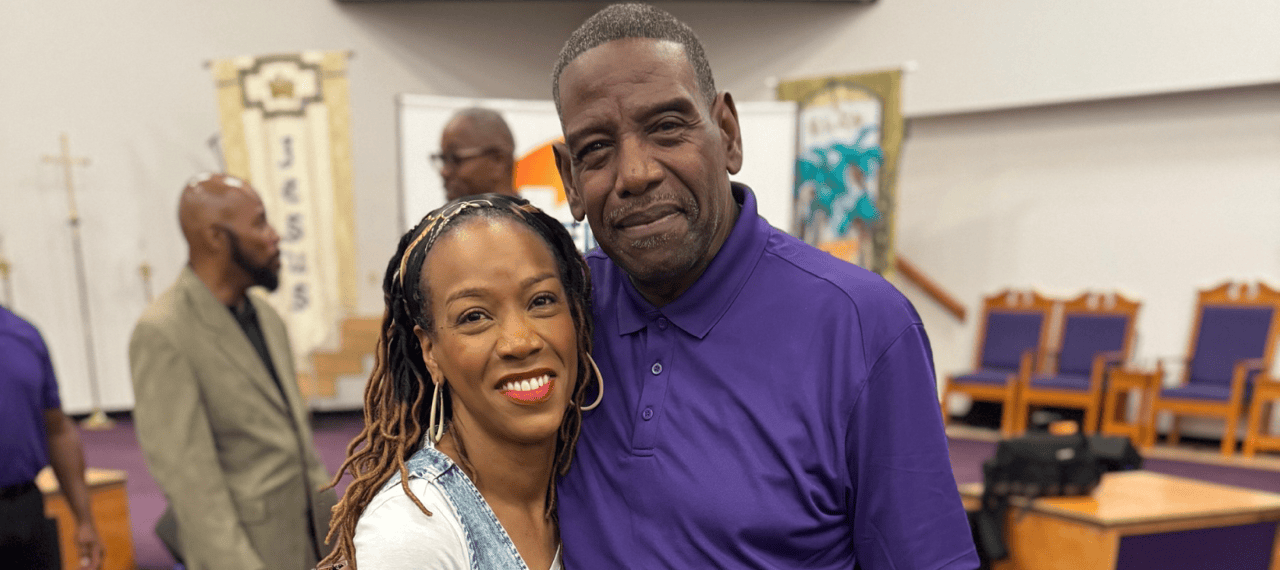
Today is the one-year anniversary of my pastor, Rev. Dr. T. Anthony Bronner’s death. The founding pastor of Elim Christian Fellowship in Buffalo and Rochester, New York, was 62 years old.
His innovative approach focused on decentralized pastoral authority. Bronner believed in flipping traditional power dynamics.
Instead of relying on a strictly top-down hierarchy, he empowered, licensed and ordained a new generation of faith leaders to share ministry responsibilities. Bronner fundamentally reshaped how spiritual community and leadership operate.
He was dedicated to expanding access to formal theological education, particularly within African American-led churches. A nationally respected preacher, author, and community leader, Bronner shaped urban ministry and championed local development.
Still, he found time to call me, stretching out the sound of the first four letters of my name and to comment under my Facebook updates: “I appreciate your preaching and writing gifts. I love you and your resilience.”
But I didn’t think I could survive this unnamed grief. There is no single, universally recognized clinical or psychological term exclusively designated for the death of a pastor.
I was angry that our relationship had come to this and there wasn’t even a way to describe it. I even fussed at him while he lay in the casket and reminded him of the plans we had made.
I was supposed to preach a three-day revival back in 2024, but it fell through. We still needed to reschedule it. He owed me at least one more time to serve alongside him.
He also needed to explain God to me again now that he was dead. I didn’t want him to return to the earth or to God. I wanted him to return to his family, his friends and the pulpit after surgery; I know that I am yet bargaining.
I’ve spent more days crying and pacing the floor trying to wrap my head around our new reality than I will ever disclose publicly. I remain tender to the sound of his voice and can be brought to tears at the mention of his name. Even the thought of him makes me weep.
His passing has been disorienting. A vibrant character in my spiritual world, a stable and consistent presence in my life for more than twenty years, the shock remains. What do you mean he’s dead?
Some days, I can’t believe it and other days, I refuse to. I’m in a constant state of denial.
How am I expected to accept such a thing? To lose such a foundational person and maintain my footing? To not want to walk back my calling if I cannot carry it out alongside him?
He’s only one of a few people I have ever cared to make proud. Bronner was cut from a different cloth that I wear like grief now. The heaviness makes me feel like he is present, though he is absent in the body now.
Yes, I know we all die, that no one lives forever. But maybe I thought he deserved a death like Enoch, “who walked with God and was no more” (Genesis 5:24). Instead, he went into surgery for a kidney transplant and never made it off the operating table.
A man of such faith in God, in people, in me, deserved euthanatos, a “good death.” A year later, nothing about his death feels good to me. This was not the death he deserved.
No talk of a sweet reunion some time in eternity or the assurance that he is no longer in pain alleviates mine. I have lost the last living connection to my understanding of God.
What am I supposed to believe after my pastor dies? The cause of death is not an answer and neither are the scripture passages I, too, have read while conducting funerals.
It all feels hollow and empty. His loss echoes through me. And since I can no longer reach for his hand, I am left alone to grapple with his death.
This year without him has been too much for me. So, I will do as the elders said and take it one day at a time, though I am convinced it won’t lessen the grief.
One year has passed and as I am writing this, it still feels like the day my pastor died.
- About the Author
- Latest Posts

Director of The Raceless Gospel Initiative, an associate editor, host of the Good Faith Media podcast, “The Raceless Gospel” and author of Take Me to the Water: The Raceless Gospel as Baptismal Pedagogy for a Desegregated Church.