
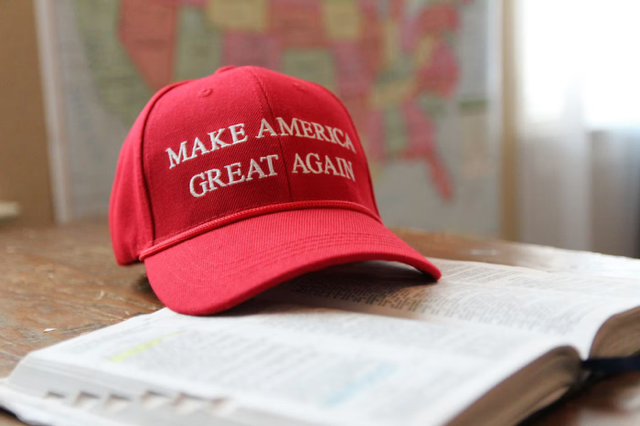
Following the historic results of the November midterm elections, which handed Democrats strong majorities in the House and Senate and triggered a sharp reckoning for Donald Trump and the Make America Great Again (MAGA) movement, some political pundits say Trump’s stranglehold over the party has broken and the MAGA movement is facing a deep structural crisis. Will this new political reality call for a change in leadership or signal the demise of this faction of the Republican Party?
JD Vance, Marco Rubio, and Ron DeSantis are positioned as potential heirs. However, political analysts point out that MAGA has historically functioned as a personal loyalty-based coalition around Trump rather than an easily transferable ideology.
The movement emerged during Trump’s 2016 presidential campaign, drawing its name and rallying cry from his “Make America Great Again” slogan, a phrase previously used in a variant form by Ronald Reagan in 1980. A right-wing nationalist movement focused on an “America First” agenda, disillusionment and fatigue among some members and influencers have grown during Trump’s second term.
A major point of contention is Trump’s military involvement in Iran, which clashed with a campaign promise of “no new wars” and caused divisions between “America First” isolationists and other factions. Rising gas prices, inflation, and a broader affordability crisis have eroded patience among working-class and rural supporters who expected immediate economic relief. Internal finger-pointing also erupted shortly after the midterm election results.
Still viewed as a patriotic effort to restore national strength and economic independence by its members, the sense of community found in the MAGA movement around a shared purpose and grievances may no longer be worth it. Its solidarity is heavily predicated on “negative partisanship.”
This bond formed around shared resentment toward political institutions and opposition to cultural shifts may have created a highly motivated and cohesive political block. But it also deepened societal polarization by using a confrontational political style and focusing on cultural identity, making cross-partisan cooperation, legislative compromise, and social cohesion increasingly difficult to achieve. In fact, this political faction is one of the most polarizing forces in contemporary American politics.
The intense loyalty required by the MAGA movement creates an “us versus them” mentality and has shaped American interethnic relations by amplifying racialized resentment. This has resulted in a shift in the Republican Party toward white identity politics and intensifying polarization around systemic equity and democracy.
The PRRI Structural Racism Index, a public opinion research study, shows that self-identified MAGA Republicans score significantly higher on measures of structural racism and “white grievance” than independents or Democrats, frequently embracing the belief that European Americans, who are racialized as white, face widespread discrimination. Research from the Brookings Institute indicates that political support for Trump correlates more strongly with anti-immigrant sentiment and racialized prejudice than with economic anxiety.
So, what will American politics look like as the influence of Donald Trump and the MAGA movement shifts or recedes? And what of the internal tug-of-war between traditional conservatives hoping to return to familiar ground and populist factions that captured local and national party structures?
A shift away from Trump does not mean the Republican Party will automatically walk away from identity-inflected policies centered on immigration, diversity, and cultural nationalism. Populist grievance politics and cultural-war divisions tap into deeper structural and demographic anxieties that predate Trump and are unlikely to disappear with him or his supporters. In short, American politics promises more of the same.
- About the Author
- Latest Posts

Director of The Raceless Gospel Initiative, an associate editor, host of the Good Faith Media podcast, “The Raceless Gospel” and author of Take Me to the Water: The Raceless Gospel as Baptismal Pedagogy for a Desegregated Church.